
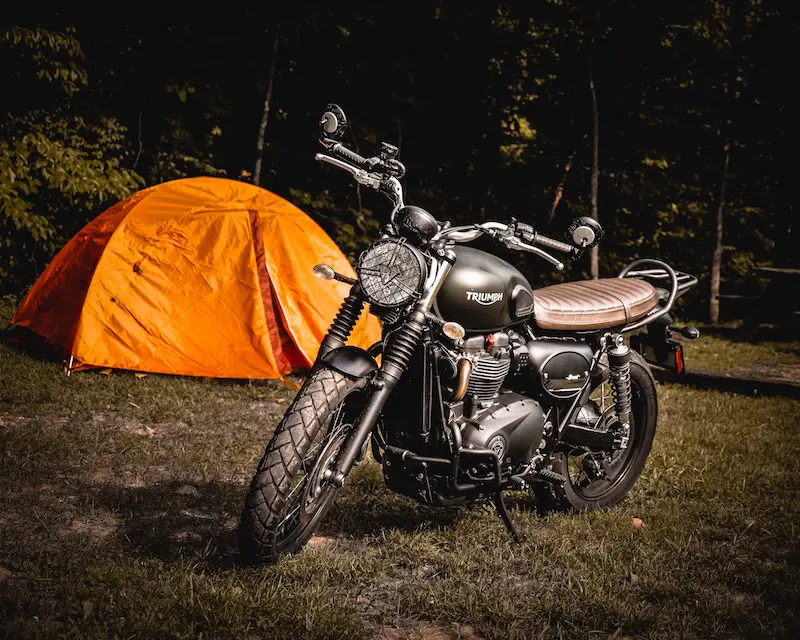
Motorcycle camping gear is a full ride-and-camp system, not just regular camping gear strapped to a bike. Every item has to earn space by helping safety, recovery, pack efficiency, or daily camp function.
That is why riders get into trouble when they buy by brand, price, or cool-looking specs alone. A tent that packs awkwardly, a pad that sleeps cold, or a kitchen setup that takes forever to deploy can make the whole trip feel harder than it should.
This guide shows what matters first, how to build the kit in the right order, and which deeper guides to use when you are ready to choose specific gear.
If you want the planning side to match the gear side, use this together with the motorcycle trip planning guide so route pace, fuel timing, and camp setup all support the same system.
Jump Ahead To:
What Motorcycle Camping Gear Really Means
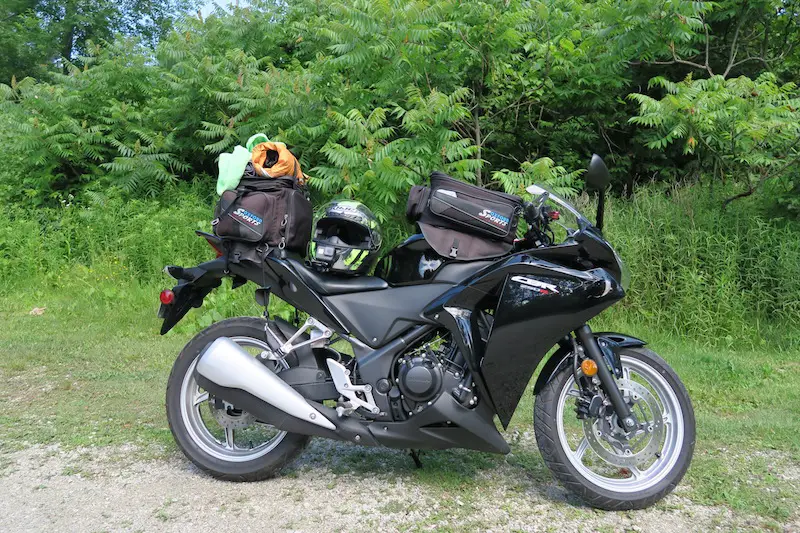
The goal is not to carry the smallest possible kit. The goal is to carry a kit that rides safely, sets up fast, and lets you wake up ready to ride again the next day.
That makes motorcycle camping different from both car camping and backpacking. Car camping assumes extra space. Backpacking assumes you are carrying the load on your body. Motorcycle travel sits in the middle. You can carry denser gear than a backpacker, but poor load placement still changes handling, braking, and stability.
A useful way to think about it is simple: your camping gear has to work on the bike first, then at camp. If it fails either part, it is not the right setup yet.
If you are still sorting priorities, start with the core items that actually belong on the bike and then use a rider-first packing checklist before every trip.
Start with Space, Weight, and Access
Most packing mistakes happen before the first bag is loaded. Riders buy gear in isolation, then try to force it into whatever luggage they already have.
Work the other way around. Start with your real storage envelope, then build the kit inside it. That means knowing how much room you truly have in panniers, dry bags, or a tail bag, and deciding which items need fast access while you are still on the road.
Three rules stay true on almost every bike:
- Keep heavy items low.
- Keep heavy items near the center of the bike.
- Keep first-use items easy to reach.
That third point matters more than people think. Rain gear, tire repair, water, and first-aid basics should not live under your entire sleep kit.
Choose the Right Luggage Mix
Hard luggage works well when fixed shape, lockable storage, and neat organization matter most. Soft luggage works well when lower weight, flexible shape, and better crash forgiveness matter more. Many riders land somewhere in the middle with a hybrid setup.
What matters most is whether the bags support the trip you are actually doing. If theft exposure and city stops are part of the route, a more secure hard or hybrid setup can make sense. If you expect mixed terrain and more tip-over risk, soft luggage usually makes life easier.
Dry protection still matters either way. If you are comparing storage options, look at dry bags that actually pack well on a bike and then use this packing guide for dry-bag layout and bag zoning.
Lock the Load Before You Leave
A good load is not just compact. It stays put. Straps, anchors, and bag placement are part of the safety system.
Before any long ride, do a short shake test. Pull the bags in travel directions, check for strap slack, and make sure nothing can drift into the chain, wheel, or exhaust. Five minutes here is cheaper than fixing a shifted load on the shoulder.
Build the Shelter and Sleep System First
If you only get one part of the kit right early, make it shelter and sleep. Bad sleep slows judgment, patience, and reaction time the next day. That turns a fun ride into a grind fast.
Your shelter system should pack clean, go up without drama, and keep wet gear separated from where you sleep. Your sleep system should keep you warm from above and insulated from the ground below.
Tent Fit Matters More Than Tent Marketing

A tent does not need motorcycle branding to work for riders. It needs the right packed shape, predictable setup, and enough weather confidence for tired arrivals.
Packed length matters as much as packed weight. Shorter pole sections are often easier to fit in panniers or side bags, which is why bikepacking-style shelters can work so well on motorcycles. Vestibule space also matters because it gives muddy boots and wet riding gear a place to live outside the sleep area.
If you are shopping now, compare tent picks built for motorcycle camping before you buy.
Treat Bag, Pad, and Pillow as One Recovery System
Sleeping bags, pads, and pillows should not be picked as separate comfort gadgets. They work as one recovery system.
The bag or quilt handles top insulation. The pad stops ground cold from draining heat all night. The pillow helps your neck and shoulders recover instead of forcing you into a bad position for hours. If one part of that system is weak, the whole night suffers.
For many three-season riders, pad insulation matters more than expected. A warm bag on top of a cold pad can still lead to a rough night. That is why an insulated pad with an R-value around 5 is such a strong general-use starting point for riders who camp across changing shoulder-season weather.
If you are comparing gear by category, start with sleeping bag picks for motorcycle camping, sleeping pads that balance insulation and pack size, and compact pillows that actually help recovery. If you want the full setup logic first, read the motorcycle camping sleep system guide.
Keep the Camp Kitchen Small and Repeatable

Most riders do better with a tiny kitchen that comes out fast than a bigger kitchen they avoid using when they are tired. A stove, fuel, one pot, one cup or mug, one utensil, and a backup ignition source handle a lot of real-world camp meals.
The point is repeatability. You want a setup you can deploy without thinking after a long day, in wind, or with fading light.
If you are deciding what to buy, compare motorcycle camping stoves for real trip use and cookware sets that pack smaller and work better on the road. If you want the broader routine, this camp kitchen setup guide covers how to keep the whole system simple.
Water Planning Is a Safety Decision
Water gets treated like an afterthought until a hot day, a long gravel stretch, or an empty refill point turns it into the main problem.
Carry a baseline amount you know you need, then build in backup. That backup can be extra carried water, a filter, a chemical treatment option, or a boil plan depending on the route. What matters is that your plan does not depend on finding water exactly where you hoped it would be.
Use the motorcycle camping water strategy guide if you want the planning framework, and compare water filters that make sense for bike travel if you need a treatment option in the kit.
Cook Within Fire-Ban and Ventilation Limits
A stove that works great at home may not fit local fire restrictions or bad-weather camp realities. You also cannot shortcut ventilation. Do not cook inside a sealed tent or tiny closed shelter.
If your trips cross changing conditions, read the guide to fire-ban cooking rules and safe stove use before you lock in a camp-cooking setup.
Decide if a Chair Earns Its Space
A chair is not survival gear, but it can be real recovery gear. After a long ride, sitting with back support instead of crouching or leaning on the bike can make evenings easier and mornings less stiff.
Still, a chair has to beat the volume cost. If your shelter, sleep, water, and repair systems are already stable, a chair might deserve a spot. If your core kit is still tight or messy, fix the basics first.
When you are ready to compare options, look at compact camp chairs that are realistic for motorcycles.
Cover the Failure Points Before the Comfort Upgrades
The gear that saves a trip is rarely the gear riders get excited about first. Tire repair, first aid, charging, and security are the boring categories that protect the rest of the ride.
Your toolkit should solve common trip-ending problems, not try to turn camp into a workshop. Carry the tools your bike actually uses, a flat-repair setup you have practiced with, and a simple first-aid kit you can reach fast.
If you need to buy this category now, compare first-aid kits that fit motorcycle camping. For the bigger habit side of the topic, this camp security setup guide covers how to keep the bike and your high-value gear lower-risk overnight.
Keep Electronics Working Without Draining the Bike
Phones, GPS units, lights, pumps, and communicators all depend on the same thing: a charging plan that works before you arrive at camp exhausted.
Charging while riding is usually the easiest way to keep core devices alive. Then use a power bank or jump-starter-style backup as the second layer, not the primary plan.
If you need hardware picks, compare rugged power banks that make sense for motorcycle camping. If you need the process side, read how to charge devices while motorcycle camping.
Pack by Function, Not by Random Category
Packing gets easier when each bag has a job. A random gear pile creates random camp setup.
A simple functional split works well for most riders:
- Dry sleep core
- Kitchen and hydration
- Clothing and weather layers
- Tools, repair, and safety
That setup makes it easier to protect the sleep kit, isolate wet gear, and find what you need without unpacking the whole bike at every stop.
If you want a more detailed packing flow, use the motorcycle camping checklist for the pre-ride routine and the dry-bag packing guide for function-based bag layout.
What to Buy First for a Short Overnight
If you are building a first kit, do not start with comfort upgrades. Start with the pieces that protect safety, shelter, sleep, and ride continuity.
First priority:
- Tent or shelter you can pack and pitch without drama
- Sleep system that keeps you warm and off the cold ground
- Water carry plan and backup treatment
- Weather layer and dry storage for critical gear
- Flat repair, light, and first aid
Second priority:
- Simpler camp kitchen
- Better packing and dry-bag organization
- Charging backup
- Small comfort upgrades like a pillow or chair
If you want the strict priority version, go back to the essentials guide. If you want the habit side after the gear is sorted, read practical motorcycle camping tips for daily camp flow.
Common Mistakes That Make a Good Kit Feel Bad
One common mistake is overpacking clothing and underpacking function. Riders carry extra layers they never wear, then realize the first-aid kit, water backup, or repair gear is buried or missing.
Another is chasing packed weight while ignoring packed shape. A piece of gear can be light and still be awkward on a motorcycle if it is too long, too rigid, or hard to place without creating dead space.
Rear-heavy loading is another frequent problem. If the bike feels vague, wallowy, or slow to settle, look at load placement before blaming the suspension.
The last big mistake is treating recovery like a luxury. Riders skip pad insulation, a dry sleep layer, or basic neck support, then wonder why the second riding day feels worse than the first.
Use the Right Guide for the Next Decision
If your next problem is shelter, start with tent options that fit motorcycle luggage better.
If sleep is the weak point, compare sleeping bag choices, insulated sleeping pads, and compact camping pillows, then read the full sleep-system guide if you want to tune the whole setup.
If camp meals feel messy or slow, use the stove roundup, the cookware guide, and the camp kitchen setup article.
If water, charging, or overnight security feel shaky, go straight to water strategy, power and charging steps, and the camp security guide.
If the trip still feels cluttered before you even leave home, use the checklist, the essentials guide, and the trip planning guide together.
Frequently Asked Questions About Motorcycle Camping Gear
What is the minimum motorcycle camping gear for a first overnight?
Minimum means shelter, sleep insulation, water, light, flat repair, first aid, and one weather-ready dry layer. That gives you enough to sleep, stay functional, and handle small problems without carrying a bloated load.
How do I fit camping gear on a smaller motorcycle?
Use a smaller system, not a messier system. Compact shelter, tight sleep kit, fewer duplicate clothes, and strict bag roles matter more on a small bike because bad packing shows up faster in handling.
Do I need motorcycle-specific camping gear?
Not always. What matters is packed size, setup speed, weather reliability, and how well the gear fits your luggage. Many riders use backpacking or bikepacking gear very successfully for exactly that reason.
What should stay easiest to reach during the ride?
Rain gear, water, tire repair, first-aid basics, and charging items should stay closest to hand. If you need something urgently, it should not require unloading your shelter and sleep system first.
Hard luggage or soft luggage for motorcycle camping?
Choose by route and risk. Hard luggage usually helps with security and fixed organization. Soft luggage usually helps with weight, flexibility, and mixed-terrain travel. Many riders mix both.
What matters more, sleeping bag rating or pad insulation?
Both matter, but pad insulation gets missed more often. A warm bag cannot fully save a cold sleep pad because ground heat loss keeps working all night.
How much cooking gear do I really need?
For most riders, not much. A stove, fuel, one pot, one cup or mug, one utensil, and backup ignition handle a lot of camp meals without turning dinner into a project.
Is a chair worth carrying on a motorcycle camping trip?
Sometimes. If your core kit is already sorted and you value seated recovery after long ride days, a chair can be worth the space. If your essentials still feel cramped, fix the basics first.
If you want the fast version, use the essentials guide to rank what matters, the checklist to pack it in the right order, and the trip planning guide to keep route, fuel, and camp timing from unraveling the ride.