
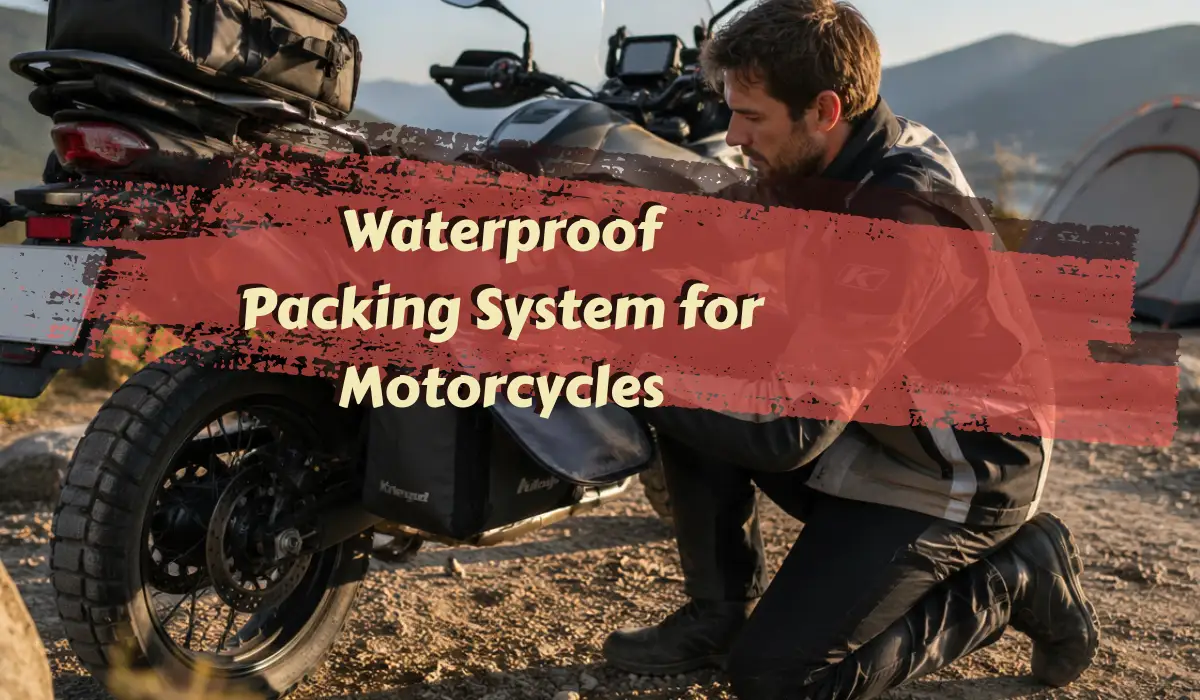
A waterproof motorcycle packing system is not just buying one bag labeled "waterproof." It is a full setup: bag type, seam construction, closure style, mounting method, and internal organization.
This guide shows how to build a waterproof system that keeps critical gear dry in rain, spray, and long travel conditions.
Jump Ahead To:
Start With the Right Luggage Type
Hard luggage
Good for lockable storage and easy organization. Waterproofing depends on seal condition and latch integrity.
Soft luggage
Better for off-road flexibility and crash tolerance. Waterproofing depends on welded seams and closure quality.
If you are choosing format first, read the hard-vs-soft luggage guide.
Step 1: Verify True Waterproof Construction
Before buying, check these core build details:
- Seams: Prefer RF-welded or heat-sealed seams.
- Closure: Roll-top with at least 3 folds is the most reliable field option.
- Material: TPU usually offers better flexibility and durability than basic PVC.
Avoid trusting rain covers alone as your primary waterproof plan.
Step 2: Match Capacity to Trip Type
- Weekend rides: moderate volume, simpler modular setup.
- Multi-day touring: larger volume with internal dry pods.
- Extended adventure routes: redundancy with separated critical gear zones.
Use the dry bag guide for product-level options.
Step 3: Build a Two-Layer System
A strong real-world setup separates protection and organization:
- Outer luggage shell for abrasion and mounting.
- Inner dry pods/liners for critical items.
This lets you remove dry contents quickly and keeps failures isolated if one compartment gets compromised.
Step 4: Mount for Stability and Heat Safety
Waterproof performance fails fast when bags move or touch heat:
- Keep soft luggage clear of exhaust; add heat shields as needed.
- Tighten straps and secure loose ends.
- Recheck tension after first miles.
Use the safe mounting guide for full mounting protocol.
Step 5: Pack by Moisture Risk
Separate your load by consequence if wet:
- Must stay dry: electronics, documents, sleeping layers.
- Can tolerate moisture: tools, outer shells, non-critical camp items.
Keep high-risk items in your most trusted sealed compartments.
Step 6: Add Pre-Ride Waterproof Checks
Before leaving:
- Confirm roll-top fold count and buckle closure.
- Confirm no seam damage or punctures.
- Confirm gasket condition on hard cases.
- Confirm no strap movement near wheel/chain/exhaust.
Troubleshooting: When "Waterproof" Fails
Water inside soft bag
Check fold count, seam damage, punctures, and closure contamination.
Hard case leaks
Inspect gasket cleanliness, gasket compression, latch tension, and case deformation.
Moisture without rain ingress
Check condensation from temperature swings and poor ventilation.
Common Waterproof Packing Mistakes
- Buying water-resistant fabric and assuming true storm-level waterproofing.
- Running stitched seams without reliable inner dry protection.
- Under-folding roll-top closures.
- Overpacking so closure cannot seal cleanly.
- Ignoring gasket maintenance on hard luggage.
Practical System Templates
Daily commuter rain setup
Compact waterproof bag + inner document pouch + quick-access rain shell.
Weekend camping setup
Main dry duffel + separate clothing dry pod + tool pouch + redundancy for electronics.
Long-route touring setup
Side-system dry modules + critical-item inner dry bags + weighted low-forward packing.
Use the weight-distribution guide and the luggage security guide so waterproofing and safety work together.
Frequently Asked Questions
Are roll-top bags actually waterproof?
Yes, when seams are welded and the roll-top is folded correctly and fully secured.
Is TPU better than PVC for motorcycle waterproof bags?
In many cases yes, especially for flexibility and long-term durability.
Do waterproof zippers need maintenance?
Yes. Keep them clean and lubricated so they continue sealing correctly.
Can hard panniers leak?
Yes, if gaskets are dirty, worn, compressed, or the case is deformed.
How many folds should a roll-top closure get?
At least three clean folds before buckling.
Should I trust rain covers alone?
No. Use true waterproof primary luggage or inner dry systems for critical gear.
What is the safest way to protect electronics?
Use inner sealed dry pods inside your main luggage system.
After building your waterproof setup, complete the system with the main luggage guide, rear bag options, and saddlebag picks. For cockpit essentials that stay accessible in rain, compare tank bag options.