
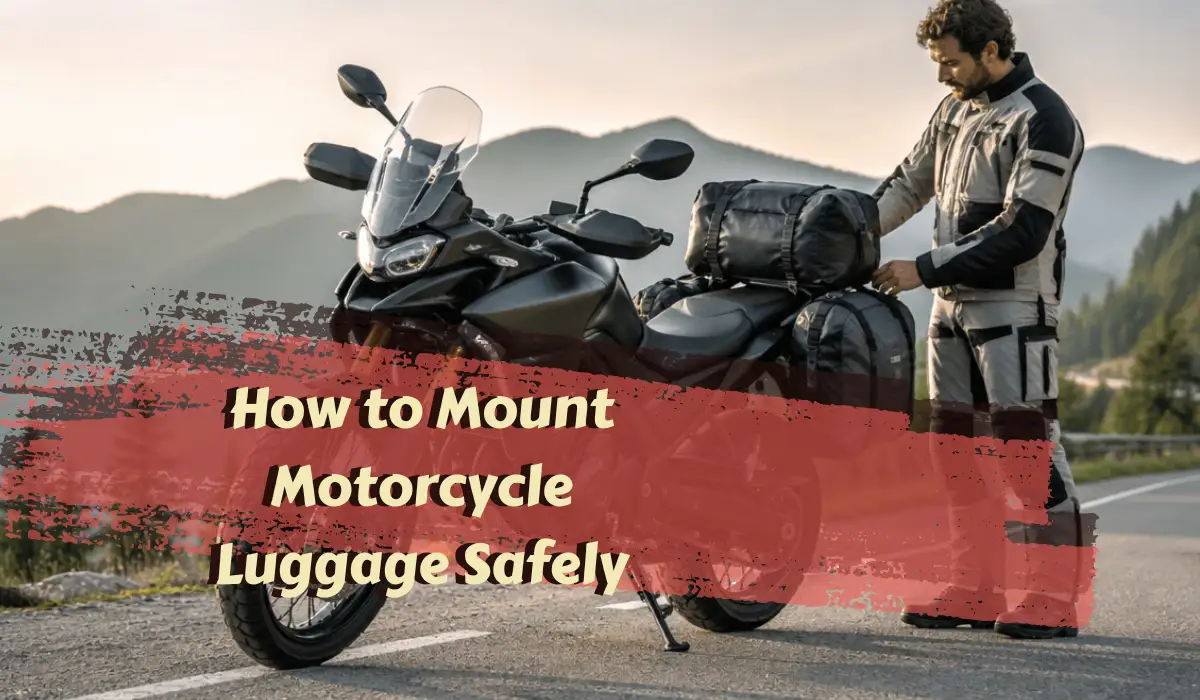
Mounting luggage safely is not just about tying bags down until they stop moving. A bad setup can cause wobble, melted bags, longer braking distances, and serious handling problems.
This guide gives you a practical step-by-step method to mount luggage safely before daily rides, touring, and camping trips.
Jump Ahead To:
What Safe Luggage Mounting Means
Safe mounting means four things are true at the same time:
- The load is within payload limits.
- The luggage is fixed to strong anchor points.
- Nothing touches exhaust, wheel, chain, or lights.
- Tire pressure and suspension are adjusted for the added weight.
If you are still choosing bag style first, read the hard-vs-soft luggage guide and the main luggage guide.
Step 1: Calculate Payload Before You Pack
Find your bike's GVWR and subtract wet weight, rider, passenger, and installed accessories. The remaining number is your safe luggage allowance.
Do not guess. Weigh your packed bags. Many riders underestimate payload and overload the rear section.
For packing strategy after this step, use the weight-distribution guide.
Step 2: Choose Proper Anchor Points
Use frame, subframe, passenger peg brackets, or dedicated rack hardware. Do not anchor to plastic trim, turn signals, or weak cosmetic parts.
For hard luggage systems, install and torque rack hardware correctly and use thread-locking compound where needed.
If you are adding a platform first, see luggage rack picks.
Step 3: Set Heat and Wheel Clearance
Soft luggage must stay clear of the exhaust. Keep around 3 inches of heat clearance or add a heat shield when needed.
Also check full suspension movement so bags and straps cannot contact wheel or chain under compression.
If your setup is weather-focused soft luggage, pair this with the waterproof packing guide.
Step 4: Pack by Weight Position, Not by Space
Put heavy items low and forward. Put light bulky items high and rearward. Keep left/right side loads balanced.
Avoid loading heavy gear into top boxes or high tail positions. Rear-high weight makes steering vague and can trigger instability.
Step 5: Secure With Non-Elastic Straps
Use non-elastic straps. Avoid bungees for primary load security because stretch allows load shift.
After tightening, tuck loose strap ends so they cannot get pulled into chain, wheel, or brake hardware.
Step 6: Adjust Tire Pressure and Suspension
After loading, adjust tire pressure to your manual's loaded values. A common touring adjustment is a modest rear increase, often around +2 to +4 PSI, depending on bike specs.
Increase rear preload to restore ride height and reduce squat. Add rebound damping as needed so the bike does not wallow over bumps.
Step 7: Perform a Full Tug Test
Grab each bag and pull firmly in every direction. The bike should move with the bag, but the bag should not move independently.
Then do a short low-speed shakedown ride. Recheck strap tension after a few miles.
Quick Troubleshooting
Luggage touches exhaust
Add heat shielding, adjust strap path, or move to side/rack support.
Bike wobbles at speed
Check tire pressure, reduce rear-high weight, and move heavy items forward/lower.
Rear suspension bottoms out
Increase preload first. If preload is maxed, spring rate may be too soft for your load.
Bag shifts under braking
Re-anchor to stronger points and replace elastic tie-downs with non-elastic straps.
Pre-Ride Safety Checklist
- Payload is within GVWR and load limits.
- Rack hardware is tight and secure.
- Straps are tensioned and loose ends are tucked.
- Exhaust and wheel clearance are checked.
- Left/right weight balance is close.
- Tire pressure is set for loaded conditions.
- Suspension preload and damping are adjusted.
- Tug test passes before departure.
Common Mounting Mistakes
- Using bungee cords as primary tie-down.
- Anchoring straps to weak plastic points.
- Overloading rear top position with heavy gear.
- Ignoring tire pressure changes after loading.
- Skipping a tug test and first-mile recheck.
Frequently Asked Questions
Can I mount motorcycle luggage without racks?
Yes, with rackless systems and correct anchor points, but clearance and strap routing still matter.
How far should soft bags be from the exhaust?
Keep clear spacing and use a heat shield when needed to prevent melt damage.
Should I increase tire pressure when carrying luggage?
Usually yes, based on your manual's loaded recommendation.
Are bungee cords safe for luggage?
They are not ideal as primary load restraints because elastic stretch allows movement.
Why does my bike feel unstable after packing?
Most often from rear-high weight bias, low tire pressure, or missing preload adjustments.
How often should I recheck strap tension?
Check before every ride and again after the first few miles.
What is the fastest safety check before leaving?
Do a full tug test, then confirm clearance and strap-end security.
After mounting is sorted, optimize your luggage system with the weight-distribution guide, the luggage security guide, and the rear bag guide. For waterproof trip setups, use the dry bag guide.