
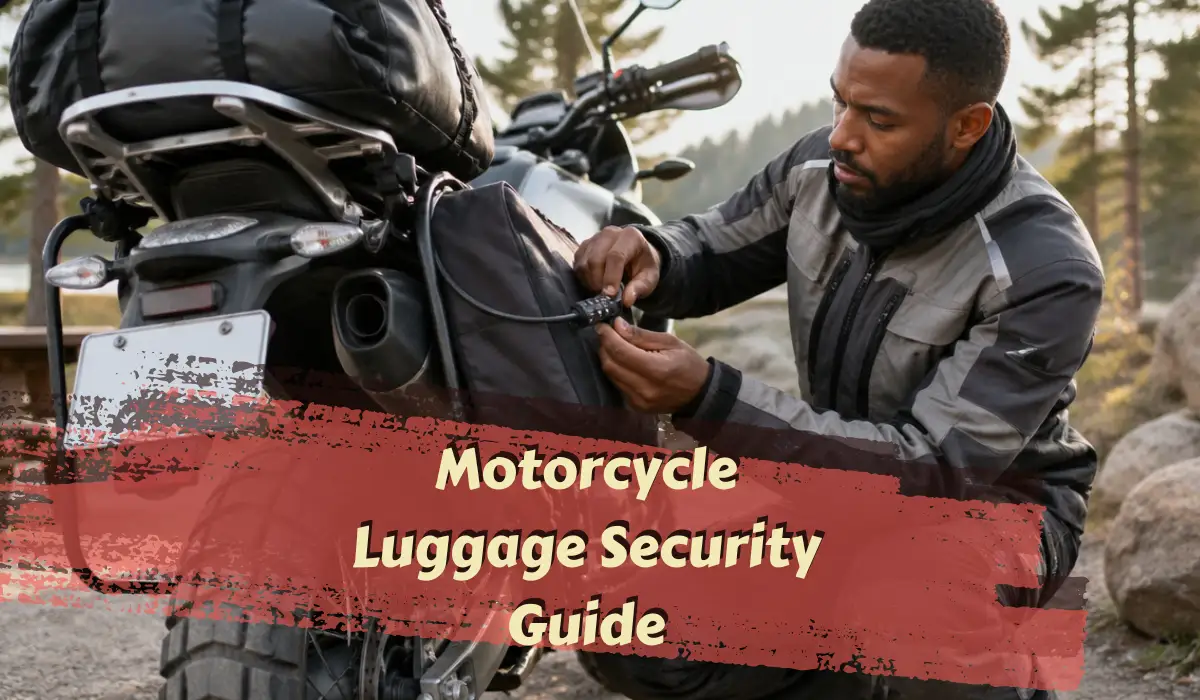
Motorcycle luggage security is not one lock or one gadget. It is a layered system. If one layer fails, the next layer still slows the thief down.
This guide shows how to secure both your bags and your bike using practical layers: mechanical locks, reinforced mounting, smart parking, and tracking.
Jump Ahead To:
The Core Rule: Layered Defense
The most reliable setup uses multiple barriers together:
- Bike lock layer: steering lock, disc lock, chain/anchor when possible.
- Luggage lock layer: lockable hard cases or reinforced soft-bag retention.
- Concealment layer: cover the bike and hide what luggage system you run.
- Recovery layer: tracker and alert workflow.
If you are still choosing luggage type, read the hard-vs-soft luggage guide.
Hard Luggage vs Soft Luggage Security
Hard luggage is usually better for theft resistance out of the box because it is rigid and lockable.
Soft luggage is lighter and often better for off-road safety, but it needs extra security hardware to reduce slash-and-grab risk.
If your goal is secure rear storage for commuting and stop-heavy rides, compare top box options.
For soft systems, add steel-core lock straps or cable/mesh reinforcement when parked.
Step-by-Step Security Setup
1. Choose your base system
Use hard luggage for high-theft city parking. Use soft luggage for off-road flexibility, then add reinforcement.
2. Secure the luggage to the bike
Hard cases: confirm latch/lock engagement every stop.
Soft bags: route lockable steel-core straps or cable through bag handles and frame anchors.
3. Remove non-negotiable valuables
Never leave passport, wallet, phone, title, or critical electronics in parked luggage.
4. Lock the bike with real friction for thieves
Steering lock alone is weak. Add a disc lock and, when possible, a chain to an immovable point.
5. Cover the bike
A cover removes visual cues and slows opportunistic theft.
6. Add a tracker
Tracker tools do not prevent theft by themselves, but they improve recovery odds when a theft happens.
Parking Security Protocol
Use this sequence every time you leave the bike:
- Choose visible, lit parking.
- Lock bike (disc + steering; chain when possible).
- Lock luggage or reinforce soft bags.
- Cover bike when practical.
- Take critical valuables with you.
- Confirm tracker/alarm status.
Security Mistakes That Cause Most Losses
- Relying only on steering lock.
- Using bungee cords or weak straps for luggage retention.
- Leaving valuables in soft bags at meal/fuel stops.
- Skipping covers in high-traffic parking areas.
- Posting live location while bike is unattended.
Security Upgrades That Actually Help
- Alarmed disc lock for push-away prevention.
- Chain to fixed anchor when overnight parking is involved.
- Steel-core strap systems for soft luggage.
- Tracker with stable alert workflow.
- Better parking discipline than "quick stop" assumptions.
Pair Security With Safe Packing
Security and handling should be planned together. Heavy rear-high luggage can create instability even if it is well locked.
Use the weight-distribution guide and the safe mounting guide so your secure setup is also a safe setup.
Frequently Asked Questions
Is hard luggage more secure than soft luggage?
Usually yes by default, because hard cases are rigid and lockable.
Can soft luggage be secured well enough for travel?
Yes, but it needs added hardware such as steel-core straps, cable locks, or mesh reinforcement.
Are trackers enough to stop theft?
No. Trackers help recovery after theft. They should be one layer in a bigger system.
Is steering lock enough by itself?
No. It should be paired with at least a disc lock, and preferably a chain when possible.
Should I remove valuables even for short stops?
Yes. Quick stops are still common theft windows.
Do covers actually help security?
Yes. Covers reduce visual targeting and increase effort/time for opportunistic thieves.
What is the best basic setup for city parking?
Hard luggage or reinforced soft luggage, disc lock, and consistent parking discipline.
Build your full luggage system with the main luggage guide, saddlebag picks, and rear bag options. For weather-focused travel kits, pair this with the waterproof packing guide.