
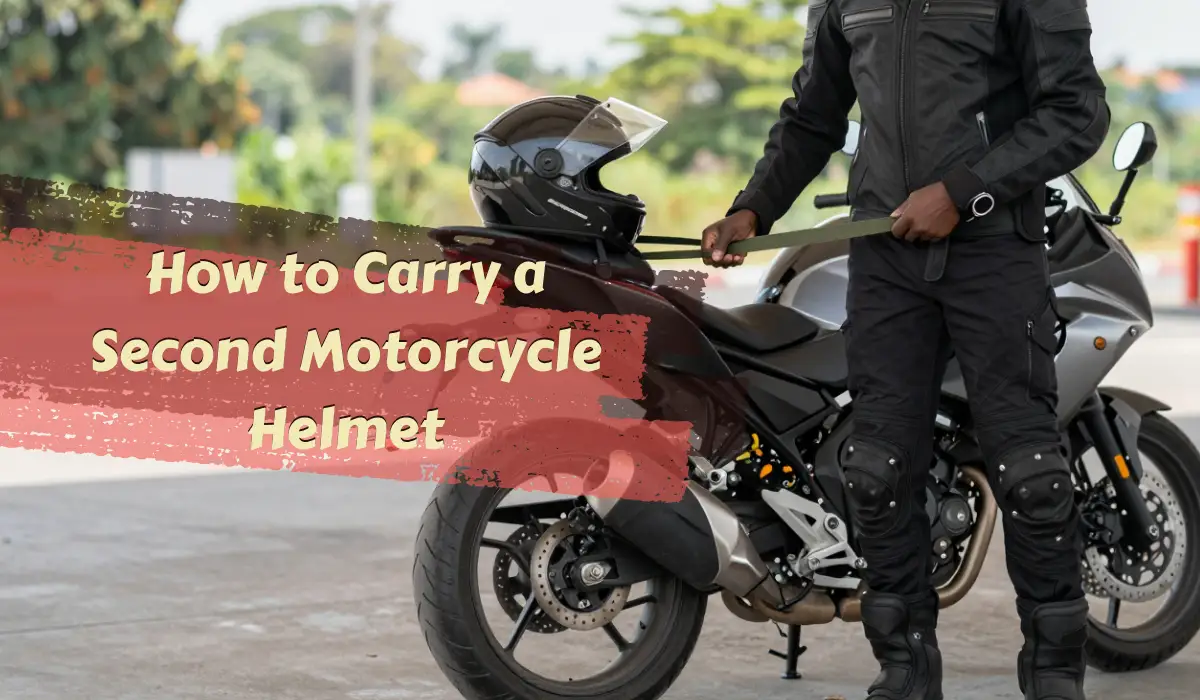
Is carrying a second motorcycle helmet easy to do safely? Yes, but only if you treat it like cargo, not like something you can casually hook onto the bike and forget.
A spare helmet changes weight balance, catches wind, and can get scratched, stolen, or heat-damaged if you mount it badly. This guide covers the safest ways to carry one and the shortcuts you should avoid completely.
Jump Ahead To:
When Riders Usually Need a Second Helmet
Most riders do this for one of three reasons:
- picking up a passenger later
- carrying a guest helmet to meet someone
- bringing a second lid for weather, noise, or comfort reasons
The exact helmet matters too. A small open-face helmet is easier to carry than a big modular or ADV helmet with a peak. If you are still picking the spare itself, compare types of motorcycle helmets before planning the storage. If the second lid is mainly for a passenger or short city use, it also helps to compare best open-face motorcycle helmets and best modular motorcycle helmets before assuming every spare will pack the same way.
The Best Ways to Carry a Second Helmet
1. A Lockable Top Case
This is usually the cleanest answer. A hard case keeps the helmet out of the weather, away from road grime, and much harder to steal. It also stops the helmet from acting like a loose parachute on the back of the bike.
The downside is weight. A top case places mass high and rearward, so you still feel it in slow handling and braking, especially if the case is already full of other gear.
2. A Tail Bag on the Pillion Seat
For sportbikes, nakeds, and bikes with limited rack space, a properly strapped tail bag is often the best compromise. It keeps the helmet low and close to the bike centerline, which is better for stability than hanging it high off the rear.
The key phrase there is “properly strapped.” A good tail bag works because it stays put. A sloppy one becomes its own problem.
3. A Dedicated Under-Seat Strap System
Purpose-built helmet straps that anchor under the seat can work well when you do not have hard luggage. They are better than random rope or a single bungee because they are designed to tension the load more evenly.
This method is practical, but the helmet stays exposed to rain, dust, UV, and theft. It is a transport method, not the safest parking solution.
4. A Dense Cargo Net for Short Trips
A real motorcycle cargo net can work on short local rides when it is tight, the mesh is dense, and the helmet is sitting on a stable base like the passenger seat or rear rack.
The danger is pretending all elastic nets are equal. Loose, stretched-out nets and cheap hooks let a round helmet shift more than riders expect. Use this as the budget option, not the premium answer.
5. A Helmet-Friendly Motorcycle Backpack
This can work on bikes with almost no luggage options, especially sportbikes. A structured backpack or expandable helmet-carry backpack keeps the helmet with you instead of leaving it exposed on the bike.
The tradeoff is rider fatigue. A helmet on your back adds drag and shoulder load, especially at highway speed. It is better than unstable external mounting, but it is not the most comfortable long-distance method.
The Worst Ways to Carry a Spare Helmet
On Your Elbow While Riding
Do not do it. Wind catches the helmet, pulls at your arm, and makes control worse when you need your upper body calm and stable.
Hanging from Mirrors or Handlebars
This is a parking habit riders think is harmless. It is not great for the helmet, and it is much worse if you ride off that way. It can scratch the shell, compress soft trim, and invites drops.
Dangling by the D-Rings While Moving
If the helmet is free to swing, it can hit the bike, shift into controls, and pull your setup off balance. A strap-only hang is not a transport solution.
Near Exhaust or Hot Parts
Heat can damage liners and trim fast. Keep the spare away from exhaust outlets, engine heat, and fuel vent areas.
How a Second Helmet Changes Handling
A spare helmet is not extremely heavy, but it is heavy enough to matter once it sits high and far back. The bike can feel lighter at the front, slower to turn, and more eager to dive under braking.
That is why low and centered is the rule. The closer the helmet sits to the center of the bike, the less it upsets the way the bike feels. This is also why a good tail bag often feels better than a badly overloaded top case.
If the spare is mounted outside the bike and fully exposed, wind drag becomes part of the problem too. An ADV peak or loose strap can catch air harder than riders expect.
Security and Damage Protection
If the helmet will stay on the bike while parked, theft protection matters just as much as ride stability. A top case is best. If you do not have one, use a proper helmet lock or cable through a hard part of the helmet and a real anchor point on the bike. If you do that often, the helmet locks guide is the next page to read because some lock styles work far better with commuting bikes, exposed parking, and awkward anchor points than others.
Do not trust soft fabric alone. A cut strap turns a “secured” helmet into a stolen helmet fast.
A helmet bag also helps more than riders think. It protects the visor from scratches, keeps road grit off the shell, and reduces sun exposure during short stops. If you carry a second lid often, the helmet bags guide is worth looking at. Riders using a backpack or tail-bag setup should also think about route length. A short urban carry is one thing. A longer work run with stoplights and repeated on-off use feels very different, which is why the best motorcycle helmets for commuting guide can help you decide whether the spare should be a true commuter lid or just an occasional passenger helmet.
A Simple Decision Guide
If you ride with luggage often and park in public, use a top case.
If you ride a sportbike or naked bike and need a practical carry method, use a tail bag.
If you only need to move a spare helmet occasionally and have no luggage, use a real strap system or a dense cargo net for short rides only.
If you need the helmet to stay with you at all times, use a backpack designed for the job and accept the comfort tradeoff.
Frequently Asked Questions
Is a top case the best way to carry a second helmet?
For most riders, yes. It gives the best mix of security, weather protection, and low hassle.
Can I use a single bungee cord?
It is a bad idea for a helmet. A helmet can slip or rotate more easily than riders expect.
Will carrying a second helmet change handling?
Yes. Rear-mounted weight can change steering feel and braking balance, especially when it is mounted high.
Is it okay to hang a helmet on a mirror when parked?
It is not the best habit. It increases the chance of scratches, drops, and unnecessary pressure on parts of the helmet.
Should I lock the helmet by the strap only?
No. Use a real locking point through a hard part of the helmet and a secure point on the bike.
How do I keep a spare helmet from getting scratched?
Use a helmet bag, keep it off rough surfaces, and stop it from swinging into the bike while you ride.
If the spare helmet is for a passenger, make sure it still fits correctly with how to size a motorcycle helmet and is still within its service life using when to replace a motorcycle helmet. If the spare is meant for hot city riding, compare best open-face motorcycle helmets. If easier on-off use matters more, compare best modular motorcycle helmets.