
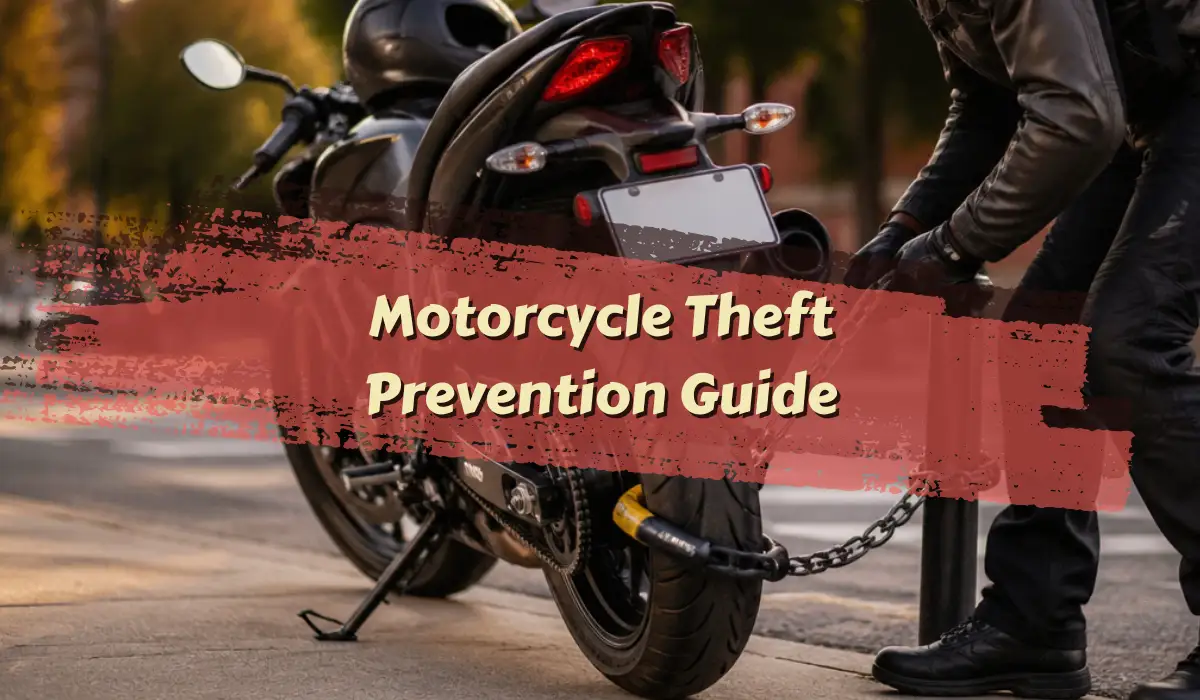
Is motorcycle theft prevention mostly about buying one expensive lock? No. Theft prevention is a system: where you park, how you lock, what layers you combine, and how consistent your routine is.
The best setup is the one you can repeat every day, not the one that only works on paper. This guide gives a practical framework you can apply for quick stops, long parking windows, and overnight storage.
Jump Ahead To:
What a Real Theft-Prevention System Includes
A complete system has four layers:
- physical delay: chain, disc lock, U-lock, or anchor
- audible deterrence: alarm behavior that actually works
- visibility control: cover and parking position choices
- recovery support: tracker and clear ownership records
Start with your best motorcycle locks category hub, then build by parking risk.
The First Rule: Match Security to the Real Threat
Most theft-prevention mistakes start with buying for the wrong scenario. A rider who only makes quick coffee stops does not need the same daily carry routine as someone leaving a bike outside overnight on the street.
That is why the best anti-theft setup is not a single "best" product. It is a system matched to your most common parking pattern, your carry tolerance, and the theft pressure where the bike actually lives.
If the bike sleeps outside, anchoring deserves most of your attention. If the bike mostly sees short public stops, fast repeatable immobilization becomes the bigger priority.
Match Security Depth to Parking Duration
Quick stops
Use a fast immobilizer layer you will always deploy. Convenience matters because skipped locking is the biggest weak point.
Multi-hour street parking
Use anchoring where possible plus a second immobilizer layer.
Overnight outside parking
Use your heaviest practical chain-to-anchor setup plus a secondary lock and alarm/tracker support.
For lock-role differences, compare disc lock vs chain lock for motorcycles.
What Each Security Layer Is Actually For
Physical delay is what forces thieves to spend time, make noise, and use tools. This is the job of chains, anchors, U-locks, disc locks, and other real hardware.
Audible deterrence is there to create attention and stress, not to replace the lock. A good alarm can still be useful, but only after the bike is physically restrained well enough for the noise to matter.
Visibility control is the underrated layer. Covers, smarter parking position, and avoiding obvious display spots help stop your bike from becoming the easiest target in the first place.
Recovery support matters because even strong prevention is not perfect. Trackers, ownership records, and current bike details help after the theft attempt has already beaten the first three layers.
Step-by-Step Theft Prevention Framework
- Choose the safest practical parking location.
- Anchor the bike to an immovable object when possible.
- Route locks through frame or swingarm, not wheel-only.
- Add a second lock type for delay and tool-switch pressure.
- Arm alarm layer and confirm it is tuned for your environment.
- Cover the bike when practical to reduce model visibility.
- Keep tracker/recovery setup active and maintained.
If your outside routine is still unclear, follow how to lock a motorcycle outside.
The order here is deliberate. Riders often jump straight to alarms or trackers because they feel advanced, but the basic structure still matters more: location, anchoring, routing, then extra layers.
A bad parking spot with expensive electronics is still a bad security setup. A solid physical routine usually outperforms a flashy but inconsistent one.
Lock Layer Recommendations by Role
- Primary anchoring: best motorcycle chain locks
- Fast daily immobilizer: best motorcycle disc locks
- Secondary compact lock: best motorcycle U-locks
- Visible quick-stop deterrent: best motorcycle grip locks
- Home fixed point: best motorcycle ground anchors
For driveway and exposed spot support, wheel immobilization can be added using best motorcycle wheel clamps.
Simple Setups by Parking Scenario
Daily commuter setup
Use a lock you can deploy fast every single time, then add more only if the bike is left exposed for longer stretches. For many riders, that means a disc lock or another fast immobilizer during the day and heavier gear left at home.
Workday or multi-hour street parking setup
This is where anchoring starts to matter more. If there is a legal, solid fixed object, use it. Then add a second lock type so the thief is not solving one hardware problem with one tool.
Home driveway or apartment lot setup
This is the situation where a ground anchor, heavier chain, cover, and alarm or tracker make the most sense together. The gear can stay near the bike, so weight is less of a problem and restraint becomes the priority.
Overnight outside setup
Use your strongest realistic combination: chain to anchor, a second immobilizer, concealment where possible, and recovery support. If the bike regularly sleeps outside, this is the setup that deserves the biggest share of the budget.
What to Buy First If You Are Starting from Zero
Buy the first lock based on your highest-risk routine, not your idealized one. If the bike spends nights outside, start with the anchor-and-chain side of the system. If the bike mostly sees short public stops, start with a dependable fast lock you will actually carry.
Then add the second layer that fixes the first layer's weakness. A disc lock pairs well with anchoring later. A heavy chain setup pairs well with a lighter day-use lock later.
That is usually a better path than buying one expensive item and expecting it to cover every situation perfectly.
Alarm and Electronics Strategy
Alarms work best as deterrence and attention tools, not as your only security layer. Tune sensitivity based on your real parking environment.
If you keep getting nuisance alerts, use the motorcycle alarm false-trigger fixes guide before replacing hardware.
Keyless ignition, immobilizers, and tracker features can all help, but they should be treated as support layers. They add friction, recovery help, or convenience. They do not replace physically securing the bike well.
This is also where maintenance matters. A dead tracker, a drained alarm battery, or a badly tuned sensor gives riders false confidence while doing almost nothing.
Parking Habits That Matter More Than Riders Expect
Do not make the bike the easiest target in the row. Parking in better-lit, higher-traffic, or more visible areas still matters even when the hardware is good.
Do not skip locks because the stop feels short. Opportunistic theft lives in exactly that gap between intention and routine.
Do not build a system so annoying that you start negotiating with yourself every time you park. Theft prevention is part gear choice and part habit design.
Ownership, Recovery, and Insurance Prep
Prevention is the first job, but recovery prep still matters. Keep current photos of the bike, key details, and ownership records easy to access if you ever need to make a report or claim.
Trackers help most when the rest of your recovery workflow is ready too. If the bike goes missing, you do not want to start hunting for VIN photos, spare-key counts, and recent documentation from memory.
It is also worth knowing what your insurer expects from your lock routine. Some policies care about approved hardware or specific parking conditions, and that is better understood before a claim than during one.
Common Theft-Prevention Mistakes
- Using one lock method for every risk level.
- Prioritizing lock specs over daily usability.
- Parking in low-visibility spots for convenience.
- Relying on steering lock as primary defense.
- Ignoring alarm tuning and battery health.
- Skipping security layers during "short" stops.
Safety and Ownership Notes
Heavy lock systems can reduce risk but increase carry burden. Build a setup you can deploy safely and consistently.
Also keep proof-of-ownership records current. Recovery and insurance processes are harder when documentation is incomplete.
If you carry heavy locks on the bike, do it in a way that does not create a new hazard for you. A theft-prevention setup should be hard on thieves, not unsafe for the rider using it.
Practical Daily Checklist
- Parking spot is visible and not isolated.
- Primary lock deployed.
- Secondary lock deployed when risk is medium or high.
- Alarm armed and settings validated.
- Cover used when practical.
- Tracker active and phone alerts enabled.
Frequently Asked Questions
What is the single most important theft-prevention step?
Locking to an immovable object when possible, then layering from there.
Are alarms enough to stop theft?
No. They are useful deterrents but should be paired with physical locks.
Should I use different lock setups for day and night?
Yes. Overnight and long parking periods usually need stronger layered security.
Is a bike cover really part of theft prevention?
Yes. It reduces visibility and makes quick target selection harder.
What should I buy first if I am starting from zero?
Start with one reliable lock you will use every time, then add layers based on risk.
Can I rely on insurance instead of heavy lock routines?
Insurance helps financially, but prevention still matters because claims and recovery are never guaranteed.
How often should I review my security setup?
Review whenever your parking routine, location risk, or bike hardware changes.
Use this guide with the best motorcycle alarms guide and how to lock a motorcycle outside to keep your daily routine practical and repeatable.