

Motorcycle alarms can add a strong deterrent layer, but only when they are loud enough, tuned correctly, and installed cleanly. A bad setup creates constant false triggers, and most riders end up disabling the system.
This guide breaks down the best motorcycle alarms by real parking use so you can pick one that is practical to live with. For complete lock and alarm strategy, start with best motorcycle locks.
Jump Ahead To:
Quick Picks
- Best Overall: PADONOW Wireless Remote Alarm
- Budget Pick: BAITHNA DC12V Motorcycle Alarm System
- Premium Pick: USUPERINK Bike Alarm Kit
- Best for Urban Parking: RUPSE Motorcycle Alarm System
Best Overall
Budget Pick
Premium Pick
Best for Urban Parking
Comparison Table
| Product | Best For | Alarm Output | Key Strength | Main Tradeoff |
|---|---|---|---|---|
| PADONOW Wireless Alarm | all-around use | 115 dB | USB-C rechargeable motion alarm with remote control | mounting and sensitivity tuning still matter |
| BAITHNA DC12V System | budget wired setup | 125 dB | cut-power anti-hijack function with remote controls | install quality and AC/DC matching matter |
| USUPERINK Alarm Kit | premium flexibility | 113 dB | multipurpose kit with 66-foot remote range | less plug-and-play than basic compact alarms |
| RUPSE Alarm System | urban street parking | 125 dB | loud 12V alarm with five-level sensitivity control | can over-trigger without proper sensitivity setup |
Quick Decision Guide
Pick PADONOW for balanced loudness, compact size, and easy daily operation. Pick BAITHNA if you want a low-cost wired system with strong output.
Pick USUPERINK for a more flexible multi-device alarm package with useful remote behavior. Pick RUPSE if you need loud urban deterrence and broad 12V compatibility.
If you leave the bike outside for long stretches, do not treat the alarm as the whole plan. Start with the main motorcycle lock guide so the noise layer sits on top of a real physical barrier.
If recovery matters after the bike moves, add one of the options from best motorcycle GPS trackers. If the bike sits in plain view every night, a simple cover from the motorcycle cover buying guide can cut visual attention before the alarm ever needs to work.
Best Motorcycle Alarms 2026
1 / 4
PADONOW Wireless Remote Alarm
Focus
Balanced wireless vibration alarm for everyday motorcycle security
Build
Compact sensor unit with remote controls and adjustable volume
Use Case
Riders needing easy install and consistent daily deterrence
Tradeoff
Requires careful placement to avoid nuisance triggers
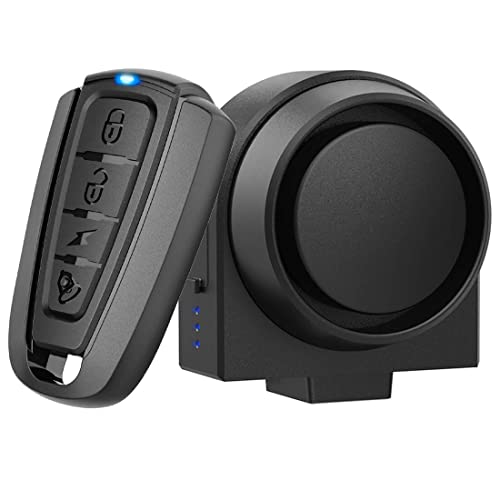
PADONOW is the best all-around pick because it offers enough loudness for deterrence while staying simple to operate. The compact body is easy to hide under a seat, inside a tail section, or behind bodywork where it is less obvious to tamper with.
The rechargeable battery, remote control, and adjustable volume make it easy to live with on a daily rider. As with all vibration alarms, placement and sensitivity tuning are the difference between a useful alert and a siren that goes off every time a truck rolls past.
Why It Wins:
- 115 dB siren is loud enough for daily deterrence without a hardwired install.
- Compact body is easy to mount discreetly with straps or adhesive.
- USB-C rechargeable battery avoids tapping into the bike’s wiring.
What You Give Up:
- Needs proper mounting location for best results.
- Wireless setup still needs sensitivity tuning time.
Bottom Line: A practical choice for riders who want a compact alarm that is easy to live with once sensitivity is dialed in.
2 / 4
BAITHNA DC12V Motorcycle Alarm System

Focus
Affordable wired motorcycle alarm with remote controls
Build
12V anti-theft module with multi-level sensitivity and horn output
Use Case
Riders wanting low-cost wired alarm integration
Tradeoff
Wiring quality and installation skill heavily affect outcomes
BAITHNA is the budget wired choice for riders who want a classic 12V alarm setup without spending much. It gives you remote operation, 125 dB output, and an anti-hijack cut-power function in a lower-cost package.
Its value depends on installation quality. The listing calls out AC and DC setup differences, so this is the kind of alarm that works best for riders who are comfortable following a wiring diagram instead of sticking a small module under the seat and calling it done.
Why It Wins:
- 125 dB horn adds real noise once the system is wired in correctly.
- Remote controls and turn-signal flashing add a more complete alarm response.
- Anti-hijack cut-power mode gives it a stronger theft-deterrence feature set than a basic siren.
What You Give Up:
- Setup is less forgiving than simple wireless units.
- Reliability depends heavily on install discipline.
Bottom Line: Choose this if you are comfortable with a wired install and want stronger alarm output without spending much.
3 / 4
USUPERINK Bike Alarm Kit

Focus
Premium flexible vibration-alarm kit for motorcycles and similar vehicles
Build
Remote-enabled motion alarm with broad compatibility and range
Use Case
Riders who want multi-use alarm flexibility across vehicles
Tradeoff
Setup is slightly more involved than basic single-unit alarms
USUPERINK is the premium pick for riders who want a more flexible alarm kit instead of a one-bike-only module. It works across motorcycles, scooters, e-bikes, and similar small vehicles, which is useful for mixed-vehicle garages.
The 113 dB output, seven sensitivity levels, three volume levels, and 66-foot remote range give you more tuning room than the most basic alarm pods. It is best for riders who do not mind spending a few extra minutes dialing in where the unit sits and how sharply it reacts.
Why It Wins:
- Seven sensitivity levels and three volume levels give you more setup control than basic alarm pods.
- 66-foot remote range is enough for common parking-lot use.
- One unit can move between motorcycles, scooters, and e-bikes.
What You Give Up:
- Slightly more setup work than basic alarm units.
- Not a fixed hardwired OEM-style integration.
Bottom Line: A good fit for riders who want one flexible alarm kit they can reuse across more than one bike or scooter.
4 / 4
RUPSE Motorcycle Alarm System

Focus
Urban-focused 12V anti-theft alarm for broad bike compatibility
Build
Loud 125 dB output with remote controls and signal support
Use Case
Street-parked motorcycles needing aggressive audible deterrence
Tradeoff
High sensitivity can require careful tuning to avoid false alerts
RUPSE is a strong urban pick because it pushes loud output and broad 12V compatibility across common motorcycle brands. For riders parking in busy public areas, that louder deterrent layer can be useful.
It also gives you five sensitivity levels, remote control functions, and a waterproof all-in-one unit. The key is tuning it so it reacts to real tampering instead of every random bump, wind shake, or parking-lot vibration.
Why It Wins:
- 125 dB horn is loud enough to stand out in exposed street parking.
- Five sensitivity levels let you tune it for calmer or busier parking spots.
- Broad 12V fit works across many common motorcycle brands.
What You Give Up:
- Can over-alert when sensitivity is set too high.
- Wired setup quality directly affects consistency.
Bottom Line: A strong fit for riders who street-park often and want louder deterrence, as long as they take time to tune sensitivity properly.
Use-Case Picks
Daily commuting
Pick PADONOW for easier day-to-day operation and cleaner quick setup. It makes sense when you want something small, rechargeable, and easy to mount without turning the install into a weekend wiring project.
Street parking
Pick RUPSE or BAITHNA for stronger 12V alarm output in exposed areas. Both fit riders who want a louder horn and remote arm/disarm control on a bike that sees regular curbside parking.
High-theft areas
Pair alarm systems with physical barriers from best motorcycle chain locks and best motorcycle disc locks.
Apartment parking
Pick a compact alarm first, then build around the space you actually have. If you cannot anchor to the ground, compare disc lock vs chain lock for motorcycles so you do not buy a chain setup that is miserable to carry every day.
Home parking
If the bike sleeps in one spot every night, a wired alarm makes more sense once you add a fixed barrier. Start with best motorcycle ground anchors or a best motorcycle wheel clamp setup so the alarm is warning you about a bike that is still physically trapped.
Where Motorcycle Alarms Help Most
Motorcycle alarms work best when someone has to touch, move, or rock the bike to start the theft. That makes them useful for short street stops, apartment lots, office parking, and any place where noise draws attention fast.
They are much weaker against fast lift-and-load theft when the bike can be picked up and shoved into a van before anyone reacts. In that situation, an alarm buys time, but the real delay comes from hard hardware such as a chain, disc lock, ground anchor, or wheel clamp.
That is also why the best setup usually mixes deterrence and delay. The alarm creates noise, the lock slows the job down, and a tracker gives you a recovery path if the bike still disappears.
How to Choose a Motorcycle Alarm
Start with installation type. Wireless vibration modules are faster to install, easier to move between bikes, and easier to hide in bodywork. Wired 12V systems make more sense if the bike lives outside often and you want a more permanent remote arm/disarm setup.
Then choose your sensitivity strategy. Too low misses tampering; too high creates constant false alarms. If this is your main pain point, use the motorcycle alarm false-trigger fixes guide before replacing hardware.
Next, look at how you actually park. A loud alarm helps most when the bike is close enough that people can hear it and react. If the bike sits far away overnight, spend at least as much effort on the physical layer as the siren layer.
Power and weather matter too. Rechargeable wireless units are easy to live with when you will actually remember to charge them. Wired units and waterproof housings make more sense if the bike sits outside in rain, heat, and daily use.
For full outside parking workflow, combine this with how to lock a motorcycle outside and the motorcycle theft prevention guide.
Common Setup Mistakes That Ruin Alarm Performance
The most common failure is treating sensitivity like a set-it-and-forget-it number. Parking beside a busy road, in a breezy carport, or on a shaky apartment deck usually needs a lower setting than a quiet garage.
Another mistake is assuming the alarm replaces the lock. If the bike can still roll away or get lifted cleanly, the siren becomes a warning instead of a barrier. That is why riders who park outside a lot often end up happier with a layered setup than with a louder alarm alone.
The last mistake is ignoring fit and install details. Wired systems need the right voltage setup and cleaner routing. Wireless systems need a mounting spot that hides the unit but still lets the sensor react consistently.
When To Skip Alarm-First Shopping
If your budget only covers one security purchase, buy the physical lock first. A best motorcycle u-lock or chain usually changes theft difficulty more than a siren by itself.
If the bike spends most of its time at home in one fixed parking spot, you may get more real security from a ground anchor, chain, or wheel clamp before you spend money on an alarm upgrade. The alarm still helps, but it should support the barrier instead of replacing it.
Frequently Asked Questions
Do motorcycle alarms stop theft by themselves?
They help deter and interrupt attempts, but physical lock layers are still essential.
Are wireless alarms reliable enough for motorcycles?
Yes, when mounted and tuned properly for your bike and parking environment.
How loud should a motorcycle alarm be?
Louder systems usually deter better in public spaces, but tuning matters to avoid nuisance alerts.
Should I choose wired or wireless alarm systems?
Choose wired for deeper integration and wireless for easier installation and portability.
Why does my alarm trigger randomly?
Common causes are high sensitivity, poor mounting, loose wiring, or noisy parking environments.
Can I use the same alarm on scooters and motorcycles?
Many universal systems support both when voltage and mounting needs are compatible.
What should I pair with a motorcycle alarm?
At least one physical lock layer such as a chain, disc lock, or ground-anchor setup.
To build a full anti-theft stack, pair this guide with best motorcycle locks, best motorcycle grip locks, and best motorcycle ground anchors.