
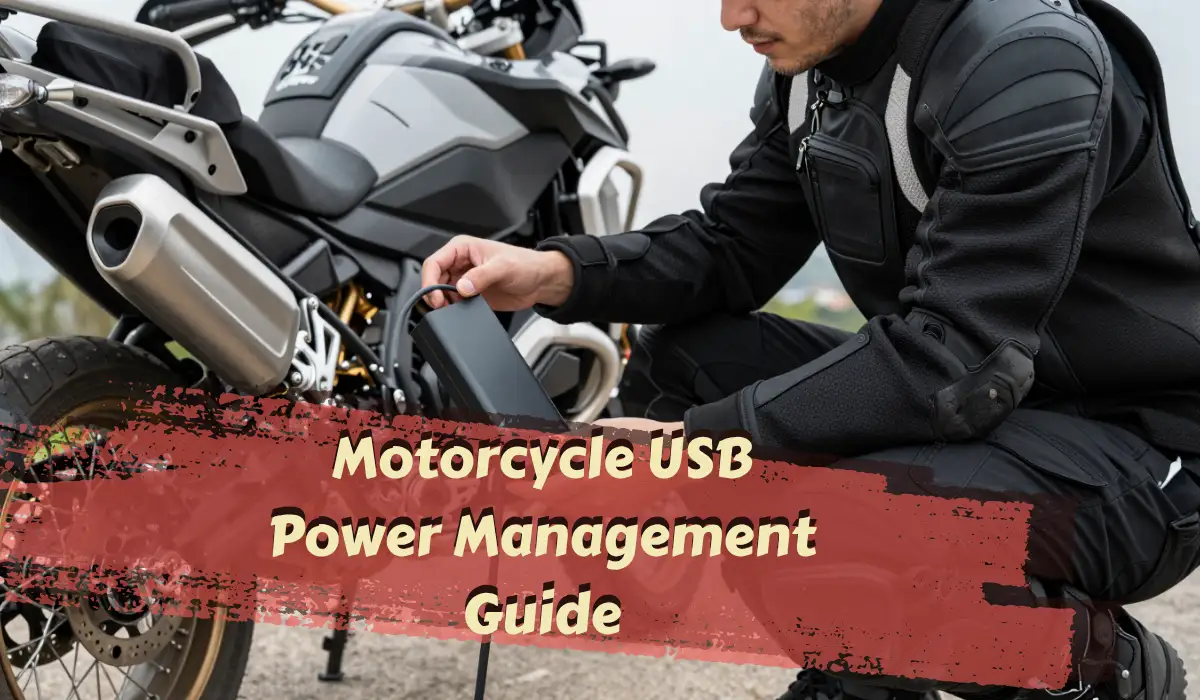
Motorcycle USB power management decides whether your charging setup is reliable or a constant battery problem. Many riders install a charger that works for a week, then deal with dead batteries, weak charging, or random electrical noise. This guide shows how to wire USB power the right way.
If you are selecting chargers and electronics now, combine this with best motorcycle USB chargers, motorcycle electronics setup guide, and best motorcycle gps.
Jump Ahead To:
What USB Power Management Really Means
USB power management is not only about charging speed. It includes how power is sourced, how it shuts off, how wiring is protected, and how stable power stays under vibration and weather.
The most common failure is parasitic drain from always-live chargers or poor wiring. On small motorcycle batteries, even around 20 mA of standby draw can create starting problems in about a week.
Best Wiring Strategy for Most Riders
Use switched power when possible
A switched circuit turns charger power off with ignition, reducing overnight drain risk.
Add fuse protection near battery source
Fuses protect wiring from short circuits. Place the fuse close to the power source, ideally within about 12 to 18 inches of the battery or main feed.
Use relay when load or complexity increases
Relay control helps isolate accessory power and avoid stressing factory circuits. A switched trigger from a tail light or accessory wire is the usual clean way to do this.
Power Method Options
Direct to battery
Simple, but highest risk for parasitic drain unless the charger has a real switch, very low standby draw, or is only used as a quick-connect adapter.
Switched circuit tap
Better for daily riders because charging turns off when bike is off. This is often enough for a single phone or GPS charger if the circuit has headroom.
Relay-controlled fused feed
Strong option for multi-device setups or higher power demand.
CAN bus controller route
Best on bikes where direct tapping can trigger system errors.
Charger Features That Matter Most
- weather protection (at least practical motorcycle-level sealing)
- IP65 minimum for exposed use, with IP67 better for wet all-season riding
- stable output under vibration
- visible battery voltage if possible
- real switch control for parked-bike protection
- quality connectors and cable strain relief
For product choices by use case, compare best motorcycle USB chargers and best rugged power banks for motorcycle camping.
Electrical Noise and Interference
Cheap converters can create radio-frequency noise that affects comms, radio, or GPS behavior. If you hear static or see unstable signal behavior after installing USB power, suspect charger quality or cable routing first.
Better filtering and cleaner routing usually solve most of these problems. Ferrite beads on the power lead or USB cable can help, but the better fix is usually a cleaner charger and smarter cable placement.
Practical Install and Test Flow
- Plan charger location and cable path.
- Install the fused power feed and switching method, with the fuse close to the battery source.
- Route away from heat and steering movement points.
- Seal and support all connections.
- Test charge performance at ride RPM and confirm the bike stays above about 13.5V under load.
- Confirm no key-off battery drain beyond normal bike draw. Under 50 mA total is the practical ceiling.
If your cockpit includes phone and dash hardware, finalize around best motorcycle phone mount and best motorcycle dash cams.
Common Problems and Fixes
Battery dies after a few parked days
Cause: parasitic draw from always-live charger. Fix: switch to ignition-switched or relay-controlled power.
Phone still drains while navigating
Cause: charger output too weak for active map + screen load. Fix: move to stronger output charger and clean wiring path.
Random static in comms or radio
Cause: noisy converter or poor cable routing. Fix: improve hardware quality and routing, then add ferrite beads or other filtering if needed.
Charger cuts in and out while riding
Cause: weak ground, loose connection, or vibration stress. Fix: rework ground and connector quality, add strain relief.
Safety Rules
- Never run unfused positive feeds.
- Use a fuse sized for the charger and wire, not the biggest spare fuse you have. For many single USB circuits, that means about 3A to 5A.
- Do not overload thin wires with high-current demands.
- Avoid tapping critical factory control circuits.
- Confirm full steering movement before finalizing cable ties.
- Test system with bike running, not only at idle.
If your phone, GPS, and helmet audio all rely on the same bike power plan, pair this with GPS vs phone navigation for motorcycles and helmet comms installation and audio tuning.
Frequently Asked Questions
Can a USB charger drain my motorcycle battery when parked?
Yes. Always-live chargers can create enough draw to cause starting issues.
Is switched power better than direct battery wiring?
For most riders, yes. Switched power reduces parasitic drain risk.
Do I need a relay for a single USB charger?
Not always, but relays become useful as load and accessory count increase.
What fuse size should I use for motorcycle USB charging?
Use a fuse matched to charger draw and wire capacity, with a little safety margin. For many single USB circuits, 3A to 5A is the normal range.
Why does my GPS lose signal when charging?
Electrical noise from low-quality converters can interfere with electronics. A better charger, cleaner routing, and ferrite beads are the usual fixes.
Should I choose USB-C charging for modern setups?
Usually yes, especially for newer phones and faster charging demands.
Is a power bank still useful if bike USB is installed?
Yes. A power bank is still valuable for backup and camp charging.
For fewer cockpit problems later, choose motorcycle Bluetooth headsets that match your riding, wire motorcycle dash cams cleanly, and protect your phone camera with the motorcycle mount vibration guide.