
Quiet motorcycle helmets matter because wind noise wears you out long before most riders notice what is happening. A helmet that fits badly, seals badly, or sits in dirty air can turn a normal ride into a loud, tiring mess even if the shell looks good on paper.
This guide focuses on helmets that make more sense for riders chasing lower fatigue and calmer freeway miles. If you are still deciding between shell styles, start with the main motorcycle helmet guide, then compare it with the full-face helmet roundup and the modular helmet picks. Noise is never just the helmet, so it also helps to read how to reduce helmet wind noise before you buy.
Jump Ahead To:
Quick Picks
- Best Overall: HJC RPHA 71 Solid Motorcycle Helmet with HJ-40 Pinlock Shield, DOT Approved (Black, X-Large) – Best all-around mix of road comfort, visor convenience, and calmer daily use.
- Best Value: Shoei RF-1400 Full Face Motorcycle Helmet – Best value for riders who want a serious quiet-road full-face lid without moving to a touring modular.
- Premium Pick: Shoei GT-Air 3 Realm Full Face Motorcycle Helmet – Best premium touring-style choice for riders chasing cleaner highway miles.
- Best for Daily Use: Shoei Neotec 3 Modular Motorcycle Helmet – Best for riders who want lower fatigue plus flip-up convenience.
Best Overall

HJC RPHA 71 Solid Motorcycle Helmet with HJ-40 Pinlock Shield, DOT Approved (Black, X-Large)
Best Value
Premium Pick
Best for Daily Use
Comparison Table
| Product | Best For | Key Strength | Main Tradeoff |
|---|---|---|---|
| HJC RPHA 71 Solid Motorcycle Helmet with HJ-40 Pinlock Shield, DOT Approved (Black, X-Large) | all-around mixed riding | strong visor feature set with touring-friendly road manners | still needs careful fit matching to stay quiet |
| Shoei RF-1400 Full Face Motorcycle Helmet | lower-fatigue daily road use | refined full-face shell for repeat highway and commuting miles | snug fit can be a deal-breaker for some heads |
| Shoei GT-Air 3 Realm Full Face Motorcycle Helmet | premium long-distance use | aerodynamic touring bias with integrated convenience | premium cost and still not silent on every bike |
| Shoei Neotec 3 Modular Motorcycle Helmet | repeat daily riding | modular convenience with stronger road-focus than cheap flip-ups | heavier and pricier than simple full-face options |
Quick Decision Guide
If you want the safest all-around pick in this file, start with the RPHA 71. If you prefer a pure full-face shell and want a strong daily road helmet, the RF-1400 is the better value lane. If long highway days are common and you are willing to pay for a more touring-focused setup, move to the GT-Air 3.
If your rides include fuel stops, glasses, city errands, and the kind of daily use where a flip-up shell makes life easier, the Neotec 3 deserves the first look. If heat matters as much as noise, compare these with the hot-weather helmet picks. If commuting is your main use case, the commuting helmet roundup is the next good filter. Riders who wear glasses for every ride should also compare the helmets for glasses guide, because temple pressure can erase the benefit of an otherwise calm shell.
Best Quiet Motorcycle Helmets 2026
1 / 4
HJC RPHA 71 Solid Motorcycle Helmet with HJ-40 Pinlock Shield, DOT Approved (Black, X-Large)
Focus
Feature-rich full-face helmet with sun visor and Pinlock-ready shield
Comfort
Push-release shield lock and daily-use visor convenience
Use Case
Riders wanting calmer road miles without losing everyday practicality
Tradeoff
Quiet performance still depends on how well the shell matches your head shape
The RPHA 71 earns the top spot because it makes the most sense for riders who want a quieter-feeling street helmet without stepping into a heavy, overbuilt touring shell. The feature set matters here: built-in sun visor, Pinlock-ready shield, and a more daily-friendly full-face layout help reduce the little annoyances that make loud rides feel even worse.
It fits best for riders who do mixed city and highway miles and want one helmet that feels calm enough for long use without becoming a niche touring-only lid. The caution is the same one that applies to every "quiet" helmet: if the shell shape does not seal well around your head and neck, the noise gains shrink fast.
Why It Wins:
- Strong balance of road comfort and daily visor convenience.
- Better all-around choice than a helmet that is quiet but annoying to live with.
- Good fit for riders who split city and highway time.
What You Give Up:
- Still depends heavily on getting the right size and shape match.
- Not a magic fix if your bike creates very dirty airflow.
Bottom Line: Best overall for riders who want a calmer helmet without giving up the convenience features that make daily use easier.
2 / 4
Shoei RF-1400 Full Face Motorcycle Helmet

Focus
Premium full-face road helmet with compact shell design
Comfort
Lightweight layout suited to repeat road use
Use Case
Riders who want a serious quiet-road full-face helmet
Tradeoff
Fit runs snug, especially around the cheeks for some riders
The RF-1400 is the value pick because it gives you the kind of refined full-face road behavior many riders are actually looking for when they say they want a quiet helmet. It is a serious everyday road lid, not a gimmick built around one talking point.
That makes it the right move for riders who want a quieter-feeling helmet but do not need modular convenience. If your rides are mostly highway, commuting, and normal street miles, it is easier to justify than a cheaper helmet that never quite settles down in the wind. The tradeoff is fit. If Shoei shape misses your head, this stops being a value fast.
Why It Wins:
- Strong full-face road manners for repeat highway use.
- Better value than buying cheap and replacing later.
- Good choice if your main problem is road fatigue, not gadget features.
What You Give Up:
- Snug fit can rule it out for some riders.
- Costs more than entry-level lids even before visor extras.
Bottom Line: Best value for riders who want a refined, quieter full-face helmet and do not need the flip-up convenience of a modular shell.
3 / 4
Shoei GT-Air 3 Realm Full Face Motorcycle Helmet

Focus
Premium full-face touring helmet with aerodynamic road bias
Comfort
AIM shell and multi-density EPS layout
Use Case
Longer road riders who want lower fatigue and better touring manners
Tradeoff
Premium price and still not silent if your bike throws rough air at helmet height
The GT-Air 3 is the premium option for riders who spend real time on faster roads and want a helmet built around cleaner long-distance use. It makes more sense as a touring-minded buy than as a short-hop city helmet, because that is where its aerodynamic and road-comfort priorities matter most.
That does not mean it turns the world quiet. No helmet does that on every bike. What it does do is give riders a better shot at calmer highway miles when the fit is right and the rest of the setup is sensible. That is enough to make it the premium pick here, even with the higher price.
Why It Wins:
- Better fit for longer road days than pure city-focused lids.
- Premium touring bias makes sense if fatigue is your enemy.
- Strong choice when visor convenience and cleaner airflow both matter.
What You Give Up:
- Costs enough that a bad fit is especially painful.
- Still needs help from earplugs and a decent screen setup.
Bottom Line: Premium pick for riders who want a quieter-feeling touring helmet and are willing to pay for a more road-focused package.
4 / 4
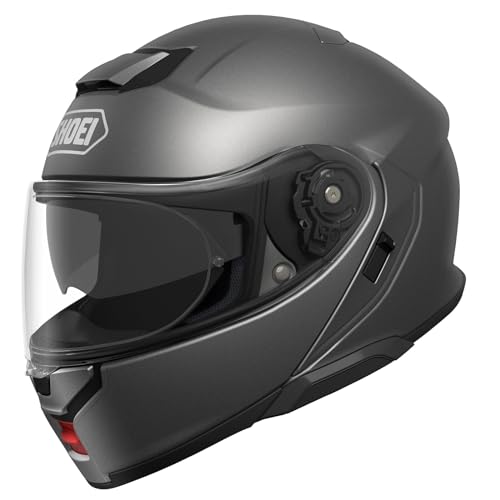
Shoei Neotec 3 Modular Motorcycle Helmet
Focus
Road-focused modular helmet with Pinlock-ready shield
Comfort
Daily-use modular convenience with touring-minded hardware
Use Case
Riders who want lower fatigue plus easy in-and-out daily use
Tradeoff
Heavier and pricier than a simpler full-face alternative
The Neotec 3 is the right answer for riders who know they want modular convenience but still care a lot about road comfort and noise control. Cheap modular helmets usually give up too much in bulk, sealing, and refinement. This one is for riders trying to avoid that trap.
That is why it fits daily commuting, fuel-stop-heavy rides, and riders who wear glasses or like the ease of a flip-up shell. It is not the lightest or cheapest quiet helmet here, but it is the one that best combines lower-fatigue road use with practical daily modular ownership.
Why It Wins:
- Better modular road manners than bargain flip-up helmets.
- Easier daily ownership for commuters and glasses wearers.
- Strong fit for riders who stop often and still want calmer freeway use.
What You Give Up:
- More weight than a comparable full-face helmet.
- Price climbs fast if you mainly ride short local miles.
Bottom Line: Best for daily use if you want a modular helmet that still feels serious about road comfort and noise control.
How to Choose a Quiet Helmet
Start with fit, not marketing. A helmet that seals well around your cheeks, crown, and neck usually matters more than a fancy "quiet" claim. That is why how to size a motorcycle helmet should come before checkout, not after it.
Then look at shell style. Full-face helmets usually give you the easiest path to lower noise. Modular helmets can still work well, but they ask more of the design and more of your fit. If you are not sure which lane fits your riding, compare the full-face options with the modular helmet roundup before you commit.
Finally, remember that the bike matters too. Windshield height, rider posture, earplugs, and neck sealing all change what "quiet" feels like. That is why how to reduce motorcycle helmet wind noise, how to stop helmet fogging, helmet speakers vs earbuds, and when to replace a motorcycle helmet belong in the same buying process.
Common Mistakes Riders Make
- Buying the most expensive helmet and skipping the fit check.
- Expecting a helmet alone to fix bad windshield turbulence.
- Ignoring earplugs while chasing "quiet."
- Buying a modular shell when a full-face lid would suit the ride better.
- Judging quiet only at parking-lot speed.
Frequently Asked Questions
What makes a motorcycle helmet feel quiet?
Good fit, clean airflow, decent neck sealing, and a shell design that does not get pushed around by wind all help.
Are full-face helmets quieter than modular helmets?
Usually yes, but a well-designed modular can still work very well if the fit is right.
Can I make a loud helmet quieter?
Sometimes. Earplugs, better windshield setup, and cleaner neck sealing can help a lot.
Does a quiet helmet also stop fogging?
Not automatically, but better visor systems and Pinlock-ready shields often help both fatigue and bad-weather usability.
Should commuters buy for noise first?
If you spend a lot of time at freeway speed, noise control should be near the top of the list.
Is a quiet helmet worth spending more on?
Yes, if you ride enough that lower fatigue, calmer airflow, and better daily comfort actually change the quality of your rides.
If your rides are mostly city miles, compare the commuting helmet roundup. If heat matters as much as noise, use the hot-weather helmet picks. If you are still deciding between shell types, go back to the main helmet guide. For setup help after you buy, read how to reduce wind noise.