
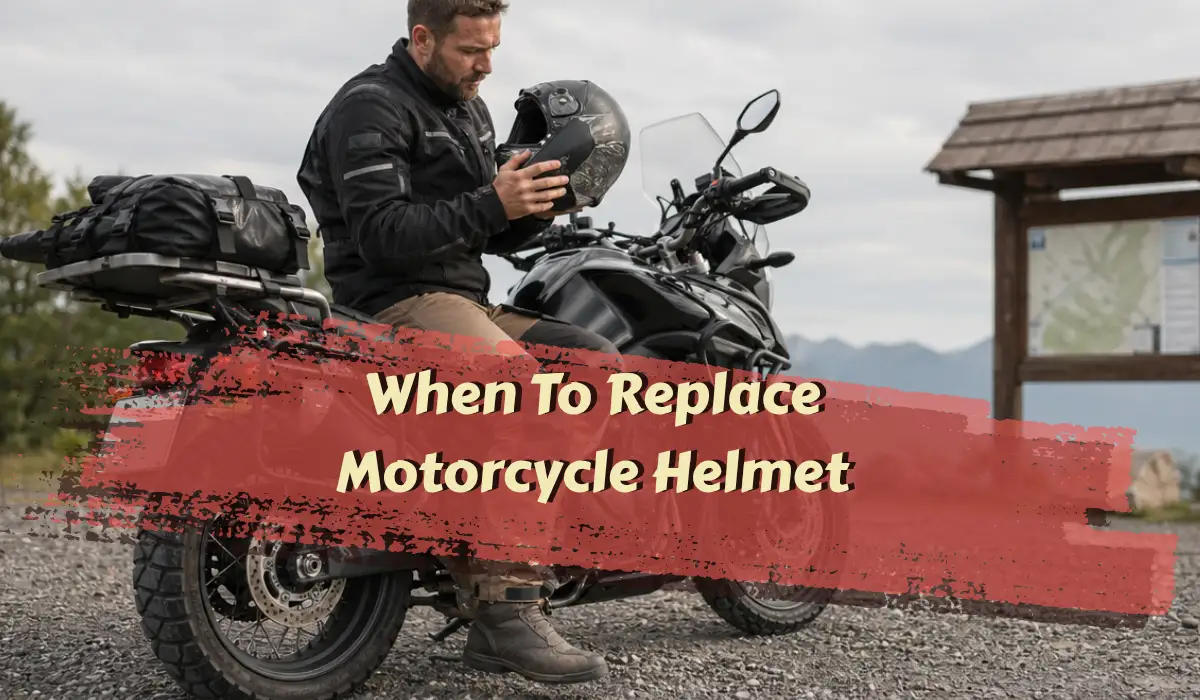
When should you replace a motorcycle helmet? Sooner than a lot of riders want to hear. A helmet is not a forever piece of gear, and waiting too long means trusting old foam, worn seals, and tired strap hardware with your head.
The good news is that the replacement triggers are pretty clear once you know what to look for.
Jump Ahead To:
The General Age Rule
For most riders, the useful life of a helmet is measured in years, not decades. A common replacement window is around five years of regular use, with many riders also checking the manufacturing date so an older helmet that sat on a shelf too long does not stay in service forever.
That rule exists because liners, adhesives, and comfort materials age even when the helmet looks fine from the outside. Sweat, oils, heat, UV exposure, and regular wear all slowly chip away at how the helmet performs.
If you are not sure how old your helmet really is, check the inside labels and the chin strap area. That date matters more than your memory of when you bought it used or found it in storage. If you want the broader context behind that timeline, motorcycle helmet safety ratings covers why aging materials matter even before a shell looks obviously worn out.
Replace It Immediately After a Real Crash
If you crashed with the helmet on your head, replace it. That is the easy rule.
The EPS liner inside a helmet is built to crush and manage energy once. It does not magically bounce back to original condition after a meaningful impact, even if the shell still looks pretty normal. Counterfeit or novelty shells make this even riskier, which is one reason how to spot a fake motorcycle helmet matters before you ever trust a used or bargain-bin lid.
That is why "it looks fine" is not a serious test after a crash.
A Hard Drop Can Matter Too
Riders argue about garage drops all the time. A minor empty helmet tumble from a seat is not the same as a crash, but a hard drop onto concrete can still be a reason to inspect carefully and replace if anything seems off.
If the shell is cracked, the liner feels damaged, the visor mechanism loosened up, or the strap hardware looks stressed, stop talking yourself into keeping it.
Replace It If the Fit Has Broken Down
A helmet can age out without ever crashing. If the padding has packed down so much that the helmet shifts, rolls, or lifts more than it used to, the protection has already started moving in the wrong direction.
This is especially easy to ignore on helmets you wear all the time. The fit loosens slowly, so riders adapt to it instead of recognizing that the helmet no longer sits as securely as it should. If you are not sure whether the helmet is actually worn out or just was never fitted well, recheck the basics in how to size a motorcycle helmet.
If the shell now feels loose around the cheeks, crown, or jawline, and new pads will not honestly fix it, replacement is the safer call.
Damage Signs That Mean Stop Using It
Replace a helmet if you find any of these:
- shell cracks
- crushed or damaged EPS liner
- broken visor pivots or retention hardware
- frayed or weakened chin strap parts
- major seal failure that shows the helmet is wearing out everywhere else too
Some of these are repairable in theory. In practice, a helmet with multiple signs of age or damage is usually telling you the story already.
Chemical and Heat Damage Count Too
Fuel, strong solvents, harsh cleaners, and heavy heat exposure can damage shell materials, seals, and foam even when the helmet never crashes. A helmet left near an exhaust, soaked with bad chemicals, or stored carelessly in brutal heat ages faster than riders think.
That is one reason regular care matters. If you have been cleaning it with the wrong products, revisit how to clean a motorcycle helmet and be honest about whether the helmet is still worth saving.
Used Helmets Are a Gamble
A used helmet might look clean and still hide the exact history you need to know: crashes, drops, chemical exposure, age, and storage conditions. That is why used helmets are hard to recommend unless you know the owner and the history in detail.
If you do not know the story, assume the risk is higher than it looks. Riders still comparing shell styles before replacing should also revisit types of motorcycle helmets so they do not swap one compromised helmet for the wrong category altogether.
A Quick Replacement Checklist
Replace the helmet now if any of these are true:
- it is past the normal age window
- it has been through a real crash
- it took a hard drop and now shows any sign of damage
- the fit has become loose and unstable
- the strap, shell, or liner shows real wear or failure
- chemical or heat damage is even a serious possibility
What Riders Get Wrong
The biggest mistake is waiting for obvious shell damage. Helmets often age out inside first.
The next mistake is assuming new cheek pads can fix everything. Sometimes they help. Sometimes they only hide that the rest of the helmet is already tired too. If the helmet is already noisy, loose, and wearing badly around the seals, the warnings in how to reduce motorcycle helmet wind noise often overlap with the signs that it is time to stop nursing an old shell along.
The last mistake is keeping an old "backup" or passenger helmet indefinitely. A spare helmet still has to be a safe helmet.
Frequently Asked Questions
How often should I replace a motorcycle helmet?
For most riders, around five years of use or roughly seven years from the manufacturing date is the common replacement window.
Should I replace a helmet after one crash?
Yes. If the helmet took a real crash with your head inside it, replace it.
What if I only dropped it in the garage?
A minor empty drop is not automatically the end, but inspect it carefully and replace it if anything seems damaged or questionable.
Can a helmet be too old even if it looks fine?
Yes. Liners, adhesives, and fit materials age long before every helmet looks visibly worn.
Is a loose helmet still safe if the shell is fine?
No. If the helmet no longer stays secure on your head, that is already a safety problem.
Is it okay to keep an old helmet as a passenger spare?
Only if it is still within its safe service life and still fits properly.
If you are replacing now, go back to best motorcycle helmet. If you need to confirm the fit on your next one, use how to size a motorcycle helmet and best motorcycle helmets for commuting if your next lid needs to work for daily use.