
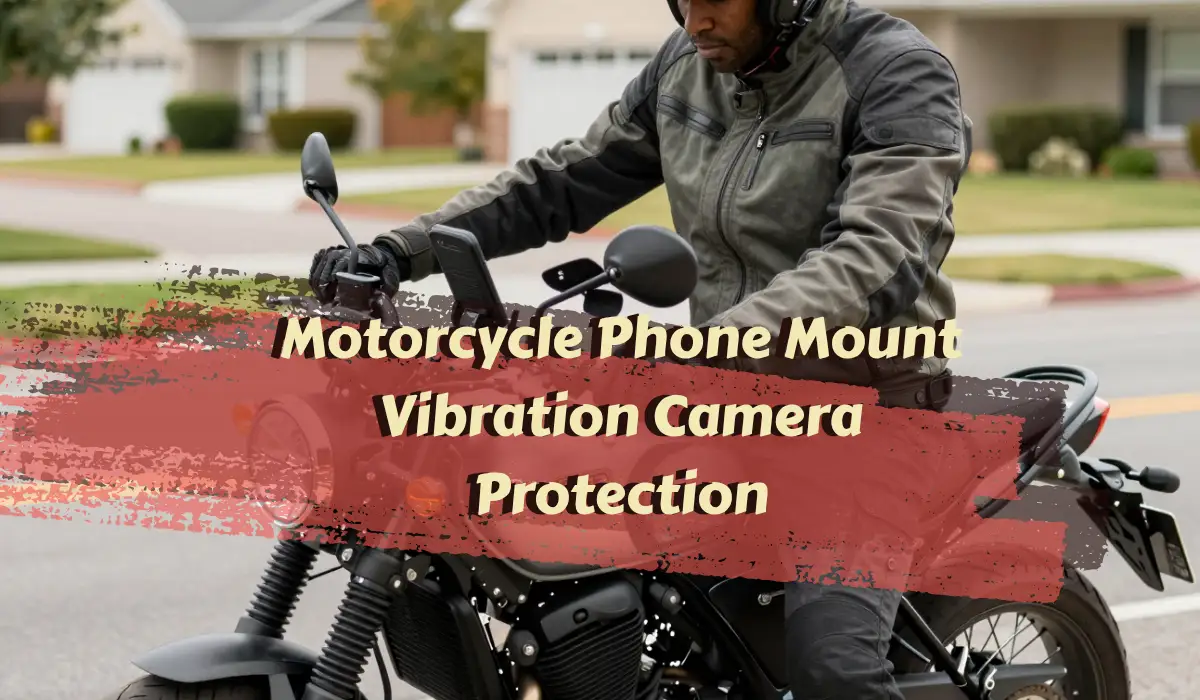
Motorcycle phone mount vibration camera protection is no longer optional for most modern phones. High-frequency engine vibration can permanently damage OIS and autofocus systems when a phone is mounted rigidly. This guide shows how to reduce that risk before your camera fails.
If you are still picking hardware, compare best motorcycle phone mount and gps vs phone navigation for motorcycles first, then decide if best motorcycle gps is a safer long-term path.
Jump Ahead To:
Why Phone Cameras Fail on Bikes
Modern phone cameras use tiny moving components for stabilization and focus. Motorcycle vibration can push those components beyond tolerance over time, especially on high-vibration engines.
The failure signs are usually obvious:
- blurry photos that never sharpen
- focus hunting and shimmering previews
- rattling or unstable camera behavior
Once damage sets in, it is often permanent.
High-Risk Conditions
Risk exists on many bikes, but it increases with:
- high-amplitude engine vibration
- long rides with direct bar-mounted phone exposure
- rigid mounts with no isolation layer
- bar-end or mirror-stem mounting points with higher movement
Even if damage does not happen immediately, repeated exposure adds up.
Core Protection Strategy
1) Use a real vibration dampener
A proper dampener between mount base and phone cradle is the first defense. It reduces the frequency energy reaching camera components.
2) Choose better mount location
Center bar or stable stem positions are usually safer than high-whip points.
3) Keep phone out of direct abuse when possible
A smart-display setup can let you keep your phone in a safer pocket or protected space while still using maps.
4) Check dampener health
Rubber or elastomer parts wear out. Replace damaged dampeners before they stop isolating vibration.
Setup Flow for Better Camera Safety
- Confirm your phone has OIS/advanced autofocus hardware.
- Choose a mount with integrated or add-on dampener support.
- Install mount in a stable cockpit position.
- Test hold strength and vibration behavior on rough roads.
- Re-check camera focus quality after early rides.
If your setup includes charging during navigation, build it with best motorcycle USB chargers and motorcycle USB power management guide so you are not forced into risky mount compromises.
Troubleshooting by Symptom
Camera went blurry after highway rides
Likely vibration damage. Stop direct mounting immediately and test with dampened setup or switch to external display.
Mount feels secure but phone still shakes heavily
Security and vibration isolation are different. You need both. Upgrade to a better dampened system.
Dampener installed but still risky on rough bike
Use a safer mount point, reduce direct exposure time, or move to dedicated nav display.
Phone overheats while mounted
Heat and vibration together are a bad combo. Reduce direct sun exposure and consider mirror-display routing.
Mistakes That Cause Avoidable Damage
- Using a rigid clamp with no dampener on OIS phones.
- Trusting any "motorcycle mount" label without vibration specs.
- Mounting at high-vibration points for convenience.
- Ignoring first signs of camera instability.
- Keeping an expensive primary phone as the only nav device.
Safer Navigation Alternatives
If your rides are long, hot, and rough, direct phone mounting may never be ideal. Many riders get better long-term results with a dedicated GPS or smart display plus protected phone storage.
Make that decision alongside best motorcycle dash cams, the motorcycle electronics setup guide, and helmet comms installation and audio tuning so the whole cockpit works together.
Frequently Asked Questions
Can motorcycle vibration really damage phone cameras?
Yes. Repeated high-frequency vibration can damage OIS and autofocus mechanisms.
Do dampeners fully eliminate camera risk?
No, but they significantly reduce risk compared with rigid mounts.
Are only iPhones affected?
No. Any phone with moving camera stabilization hardware can be affected.
Is mount position as important as dampener choice?
Yes. Some mounting points transmit much more vibration than others.
Should I stop using my phone on the bars completely?
Not always. Many riders are fine with quality dampened setups, but higher-risk use cases may need dedicated displays.
How do I know if my camera is already damaged?
Persistent focus issues, blur, or unstable preview behavior after rides are common warning signs.
What is the safest setup for long touring days?
A dedicated or mirror display setup that keeps your main phone protected is usually safer long-term.
If your phone mount is part of a larger cockpit setup, pair it with motorcycle Bluetooth headsets for audio, rugged power banks for motorcycle camping for backup charging, and helmet comms installation and audio tuning for clearer calls and prompts.