
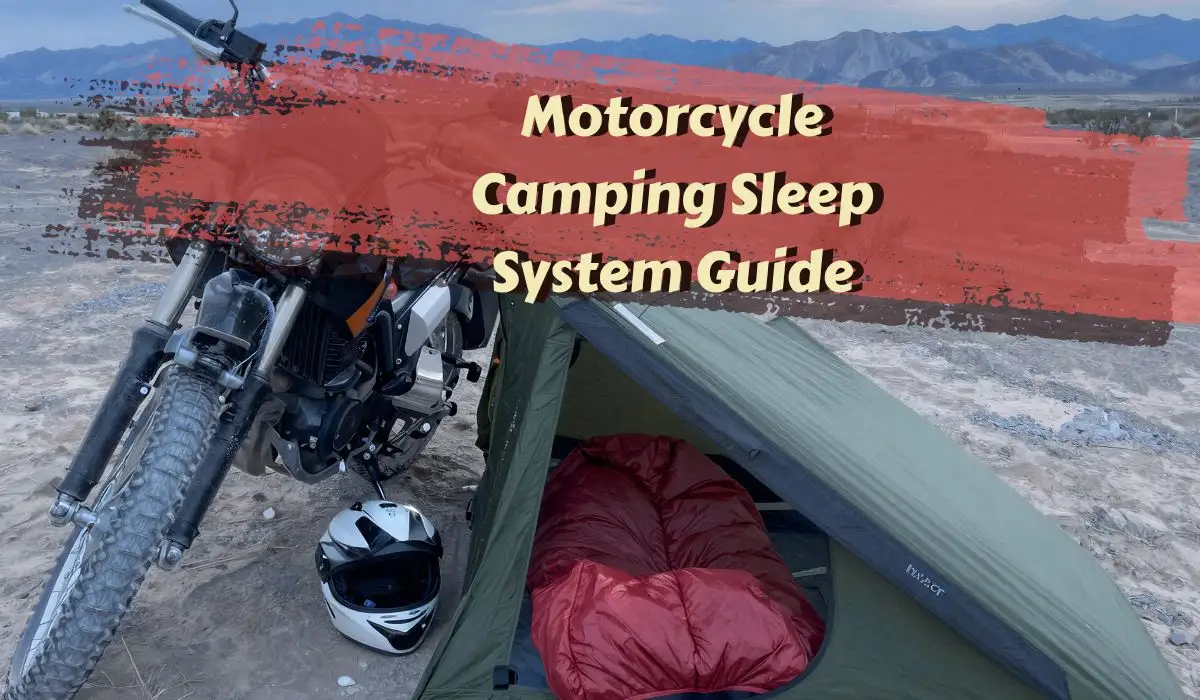
A motorcycle camping sleep system guide is a step-by-step plan for staying warm, dry, and rested without overloading your luggage. If one piece is wrong, you wake up cold and ride tired the next day. This guide helps you match bag, pad, shelter, and packing method as one system. For the bigger category view, start with the main motorcycle camping gear guide.
The system also has to compete honestly with the rest of the bike. A tighter motorcycle camping essentials hierarchy keeps recovery gear high on the list, and better motorcycle camping tips help you protect that sleep setup when weather, fatigue, and late arrivals pile up.
Jump Ahead To:
What a Motorcycle Camping Sleep System Is (and Who Needs It)
Your sleep system is the full combo you use at night: shelter, sleeping bag or quilt, sleeping pad, and pillow.
Most riders focus only on the bag. That is the biggest mistake. If your pad is wrong, you still get cold from the ground even with a warm bag.
If you do overnight rides, this guide is for you. If you do multi-day travel, this is mandatory.
How a Good Sleep System Works
Think in layers.
Layer 1 is ground insulation. This is your pad and its R-value.
Layer 2 is body insulation. This is your sleeping bag or quilt rating.
Layer 3 is weather protection. This is your tent or bivy setup and ventilation control. If you are still deciding shelter shape and packed length, compare motorcycle camping tents.
When all three layers match your conditions, you sleep better and ride better the next day.
If you still need to choose pieces, start with best motorcycle camping sleeping bags and best motorcycle camping sleeping pads.
Step-by-Step Sleep Setup for Motorcycle Travel
1. Set your expected night temperature
Build for the coldest realistic night, not the average forecast.
2. Choose your bag or quilt style
Down packs smaller and lighter. Synthetic handles moisture better and is easier on budget.
3. Choose pad insulation first, then thickness
Comfort matters, but insulation matters more. In cold weather, low R-value pads fail fast.
4. Add a small pillow with real neck support
A good pillow reduces shoulder and neck fatigue after long ride days. If you need options, see best motorcycle camping pillows.
5. Pack your bag for motorcycle space
Stuff your bag instead of rolling it tight into hard folds. Use a waterproof bag or dry storage strategy so insulation stays dry. This works better when your luggage already follows a dry-bag packing method built around sleep gear protection.
6. Set up camp to reduce condensation
Use ventilation in your shelter. Damp air can soak outer bag fabric overnight and kill warmth. A real pillow also helps the full system feel finished, so if neck support is the weak point, compare motorcycle camping pillows.
If your route is dry, windy, or short on easy refill points, your overnight comfort can also depend on hydration discipline. Build that side of the plan with motorcycle camping water strategy before you blame the bag or pad for every rough night.
7. Keep a repair path ready
Carry a pad patch kit. Tiny leaks become major sleep failures if you cannot fix them in camp.
Sleep System Checklist Before Every Trip
- Bag or quilt rated for your expected low temperature.
- Insulated sleeping pad matched to season.
- Pillow packed.
- Dry sleep clothes (no cotton).
- Waterproof storage for insulation.
- Pad repair kit and adhesive.
- Shelter ventilation plan.
Decision Guide: Down vs Synthetic
Choose down if:
- You need smaller pack size.
- You care about lower weight.
- You can keep your sleep kit reliably dry.
Choose synthetic if:
- You expect damp trips often.
- You want lower cost.
- You want easier wash and maintenance.
Both work. The best choice is the one you can pack, protect, and use correctly every night.
Safety and Care Rules That Prevent Failure
Do not store your bag compressed for long periods at home. Long-term compression damages loft.
Do not treat extreme ratings as comfort ratings. Build your real comfort margin above that line.
Do not sleep in sweaty cotton layers. Change into dry base layers before bed.
Do not ignore condensation. Wet insulation means less warmth and worse recovery.
Common Sleep System Mistakes (and Fast Fixes)
Mistake: Buying for price only
Fix: Buy for your conditions first, then tune weight and size.
Mistake: Choosing pad thickness without checking insulation
Fix: R-value drives warmth against ground cold.
Mistake: Packing your sleep kit where it can soak
Fix: Protect insulation in waterproof storage every day, not only when rain starts.
Mistake: No field repair plan
Fix: Carry a patch kit and know your repair steps before the trip.
Mistake: Overloading one side of the bike with bulky sleep gear
Fix: Pack light but bulky items high and centered when possible to keep handling stable.
Frequently Asked Questions
Why do riders get cold even with a warm sleeping bag?
Most heat loss comes from the ground when pad insulation is too low.
Is down always better for motorcycle camping?
Down is better for pack size and weight. It is not better if you cannot keep it dry.
What matters more: sleeping bag rating or pad insulation?
Both matter, but pad insulation is often the hidden weak point.
Should I roll or stuff my sleeping bag when packing?
Stuffing is usually better for long-term bag health and for filling odd luggage spaces.
How do I reduce tent condensation on cold nights?
Vent your shelter, avoid breathing into the bag, and manage moisture before sleep.
What is the minimum repair gear for sleeping pads?
Patch material, proper adhesive, and a way to clean the area before patching.
For full camp planning, pair this with your motorcycle camping checklist and the complete motorcycle camping gear guide so your sleep setup matches the rest of your loadout. For product-specific picks, compare motorcycle camping sleeping bags and motorcycle camping sleeping pads.