
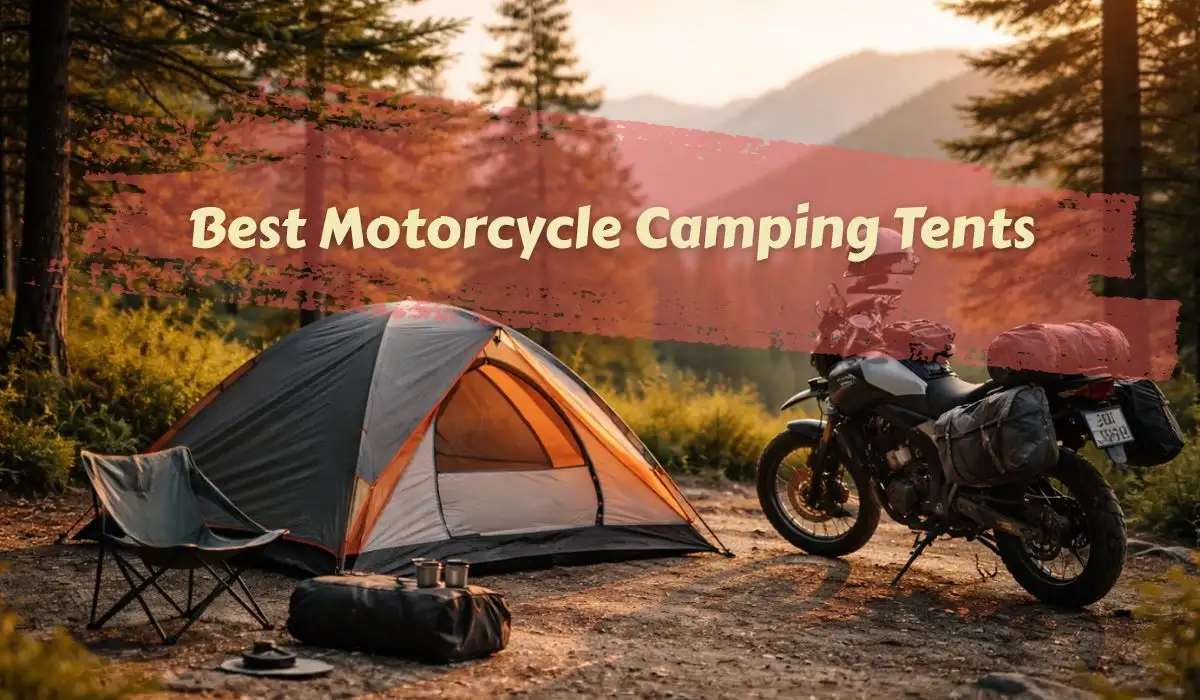
A tent can look perfect on paper and still be wrong for motorcycle camping. Packed length, awkward pole sections, and bulky stuff sacks matter on a bike far more than they do in a car trunk. A tent also has to be easy enough to live with after a long ride, not just light enough to brag about. If you want the bigger picture first, start with the main motorcycle camping gear guide and a smarter motorcycle camping checklist.
The best choice depends on what you actually need from camp. Some riders want the most moto-friendly packed carry possible. Some want the lowest-cost weather shelter that still works. Others want a tent that feels nicer once camp is up, even if they pay more for it. Packed size, setup behavior, and livability matter just as much as raw weight.
Jump Ahead To:
Quick Picks
- Best Overall: MSR Hubba Hubba Bikepack 2 Tent for the most motorcycle-aware mix of packed carry and livable shelter.
- Budget Pick: Coleman Sundome Tent for cheap, dependable weather protection if you can handle the bulk.
- Premium Pick: Big Agnes Copper Spur HV UL Tent for riders who want low weight with nicer camp comfort.
- Best Solo Low-Profile Tent: Snugpak Ionosphere 1 Tent for compact solo shelter with a very small footprint.
- Best Budget Ultralight: Naturehike Cloud Up 2 Tent for lighter compact carry without premium-tent pricing.
Best Overall
Budget Pick
Premium Pick
Best Solo Low-Profile Tent
Best Budget Ultralight
Comparison Table
| Product | Best For | Carry / Shelter Angle | Main Tradeoff |
|---|---|---|---|
| MSR Hubba Hubba Bikepack 2 Tent | Most riders | Bike-specific compact pole and bag design | Premium price |
| Coleman Sundome Tent | Lowest-cost shelter | Roomy value-focused tent | Bulkier packed carry |
| Big Agnes Copper Spur HV UL Tent | Premium comfort-to-weight | Ultralight tent with nicer livability | High price and lighter-duty feel |
| ALPS Mountaineering Lynx 2 Tent | Durability value | Dependable freestanding two-person layout | Heavier and bulkier |
| Snugpak Ionosphere 1 Tent | Solo stealth and small footprint | Low-profile one-person tent | Tight headroom and less hangout space |
| Naturehike Cloud Up 2 Tent | Budget ultralight balance | Compact lighter two-person tent | Less long-term confidence than premium picks |
Quick Decision Guide
- Pick the Hubba Hubba Bikepack 2 if you want the tent that feels most clearly designed for two-wheel travel.
- Pick the Sundome if low price matters most and your bike can handle a bigger packed tent.
- Pick the Copper Spur HV UL if you want premium low weight and a nicer camp feel.
- Pick the Lynx 2 if durability and dependable freestanding setup matter more than shaving ounces.
- Pick the Ionosphere 1 if you ride solo and want a compact low-profile shelter.
- Pick the Cloud Up 2 if you want a lighter, more moto-friendly budget tent without paying top-tier money.
- If the rest of your overnight setup is still weak, compare sleeping bags for motorcycle camping and sleeping pads that fit bike travel better.
Best Motorcycle Camping Tents 2026: Top Picks for Riders
1 / 6
MSR Hubba Hubba Bikepack 2 Tent

Tent Type
Bike-specific 2-person tent
Poles
Short DAC pole sections
Strength
Moto-friendly packed carry
Use Case
Riders wanting the cleanest bike-travel tent fit
Tradeoff
Premium cost
The Hubba Hubba Bikepack 2 earns the top spot because it solves a motorcycle problem that many backpacking tents ignore. Shorter pole sections and a bike-friendly carry bag make the whole packed shape easier to live with on two wheels. That may sound minor until you try to strap a normal long-pole tent across a crowded rear rack.
Once camp is up, it still feels like a serious shelter instead of a packing gimmick. You get low weight, good livability, and a setup that feels purpose-built instead of adapted. The downside is cost. This is a premium tent, and you are paying for that bike-focused convenience as much as the shelter itself.
Why It Wins:
- Packed shape is much easier to manage on a motorcycle.
- Delivers real livability instead of sacrificing comfort for novelty.
What You Give Up:
- Costs more than generic backpacking or mainstream camp tents.
- Riders with lots of luggage room may not need the bike-specific design.
2 / 6
Coleman Sundome Tent

Tent Type
Value-focused camping tent
Strength
Easy setup and low cost
Use Case
Budget weather shelter
Livability
Roomy interior
Tradeoff
Bulky packed size for smaller bikes
The Sundome is the budget pick because it gives you the basics at a price that is hard to argue with. It is easy to set up, roomy for the money, and good enough in bad weather that it does not feel like a false-economy buy for riders who just need a simple shelter.
Its problem is not function. It is shape and bulk. This is a budget camping tent first, not a moto-specific packing solution. On a larger bike that may be fine. On a smaller luggage setup, the packed size gets annoying fast. If cost is your first filter, though, it is still the clear value play.
Why It Wins:
- Low price without giving up basic weather protection.
- Easy setup and useful interior room for the money.
What You Give Up:
- Packed carry is much less bike-friendly.
- Not the tent for riders chasing compact luggage efficiency.
3 / 6
Big Agnes Copper Spur HV UL Tent

Tent Type
Premium ultralight tent
Features
mtnGLO lighting and awning vestibules
Strength
Low weight with better livability
Use Case
Comfort-focused ultralight riders
Tradeoff
High price and lighter-duty materials
The Copper Spur HV UL is the premium pick for riders who want low weight but still care how the tent feels once camp is set. It is not just about being light. The nicer livability details, like usable vestibules and a more refined interior feel, make it a better tent to spend time in.
That comes with the usual ultralight trade. Thin materials and high price mean this is not the tent you toss around without thinking. It makes sense for riders who want a luxury-leaning backpacking shelter that still works well in a motorcycle setup. If durability value matters more than low weight, the Lynx is the safer buy.
Why It Wins:
- Great comfort-to-weight balance for a premium shelter.
- Better camp livability than many stripped-down ultralight tents.
What You Give Up:
- Price is firmly premium.
- Lighter materials need more care over time.
4 / 6
ALPS Mountaineering Lynx 2 Tent

Tent Type
Freestanding 2-person tent
Structure
Aluminum poles and two vestibules
Strength
Good durability and value
Use Case
Dependable long-term camping use
Tradeoff
Heavier and bulkier than the most compact tents
The Lynx 2 is the durability-value choice for riders who want a dependable freestanding tent without paying premium ultralight prices. It is not trying to be the smallest or lightest shelter here. It is trying to be trustworthy, easy to live with, and strong enough to feel like a long-term buy.
That makes it a good fit for riders who care more about solid hardware and practical livability than saving every inch of packed space. The cost for that confidence is extra weight and bulk. On a larger bike, that may not matter much. On a tight minimalist setup, it matters a lot.
Why It Wins:
- Strong value for riders who want durability over ultralight fragility.
- Freestanding layout is easy and forgiving at camp.
What You Give Up:
- Heavier and bulkier than the moto-friendliest picks.
- Less appealing if compact packed length is your top priority.
5 / 6
Snugpak Ionosphere 1 Tent

Tent Type
Low-profile 1-person tent
Waterproofing
5000mm coating
Strength
Very compact carry and small footprint
Use Case
Solo stealthy camping
Tradeoff
Tight headroom and non-freestanding setup
The Ionosphere is the specialist solo tent for riders who want compact carry and a lower-profile shelter. It packs small, stays visually modest, and fits the kind of solo travel style where you care more about efficiency than hanging out inside the tent for hours.
That low profile is both the benefit and the compromise. It works well when you want efficient weather shelter, but it is not roomy, and it is not a comfort-first camp lounge. If you want space for gear spread, changing clothes easily, or longer evenings inside the tent, a larger two-person shelter will feel much better.
Why It Wins:
- Very compact and easy to justify on a small luggage setup.
- Great fit for solo riders who value low-profile shelter.
What You Give Up:
- Limited headroom and overall interior comfort.
- Less convenient setup than a freestanding tent.
6 / 6
Naturehike Cloud Up 2 Tent

Tent Type
Lightweight 2-person tent
Included
Footprint included
Strength
Compact carry and strong value
Use Case
Budget-conscious lighter packing
Tradeoff
Less long-term confidence than premium tents
The Cloud Up 2 is the smarter budget-ultralight choice for riders who want a more motorcycle-friendly packed tent without jumping into premium pricing. It gives you a lighter, smaller-feeling shelter than bulkier budget options while still staying in a more reasonable price range.
Its appeal is easy to understand: compact carry, simple setup, and strong value against tents that cost a lot more. The tradeoff is that it does not inspire the same long-term confidence as the top premium shelters. For many riders that is fine. If you want better packability on a mid-range budget, it is a very practical pick.
Why It Wins:
- Strong compact-carry value for the money.
- Better fit for bike travel than bulkier budget tents.
What You Give Up:
- Not as confidence-inspiring long term as premium tents.
- Still a value-oriented lightweight tent, not a bombproof shelter.
Which Tent Fits Your Bike Travel Style?
Small packed footprint first
The Hubba Hubba Bikepack 2, Ionosphere, and Cloud Up 2 are the strongest fits when packed carry matters most. The Hubba Hubba is the most polished. The Ionosphere is the tightest solo option. The Cloud Up 2 is the budget-minded middle ground.
Lowest-cost weather shelter
The Sundome and Lynx 2 make the most sense if price matters more than compact packing. They are easier to justify on larger bikes or on trips where you are already carrying more camping essentials than usual.
More livable camp setup
The Copper Spur HV UL and Hubba Hubba Bikepack 2 are the best picks if you care about how the tent feels once camp is up, not just how it straps to the bike. Better livability matters more on longer trips than many riders expect.
How to Choose a Motorcycle Camping Tent
Start with packed length and bulk before anything else. A tent that technically fits your weight goal can still be a pain on the bike if the pole bag is too long or the whole pack shape fights your luggage. After that, think about setup style. Freestanding tents are easier on mixed ground. Stake-dependent shelters can save space but ask more from your campsite choice.
Then be honest about how you use the tent. If it is only for sleep, a small efficient shelter is fine. If you want space for gear, bad-weather time, or a more relaxed camp routine, livability matters a lot more. That is also why your tent choice should work with your sleep system and dry-bag packing plan, not against them.
Common mistakes when buying motorcycle camping tents
- Buying by floor size alone and ignoring packed length.
- Chasing ultralight numbers without thinking about durability or comfort.
- Picking a solo shelter when what you really want is gear room.
- Buying a cheap bulky tent for a small bike and then fighting it every time you pack.
Frequently asked questions about motorcycle camping tents
Is a one-person or two-person tent better for motorcycle camping?
A two-person tent is usually more comfortable because it leaves room for gear and changing clothes. A one-person tent makes more sense when compact carry matters more than livability.
How much packed tent length matters on a motorcycle?
It matters a lot. Long pole sections can be harder to strap cleanly and can limit where the tent fits on the bike.
Are bikepacking-specific tents worth it for motorcycle camping?
They can be, especially if they use shorter pole sections and more bike-friendly carry bags. Those details make packing easier on a motorcycle.
When does a budget tent make sense for motorcycle camping?
A budget tent makes sense when low cost is the main priority and your bike has enough space to handle a bulkier packed shelter.
If you are building the rest of the overnight kit, compare motorcycle camping sleeping bags, motorcycle camping sleeping pads, and motorcycle camping pillows. For the wider category, start with motorcycle camping essentials.