
Buying the wrong "heated" liner gets expensive fast. Some products are true electric liners with powered heat zones. Others are just jackets with a removable thermal layer. If you want real heat on cold rides, that difference matters.
This guide stays focused on powered upper-body options that actually belong in a heated-gear setup. For the full heated-gear overview, start with the main heated motorcycle gear guide, then pair your liner choice with the heated glove guide and the heated pants liner guide.
Jump Ahead To:
What Counts as a Heated Jacket Liner
A true heated jacket liner has powered heating zones and needs either a battery pack or a bike-powered 12V connection. That is what gives you active heat instead of just trapped body warmth.
A heated vest liner also counts when your goal is core-first warmth with less sleeve bulk. It will not warm your arms the way a full liner does, but it still belongs in the same decision set for riders trying to build a cold-weather system.
A plain thermal liner does not belong in the same bucket. Some product pages blur that line, so check the power setup before you buy. If you still need to choose between wired and portable platforms, use the 12V vs 7V vs 5V heated gear breakdown, then line up the install side with the heated gear wiring guide and the heated gear controller guide.
Quick Picks
- Best Overall: Gerbing Heated Jacket Liner
- Best for Harsh Weather: MIDIAN Heated Jacket Liner 12V
- Best for Daily Riding: Gerbing Unisex 12V Heated Vest Liner
Best Overall
Best for Harsh Weather
Best for Daily Riding
Comparison Table
| Product | Best For | Heating Layout | Standout Strength | Main Tradeoff |
|---|---|---|---|---|
| Gerbing Heated Jacket Liner | most riders who want a true 12V liner | 7 Microwire zones across collar, chest, sleeves, and back | proven bike-powered ecosystem with broad controller support | harness and controller are separate purchases |
| MIDIAN Heated Jacket Liner 12V | colder, wetter highway riding | 6 zones across collar, chest, sleeves, and back | winter-focused shell materials and bike-powered heat | cable/controller planning is still on you |
| Gerbing Unisex 12V Heated Vest Liner | riders who want core heat without sleeve bulk | 5 Microwire zones across collar, chest, and back | easier layering under tight jackets | arms still depend on your outer layers and gloves |
Quick Decision Guide
Pick the Gerbing jacket liner if you want the safest all-around answer for true heated-liner use. It has full upper-body coverage, a mature 12V ecosystem, and the kind of snug mid-layer fit that works on long cold rides.
Pick MIDIAN if you ride in rough winter weather and want a more weather-blocking shell feel underneath your outer jacket. Pick the Gerbing vest liner if your core gets cold first, your jacket fit is already tight, or you want less bulk for routine commuting.
Best Heated Motorcycle Jacket Liners 2026
Before the picks, one category correction matters: a removable thermal liner is not the same thing as an electrically heated liner. Useful cold-weather jackets still exist, but this roundup is only ranking products that deliver powered heat.
1 / 3
Gerbing Heated Jacket Liner

Focus
True 12V heated jacket liner for long cold rides
Comfort
7 Microwire heat zones, low-profile cuffs, and drop-tail coverage
Use Case
Riders who want full upper-body heat with a mature controller ecosystem
Tradeoff
Harness and controller are sold separately
Gerbing is the cleanest answer for most riders because it is a true 12V heated liner built around full upper-body coverage. The seven-zone layout reaches the collar, chest, sleeves, and back, so it warms the areas that usually fail first once wind chill starts stacking up at highway speed.
It also behaves like a real liner instead of a bulky winter jacket. The low-profile cuffs fit under an outer shell more easily, the drop tail helps in riding position, and the brand already supports single-zone, dual-zone, and Bluetooth controller paths. The main downside is modular buying. You need to add the harness and controller separately, and sizing needs attention because the fit works best when it sits close to the body as a mid-layer.
Why It Wins:
- Seven heat zones cover collar, chest, sleeves, and back instead of stopping at the core.
- Low-profile cuffs and drop tail fit more cleanly under a real riding shell.
- Gerbing's controller and harness options make it easier to expand into gloves or pants later.
What You Give Up:
- Separate accessories add cost and setup steps.
- If you buy it too loose, you waste heat transfer and lose the benefit of the liner fit.
Bottom Line: This is the best all-around choice if you want a real heated jacket liner instead of a cold-weather jacket with a thermal insert.
2 / 3
MIDIAN Heated Jacket Liner 12V
Focus
Winter-first 12V heated jacket liner for rough-weather riding
Comfort
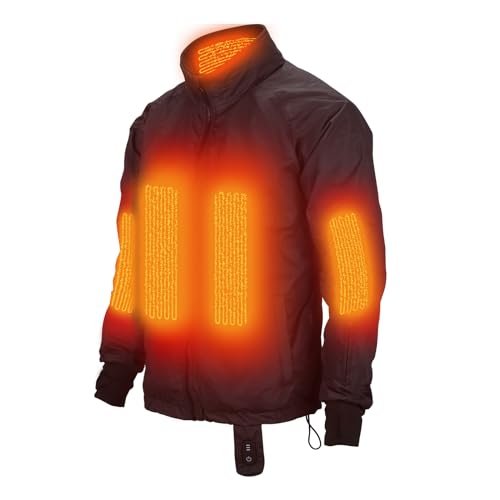
6 heating zones with windproof and waterproof material emphasis
Use Case
Riders who want bike-powered heat under a more weather-blocking shell
Tradeoff
Power cable is not included and sizing needs closer checking
MIDIAN makes more sense when you care as much about winter shell feel as raw heat zones. It runs from the bike, uses six heated zones across the collar, chest, sleeves, and back, and leans harder into windproof and waterproof materials than many lighter liners.
That makes it a better fit for riders who spend long stretches in ugly weather and want a liner that still feels purpose-built once the temperature really drops. The tradeoff is that setup is less tidy than the product title suggests. You still need to sort out the cable side yourself, and sizing deserves a careful check before you buy because heated liners only work well when they sit close to the body.
Why It Wins:
- Six-zone heated layout covers the right cold-weather contact points.
- Material package is aimed squarely at winter use.
- Built to run from the vehicle battery for steady ride-length heat.
What You Give Up:
- The power cable is a separate step, not an included convenience.
- Close-fit sizing matters more here than it does with casual cold-weather layers.
Bottom Line: Choose this when harsh-weather riding matters more than keeping the setup simple.
3 / 3
Gerbing Unisex 12V Heated Vest Liner
Focus
Low-bulk 12V vest liner for core-first heat
Comfort
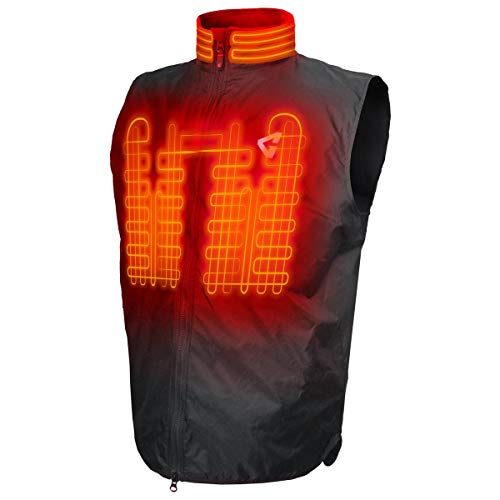
5 Microwire zones with a heated collar and snug liner profile
Use Case
Commuters who want reliable torso heat under tighter jackets
Tradeoff
No heated sleeves, so your arms still need support elsewhere
The Gerbing vest liner is the better daily answer when your jacket fit is already tight or you simply do not want full-sleeve bulk under your shell. The five-zone layout covers the collar, chest, and back, so it attacks the part of the body that usually drives the rest of the cold-weather cascade.
That core-first strategy makes sense when your jacket fit is already tight or your commute is short enough that sleeve heat is not the main problem. The heated collar is a useful comfort upgrade on cold mornings, but the compromise is obvious once you get into deeper winter riding: your arms do not get direct heat, so the rest of the system has to carry more of the load.
Why It Wins:
- Vest cut slips under tighter jackets where full sleeves start to bunch.
- Heated collar plus chest and back zones fix cold-core problems on short daily rides.
- Core-only heat adds less bulk when your commute does not need heated sleeves.
What You Give Up:
- No sleeve heat.
- You still need the proper 12V harness and controller setup.
Bottom Line: This is the practical daily-use choice if core warmth matters more than full-arm coverage.
If You're Buying New in 2026
Buy a true heated liner if you ride at speed in real winter cold and want stable ride-length heat. Buy a heated vest liner if your jacket fit is tight, your rides are shorter, or you want to warm your core without stuffing another full layer into the sleeves.
If you are still tempted by a jacket with a detachable thermal liner, treat that as a separate cold-weather category, not a substitute for powered heat. Once you know which direction you want, map the install side with the heated gear wiring guide and the control side with the heated gear controller guide.
If you want to compare more torso-first options, use the heated vest guide. If shell fit is the real bottleneck, check the heated gear layering and sizing guide before buying more heat.
Jacket Liner vs Heated Vest Liner
This is the choice that trips riders up more than any other in the category. A full jacket liner is the stronger answer when your shoulders, upper arms, and forearms are part of the cold problem. That usually happens on naked bikes, highway rides, and any setup where wind exposure is high enough that the arms lose heat almost as fast as the core.
A vest liner is the cleaner answer when the real problem is the torso and the jacket already fits close in the sleeves. It solves cold-core fatigue without forcing more bulk into the elbows and shoulders, and it is often easier to live with on shorter rides or daily commuting.
The mistake is treating those two products like equal swaps. They are not. A vest liner is not a cheaper jacket liner. It is a more focused tool. If your arms freeze first, a vest can still leave you disappointed even when your chest feels better. If your shell is already tight and your commute is short, a full jacket liner can solve a problem you do not actually have while making the whole jacket feel crowded.
That is also why riders do better when they decide by failure point instead of by product title. If the core is the main weak spot, vest first can be smarter. If the whole upper body starts to fail once speed rises, go straight to the full jacket liner and build around that.
Fit and System Checks Before You Buy
A heated jacket liner only works well when the rest of the system lets it. Before you buy one, check:
- whether the outer shell still fits correctly with a thin heated layer underneath
- whether the liner can sit close over a single base layer instead of floating off the body
- whether the bike has enough electrical margin for a real 12V liner
- whether you are ready to add the right harness and controller instead of improvising later
That sounds boring, but boring is what keeps heated gear useful. Riders often blame the liner when the real problem is a shell that leaks too much wind, a fit that is too loose, or a bike that is being asked to power more heat than it really should.
If you want the cleanest result, treat the liner as one part of a chain: voltage platform, wiring, controller, then layering. When those pieces line up, even a modest liner feels much better. When they do not, a great liner can feel average.
When a Heated Jacket Liner Is the Wrong First Buy
If your hands are the part that ends the ride, or the bike barely has enough electrical margin for lighter gear, a jacket liner may not be the smartest first spend. It is often the right upper-body answer, but it is not automatically the first answer.
That is why riders do better when they choose by system need instead of by product category alone.
Use-Case Picks
Daily commuting
Start with the Gerbing vest liner if your main problem is cold core temperature and you want less bulk under a normal riding jacket. Step up to the Gerbing jacket liner if your forearms and shoulders freeze on the same ride.
Touring and long rides
The Gerbing jacket liner is the better starting point because it gives full upper-body coverage and stays bike-powered as long as the engine is running. Add the heated glove guide and the heated pants liner guide before expecting one garment to carry the whole system.
Extreme cold and wet riding
MIDIAN is the stronger fit when you want a liner that leans harder into wind and weather resistance. It still works best when the rest of the system is sorted, so use the heated gear troubleshooting guide and the heated gear layering and sizing guide if your warmth still feels uneven after installation.
Why Heated Motorcycle Jacket Liners Matter
Upper-body heat is where most full winter setups either work or fall apart. If your chest and back stay warm, your hands usually stay more functional and your body does not fight as hard to protect core temperature.
That matters on the bike because cold does more than make you uncomfortable. It stiffens your upper body, makes fine control feel worse, and pushes you toward max heat everywhere else just to keep up. A good liner reduces that whole spiral before it starts.
How to Choose Heated Motorcycle Jacket Liners
Start with power architecture. Bike-powered 12V systems are still the strongest choice for long winter rides because they do not leave you counting battery bars halfway through the day. Use the voltage-system guide if you are still weighing portable gear against a wired setup.
Then choose between full sleeves and core-only heat. A vest liner is smaller and easier to fit. A full jacket liner is the better answer if wind chill destroys your shoulders, upper arms, and forearms at speed.
Finally, get the fit and install right. Heated liners work best over a thin base layer and under a protective outer shell. If the liner is too loose, heat transfer drops. If the whole setup is too tight, comfort and mobility get worse. Build that part with the heated gear layering and sizing guide, then finish the wiring and controller choices with the heated gear wiring guide and the heated gear controller guide.
Common Mistakes
- Confusing a thermal liner with a true heated liner.
- Buying the garment before checking whether the harness and controller are included.
- Wearing the liner too loose under the shell.
- Expecting a vest liner to solve cold forearms and hands by itself.
- Ignoring the rest of the heated setup when the real issue is gloves, layering, or wiring.
Frequently Asked Questions About Heated Motorcycle Jacket Liners
Are heated jacket liners better than thermal liners?
Yes if you need active heat. A thermal liner only traps what your body already makes. A heated liner creates warmth on its own.
Is a heated vest liner enough for winter riding?
Sometimes. It works well when your core is the main problem, but a full jacket liner is better when cold shoulders and arms end the ride.
Do I need a controller for a heated jacket liner?
Usually yes. A proper controller makes the system easier to tune and keeps the heat usable instead of all-or-nothing.
Should a heated jacket liner fit tight or loose?
Snug is better. It should sit close enough to transfer heat well without restricting movement or bunching your outer armor.
Can I use a heated liner in rain?
Yes, but the full setup still matters. The liner, outer shell, wiring, and connector routing all need to be sorted for wet-weather riding.
Is 12V still the best choice for long rides?
For most riders, yes. It stays consistent on long cold days as long as the bike has enough electrical headroom and the wiring is done right.
What should I pair with a heated jacket liner first?
Most riders get the biggest next gain from the heated glove guide, because warm hands are usually the next weak link once the core is sorted.
After you settle on the right upper-body layer, compare the heated vest guide, the heated grip guide, and the full heated motorcycle gear guide to round out the rest of your cold-weather setup.