
If your core gets cold, everything else gets harder on the bike. You lose comfort, attention drops, and your hands feel colder faster even with heated grips or gloves. The best heated motorcycle vests keep your torso warm so the rest of your winter system works better.
For full cold-weather planning, start with the main heated motorcycle gear guide, then pair this page with the heated motorcycle jacket liners guide and the heated motorcycle gloves guide.
Jump Ahead To:
Quick Picks
- Best Overall: Gerbing Unisex 12V Heated Vest Liner
- Best Battery Vest: Gerbing 7V Women's Torrid 2.0 Softshell Vest
- Budget Pick: Venustas Men's Fleece Heated Vest
- Premium Pick: Heated Vest for Men with Battery Pack
- Best for Touring: ARRIS Heated Vest 7.4V
- Best for Cold Weather: Alpha Heat Vest 8-Zone
- Best Alternate: Hoson Heated Vest 9-Zone
Best Overall
Best Battery Vest
Budget Pick
Premium Pick
Best for Touring
Best for Cold Weather
Best Alternate
Comparison Table
| Product | Best For | Heating Layout | Power Style | Main Tradeoff |
|---|---|---|---|---|
| Gerbing Unisex 12V Heated Vest Liner | broad motorcycle-first use | 5 Microwire heating zones | 12V bike-powered system | needs separate harness/controller purchases |
| Gerbing 7V Women's Torrid 2.0 Softshell Vest | battery-first low-bulk use | 4 heat zones | 7V battery-driven | women-specific fit and runtime drops faster on high |
| Venustas Men's Fleece Heated Vest | budget all-day comfort | 6 larger-area panels | rechargeable battery pack | bulkier fleece profile under tight shells |
| Heated Vest for Men with Battery Pack | premium zone control | 8 zones with independent control groups | 5V battery pack | shell durability varies by heavy-use conditions |
| ARRIS Heated Vest 7.4V | touring flexibility | multi-zone with adjustable control | 7.4V high-capacity battery | charging kit and size setup require more prep |
| Alpha Heat Vest 8-Zone | cold-weather value | 8-zone carbon-fiber heating layout | USB-rechargeable style | fit tends to run small for some riders |
| Hoson Heated Vest 9-Zone | low-cost alternate | multi-zone layout with 3 levels | 5V battery bank style | consistency and quality control can vary |
Quick Decision Guide
Pick the Gerbing 12V vest liner if you want the safest broad-audience answer for motorcycle use. It is unisex, low bulk, and easier to fold into a real heated-gear system once gloves, wiring, and controllers enter the picture. Pick Gerbing Torrid if you specifically want a battery vest in a women-specific cut and do not want to hardwire the bike yet.
Pick Venustas if you want broad heat coverage at lower cost. Pick the 8-zone smart-controller vest if you want more granular control by body zone and stronger customization. Pick ARRIS for touring when adjustable fit and long battery support matter. Pick Alpha Heat for cold-weather value with broad zone coverage. Pick Hoson if budget is tight and you want a backup vest option.
Best Heated Motorcycle Vests 2026
1 / 7
Gerbing Unisex 12V Heated Vest Liner
Focus
Bike-powered heated vest for broad motorcycle use
Comfort
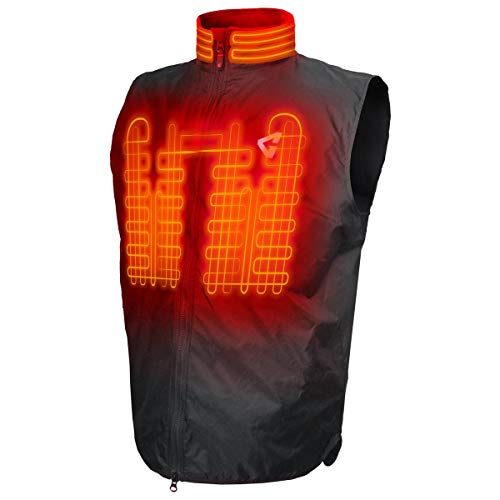
5 Microwire heating zones in a snug liner profile
Use Case
Riders wanting stable core heat that works inside a larger 12V system
Tradeoff
Harness and controller are separate purchases
This Gerbing liner is the best overall vest for a motorcycle-first reader because it solves the core problem without narrowing the fit to one body cut or one battery workflow. It runs from the bike, stays low bulk under a jacket, and drops neatly into the same ecosystem riders usually expand later with gloves, pants, and a dual-zone controller.
The real advantage is consistency. You are not juggling battery packs on long cold rides, and the liner profile works more like part of a full system than like a casual heated layer you happen to ride in. The tradeoff is setup. It only pays off if you are willing to wire the bike correctly and treat the vest like real heated gear instead of a standalone gadget.
Why It Wins:
- Bike-powered heat stays consistent on long rides instead of fading with battery runtime.
- Unisex liner format makes it a broader default recommendation than gender-specific or casual-use battery vests.
- Gerbing's controller and harness ecosystem makes it easier to add gloves or other 12V pieces later.
What You Give Up:
- You must buy the harness and controller separately.
- It is a core-only layer, so arms still need glove and shell help in deeper cold.
Bottom Line: This is the cleanest all-around answer when you want a heated vest that fits into a real motorcycle heated-gear system.
2 / 7
Gerbing 7V Women's Torrid 2.0 Softshell Vest

Focus
Balanced battery-heated vest for low-bulk portable use
Comfort
4 heating zones with water-wind-resistant softshell
Use Case
Riders wanting a women-specific battery vest they can use on and off the bike
Tradeoff
High heat setting shortens runtime noticeably and the fit is not broad-unisex
This Gerbing vest is still one of the strongest battery-powered options in the category. The four-zone layout targets chest, back, and neck where core heat matters most, and the softshell cut keeps the whole thing from feeling bulky under a riding jacket.
Its real fit is narrower than the old ranking implied, though. This is a women-specific cut, so it should be treated as the better answer for riders who want that fit and want battery convenience without hardwiring the bike. Runtime on high is still the main watch-out.
Why It Wins:
- Four zones heat chest, back, and neck where riders lose core warmth first.
- Softshell cut layers cleanly under a riding jacket without filling the sleeves.
- DWR-style shell sheds light rain and road spray better than plain fleece vests.
What You Give Up:
- Max heat can drain battery quickly.
- Women-specific fit is the right answer for some riders, not the default answer for all riders.
Bottom Line: Choose this when you want a battery vest, the women-specific cut works for your fit, and you do not want to wire the bike yet.
3 / 7
Venustas Men's Fleece Heated Vest

Focus
Affordable high-coverage heated vest
Comfort
6 enlarged heating panels and soft fleece construction
Use Case
Riders wanting long wear comfort at a lower cost
Tradeoff
Fleece bulk can layer tight under slim race-fit jackets
Venustas gives strong heat coverage for the price with larger heating panel footprint than many basic vests. It warms collar, chest, shoulders, and back zones, making it useful for riders who get cold across broad upper-body areas.
Comfort is another highlight. The fleece body feels good for long wear and daily commuting, and battery runtime is solid on medium and low settings. The main tradeoff is layering bulk under tighter-fitting shells.
Why It Wins:
- Excellent warmth-per-dollar value.
- Broad panel coverage improves whole-core comfort.
- Medium and low settings stay useful longer than max-heat-only vests on daily rides.
What You Give Up:
- Thicker fleece feel can crowd slim jackets.
- Less moto-specific shell structure than premium riding liners.
Bottom Line: This makes sense for riders who want broad warmth and long-wear comfort at a lower price.
4 / 7
Heated Vest for Men with Battery Pack

Focus
High-zone customizable heating vest
Comfort
8 zones with independent control groups and 3 heat levels
Use Case
Riders who want precise warmth tuning by body area
Tradeoff
Battery/system complexity is higher than simple one-button vests
This model stands out for control granularity. It uses eight heating zones and split control groups so you can tune neck/shoulder, abdomen, and back/waist separately. That helps riders who run hot in one area and cold in another.
It is also lightweight for its feature set and includes practical battery status visibility. For riders who want custom warmth mapping instead of one global setting, this is a big upgrade. The tradeoff is more setup complexity than simple fixed-zone vests.
Why It Wins:
- Best zone-level control flexibility in this list.
- Eight zones cover more of the torso than standard three-panel vests.
- Battery status visibility makes charge management easier on longer days.
What You Give Up:
- More complex controls and battery workflow.
- Requires good layering discipline to get full benefit.
Bottom Line: This suits riders who want more control over where the heat goes across the vest.
5 / 7
ARRIS Heated Vest 7.4V

Focus
Touring-oriented heated vest with adjustable fit
Comfort
multi-zone heating and 5-level control with high-capacity battery
Use Case
Long rides with variable weather and layering needs
Tradeoff
Initial setup and charging routine are more involved
ARRIS is built for riders who spend long days in changing conditions. The adjustable fit system helps when layering thickness changes during multi-day trips, and the multi-level control gives better thermal tuning than simple 3-step units.
Battery support is strong for this class and the heat output ramps quickly. For touring, that flexibility is useful, especially when mornings are cold and afternoons warm up. The setup is not hard, but it is more involved than minimalist vest options.
Why It Wins:
- Excellent adjustability for touring layer changes.
- Five heat levels give finer control than basic three-step vests.
- High-capacity 7.4V battery supports longer ride days.
What You Give Up:
- More battery and charging management.
- Slightly bulkier control ecosystem than simple vests.
Bottom Line: This makes sense for touring riders who need adaptable warmth across long changing days.
6 / 7
Alpha Heat Vest 8-Zone

Focus
Low-cost high-zone cold-weather vest
Comfort
8 zones with one-button 3-level control
Use Case
Riders needing broad heat coverage on a strict budget
Tradeoff
Sizing can run small and fit check is critical
Alpha Heat offers broad zone coverage at a lower price than most multi-zone competitors. It uses eight heating areas with quick warm-up behavior, making it a strong value choice for riders trying to push into colder temperatures.
The shell is designed for weather resistance and layered use. For riders on tight budgets, this vest can be an effective core-heating upgrade. Fit is the key caution point, since sizing trends smaller than expected for some users.
Why It Wins:
- Eight heating zones spread warmth wider than basic front/back vests.
- Fast warm-up with simple controls.
- Lower price makes broad zone coverage easier to reach on a budget.
What You Give Up:
- Fit consistency can be tricky.
- Less premium finishing than higher-priced vests.
Bottom Line: This is a practical low-cost route if you want wide heating coverage for colder rides.
7 / 7
Hoson Heated Vest 9-Zone

Focus
Budget alternate heated vest for backup or light use
Comfort
multi-zone layout with 3 heat settings and battery-bank style power
Use Case
Riders needing a low-cost secondary vest option
Tradeoff
quality consistency and zone performance can vary unit to unit
Hoson is the alternate pick for riders who need a low-cost entry or backup vest. It offers multi-zone heating and simple three-level control with lightweight wear characteristics.
It can work well in light-to-moderate winter use when expectations are realistic. Compared with stronger primary picks, quality consistency and zone behavior are less predictable, so it is better treated as a backup route than your only critical winter layer.
Why It Wins:
- Low-cost way to add core heat.
- Lightweight and easy to layer.
- Three-level control is simple when you only need occasional cold-weather heat.
What You Give Up:
- Variable quality control and performance consistency.
- Less confidence for hard daily winter use.
Bottom Line: This works as an affordable backup vest or light-duty extra layer for occasional cold rides.
Use-Case Picks
Daily commuting
Gerbing 12V vest liner is the most consistent if your bike is wired for heated gear. Gerbing Torrid is the easier battery-first answer if the women-specific fit suits you and you want a portable vest.
Touring and long rides
ARRIS is the better fit for long days where layering and heat levels change often.
Extreme cold and wet riding
Gerbing Torrid or Alpha Heat are practical choices when core warmth is the top priority.
Battery Vest vs 12V Vest Liner
This is the split that decides most vest purchases. A battery vest is simpler. You charge it, wear it, and use it off the bike too. That is why battery vests work well for commuting, mixed-use riding, and riders who do not want to build a full harness and controller setup yet.
A 12V vest liner is more motorcycle-specific. It is the better answer when the ride is long, the cold is harder, or you already know the rest of your heated system may grow later. It also avoids the common battery-vest frustration where high heat is great for a while, then fades exactly when the ride is getting colder.
The tradeoff is commitment. A good 12V vest liner asks you to wire the bike correctly, think about electrical headroom, and use a controller plan that makes sense with the rest of your gear. If you want a simpler overview of that system side, use the heated gear wiring guide and the heated gear controller guide.
Fit and Layering Checks Before You Buy
Vest fit matters more than a lot of riders expect. If the vest is too loose, heat transfer drops because the warm zones sit off the body. If it is too bulky, your shell fit gets tight and the whole point of the vest form factor starts to disappear.
That is why vest choice is partly about shape, not only heating zones. A low-bulk liner like Gerbing makes more sense under tighter jackets. A fleece or casual battery vest can feel better off the bike, but it may crowd a snug riding shell more than you want.
Before you buy, check three things:
- whether your jacket already feels tight across the chest or ribs
- whether you need true off-bike use or only on-bike heat
- whether your hands and arms still need separate help from gloves or grips
If your shell fit is already marginal, use the heated gear layering and sizing guide before you assume a vest is the wrong category. A lot of “bad vest” problems are really layering and fit problems.
How to Choose Heated Motorcycle Vests
First choose power architecture: battery vest or bike-powered vest liner. Battery vests are simple and portable. 12V liners are better for long ride consistency if you wire them right. Decide this first with the 12V vs 7V vs 5V heated gear guide.
Then evaluate zone layout versus your cold pattern. Some riders lose heat mostly in upper chest and neck, others in back and waist. A vest with proper zone distribution can outperform a higher-watt vest with poor placement.
Finally, build the full thermal chain. Vests work best when paired with the heated motorcycle gloves guide, the heated socks and insoles guide, and the heated gear controller guide under a clean wiring plan from the heated gear wiring guide.
Common Mistakes
- Buying by zone count only and ignoring actual zone placement.
- Skipping fit checks and ending up with weak heat transfer.
- Choosing battery-only vests for very long cold touring days.
- Ignoring wiring and controller compatibility for 12V systems.
- Treating heated vest as a complete solution without hand/leg layers.
Frequently Asked Questions
Is a heated vest enough for winter motorcycle riding?
It helps a lot for core warmth, but most riders still need heated hands and good lower-body layering.
Are battery vests better than 12V bike-powered vests?
Battery vests are simpler; 12V systems usually perform better for long-duration rides.
How many heating zones do I really need?
Zone placement matters more than raw number. Pick layouts that match where you get cold first.
Can heated vests be worn under normal riding jackets?
Yes, most are designed as mid-layers under a protective outer shell.
Do heated vests work in rain?
Many are weather-resistant, but shell quality and outer-layer protection still matter.
Should I size up a heated vest?
Usually no. A closer fit improves heat transfer, but avoid compressing movement.
What should I buy first: heated vest or heated gloves?
Most riders start with gloves, then add vest for stronger total-system warmth.
If your system still feels uneven, use the heated gear troubleshooting guide and compare your whole setup in the main heated motorcycle gear guide.