
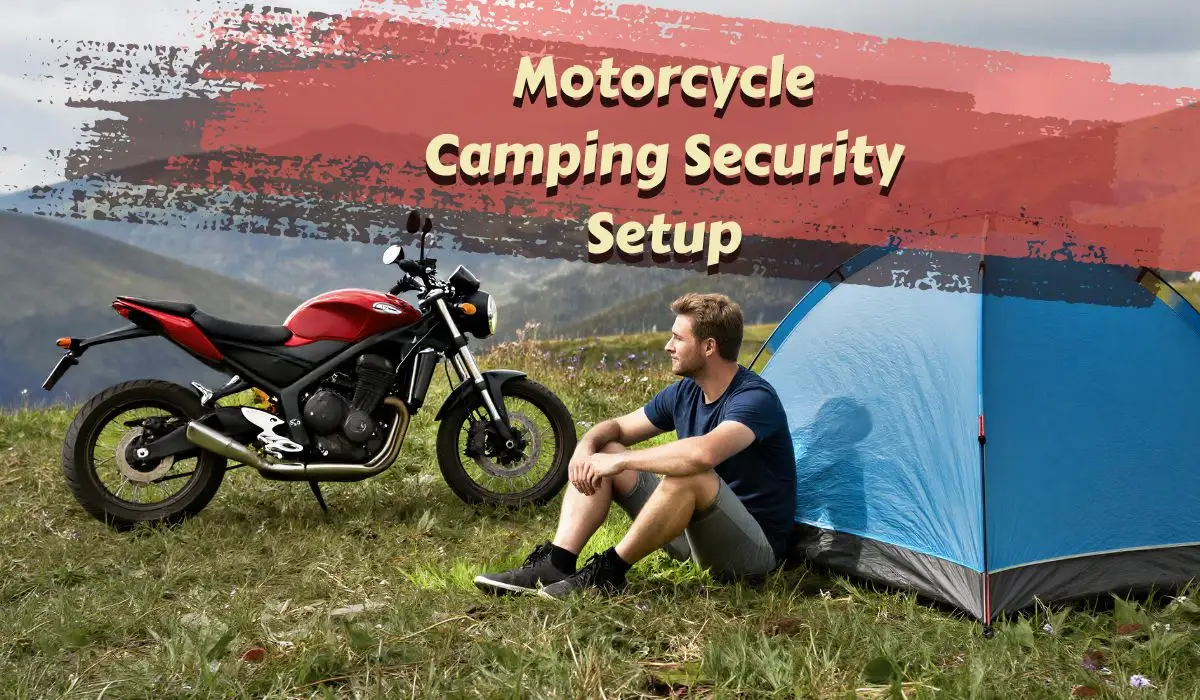
A motorcycle camping security setup is a layered routine that protects your bike and luggage at stops and overnight camps. One weak layer can turn a short walk-away into a stolen bag or bike. This guide covers lock placement, visibility, and tracking so your setup is quick to repeat each night. For the wider packing context, pair it with the main motorcycle camping gear guide.
Jump Ahead To:
What Motorcycle Camping Security Setup Means (and Who Needs It)
This is not just about buying one "best" lock. Security on the road is a routine.
Your routine should cover three things:
- Stop the bike from rolling.
- Stop the bike from being lifted or dragged.
- Reduce the chance your bags or valuables get grabbed fast.
If you camp off your bike, this applies to you whether you do weekend rides or long trips.
Core Security Concepts That Actually Work
The strongest approach is layered defense. Make a thief deal with multiple problems at once.
A practical stack looks like this:
- A frame anchor lock (chain or U-lock) to a fixed object when available.
- A wheel immobilizer like a disc lock for fast deterrence.
- A visible cover to hide model details and lock setup.
- A tracker or alarm for movement alerts.
A second concept is asset control. Your tank bag should carry your highest-value items, and it should come with you every time you walk away.
If you need hardware picks first, start with best motorcycle locks, then compare best motorcycle chain locks and best motorcycle disc locks.
Step-by-Step Security Flow for Camp Stops
1. Read the environment first
Urban hotel lot, paid campground, and remote stealth spot are different problems. Scale your setup to risk.
2. Conceal before you lock
Cover the bike first when possible. It lowers visual interest and hides your lock points.
3. Lock through the frame, not just a wheel
If you have a fixed anchor, run the chain or U-lock through the frame. Avoid wheel-only locking as your main defense.
4. Add a quick immobilizer
Use a disc lock or grip lock for a second layer. This slows fast roll-away attempts.
5. Secure soft luggage and remove valuables
If you run soft bags, add steel-core straps or mesh protection. Keep documents, money, and electronics in your tank bag and carry it with you. A cleaner pack layout also helps here, especially if you already use a dry-bag system that separates valuables from bulk camp gear.
6. Arm tracker and alerts
Turn on your tracker or alarm every time you park for the night, not only in cities.
7. Build sleep-time awareness at camp
At remote camps, set your bike close enough that movement wakes you. Keep keys, light, and footwear ready so you can react fast. This gets easier when the rest of your overnight setup follows a motorcycle camping sleep system that keeps essentials close and organized.
Quick Security Checklist Before Bed
- Steering lock engaged.
- Frame anchor lock or chain in place.
- Disc or grip lock applied.
- Cover installed.
- Tracker or alarm armed.
- Tank bag valuables removed from bike.
- Soft luggage straps checked.
Troubleshooting by Scenario
Quick fuel or food stop
Use a fast setup: steering lock + disc lock + take tank bag. Speed matters here.
Overnight in a public lot
Use full layering: frame anchor, wheel lock, cover, and active tracker.
Remote stealth camp
Focus on concealment, close bike placement, and movement awareness. Avoid bright, obvious camp setups.
No solid anchor available
Create friction by using multiple locks and adding time-cost to removal. Combine wheel immobilizer, cover, and tracking.
Safety and Legal Notes
Do not build dangerous booby traps. Perimeter alarms and alert tools should warn you, not create harm.
Check local rules before using noise-making devices around campsites. What is fine on one property can be illegal or restricted in another.
If you use tracking tools, confirm signal and battery behavior before the trip. A dead or offline tracker gives false confidence.
Common Security Mistakes Riders Make
Mistake: Trusting only the steering lock
Fix: Always add a second and third layer.
Mistake: Leaving chain slack on the ground
Fix: Keep lock points high and awkward to reduce easy attack angles.
Mistake: Leaving valuables in easy-access bags
Fix: Treat tank bag carry-out as a strict habit at every stop.
Mistake: Using the same setup for every location
Fix: Adjust by risk level. Quick-stop routine is not enough for overnight parking.
Mistake: Forgetting to arm electronics
Fix: Make arming tracker/alarm part of your shutdown checklist.
Frequently Asked Questions
Is one heavy lock enough for motorcycle camping?
No. One lock can slow theft, but layered security is much stronger in real travel conditions.
Should I lock only the front wheel?
Use wheel locks as a layer, not the whole system. Frame anchoring adds much better theft resistance.
How do I protect soft luggage at camp?
Use steel-core straps or mesh-style protection and avoid leaving valuables in outer bags overnight.
Are alarms useful in remote camps?
They can help, especially as an alert layer, but they work best with physical locks and good camp habits.
What should I always carry into a store or hotel?
Carry your tank bag with your high-value items every time.
Is a motorcycle cover really part of security?
Yes. It reduces visual targeting by hiding your bike details and security setup.
For a full anti-theft setup, combine this with motorcycle theft prevention guide and choose luggage that is easier to secure from best motorcycle luggage. It also helps to fold this into your motorcycle camping checklist and how to charge devices while motorcycle camping so locks, electronics, and carry-out valuables are handled in one shutdown routine.