
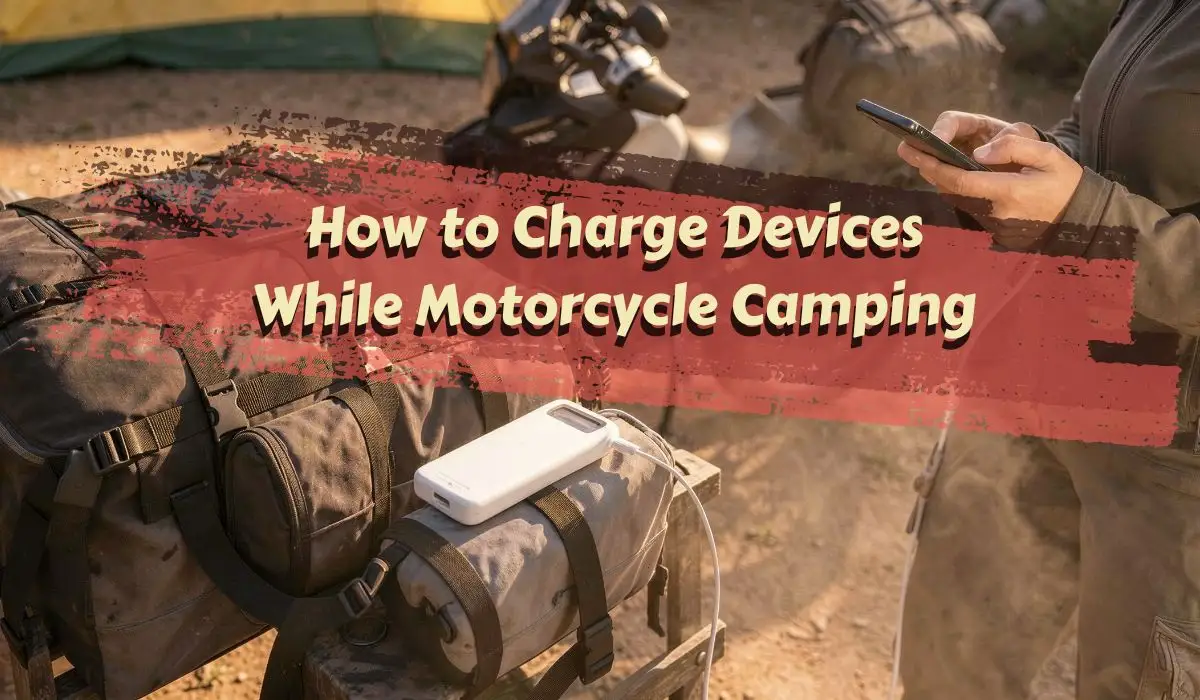
How to charge devices while motorcycle camping is a power routine that keeps your phone, nav, and lights running without draining your starter battery overnight. If you get this wrong, you can lose both comms and morning start power. This guide shows a simple ride-and-camp setup you can repeat every trip. For the wider context, pair it with the main motorcycle camping gear guide.
Jump Ahead To:
What Charging Devices While Motorcycle Camping Means
This is not just plugging in a phone. It is a full power routine for riding time and camp time.
Your setup needs to do three things:
- Charge safely while the engine is running.
- Avoid parasitic battery drain when parked.
- Give you backup power at camp without relying on your starter battery.
If you run navigation, phone camera, action cam, lights, or comms, this guide is for you.
Core Charging Concepts You Need First
Bike power is your main generator
Your alternator is your strongest daily power source. Use ride time to top up your key devices and backup battery.
Stored power is for camp use
At camp, use a power bank or jump pack instead of pulling from the bike battery whenever possible. If you still need a battery pick, compare rugged power banks for motorcycle camping.
Switched power prevents dead batteries
A USB charger wired to always-on battery can drain power even when nothing is plugged in. Switched or relay-based circuits reduce this risk.
One charging path is not enough
Bring backup options. A failed cable or blown fuse should not kill your whole charging plan.
If you need gear options first, see best rugged power banks for motorcycle camping and best motorcycle usb chargers.
Step-by-Step Charging Setup
Method A: Install a switched USB charger (recommended)
- Mount a weather-resistant USB unit in a protected cockpit area.
- Wire it to switched power (or through a relay triggered by switched power).
- Add the correct inline fuse near the source.
- Route wires away from heat and moving parts.
- Test that charging only works when ignition is on.
This is the most reliable setup for daily riding.
Method B: SAE pigtail setup (simple and flexible)
- Install a fused SAE lead to the battery.
- Use an SAE-to-USB adapter when needed.
- Unplug the adapter when parked.
This method is easy and versatile, but habit is critical. Leaving adapters connected can slowly drain the battery.
Field Charging Strategy at Camp
Use this order at camp:
- Charge a power bank while riding.
- Use that power bank for phone, lights, or camera at night.
- Keep jump starter capacity reserved for emergency starts.
Solar can help at a fixed camp, but it is usually weak and inconsistent while riding. For route planning around camp needs, pair this with the motorcycle trip planning guide. If your charger, cables, and backup battery live in soft luggage, it also helps to follow a dry-bag packing routine that protects electronics and keeps them easy to reach.
Quick Charging Checklist
- Switched USB or relay setup installed.
- Correct fuse in place.
- Spare fuse and short backup cable packed.
- Power bank charged before camp.
- Jump starter charged and reserved.
- All adapters unplugged at night if not switched.
Common Mistakes (and How to Fix Them)
Mistake: Direct-to-battery USB with no switch
Fix: Convert to switched or relay-controlled power.
Mistake: Charging everything from one small port
Fix: Prioritize devices and stagger charging windows.
Mistake: No backup cable or fuse
Fix: Carry at least one spare cable and fuse set.
Mistake: Relying on solar while moving
Fix: Use solar for stationary camp only, not as ride-day primary charging.
Mistake: Draining jump starter for normal charging
Fix: Keep jump pack capacity reserved for emergency starts whenever possible.
Safety Notes
Use proper wire gauge and secure all wiring to avoid chafing and shorts.
Never run unfused accessory power from battery leads.
Keep connectors dry and protected where possible. Water and vibration are a bad mix for low-cost charging hardware.
If you are also running heated gear and other accessories, plan your load so your bike stays stable and your electrical system is not overloaded. See our heated gear controller guide for control-side planning. For a full camp shutdown routine, it also helps to fold charging habits into your motorcycle camping security setup so valuables and electronics are not left exposed overnight.
Frequently Asked Questions
Can I charge my phone directly from the motorcycle battery while parked?
You can, but it is risky if the circuit is always on. A safer approach is switched wiring or using a charged power bank at camp.
Will a USB charger drain my battery if nothing is plugged in?
Some units can still draw small power. That is why switched circuits or unplug habits matter.
What is better for camping: power bank or jump starter?
Use both. Power bank for normal charging, jump starter for emergency starts.
Is solar worth carrying on motorcycle trips?
It can help for stationary camps and longer stops. It is usually not reliable as your only charging source.
What should I charge first during the day?
Navigation and communication devices first, then secondary devices like lights or action cameras.
Do I really need spare fuses and cables?
Yes. Small electrical failures are common and easy to fix if you carry basic backups.
For full camp setup planning, combine this with the motorcycle camping checklist and the camp kitchen setup guide so your power, water, and cooking routines all work together. If your trip also depends on careful overnight recovery, build charging around your motorcycle camping sleep system.