
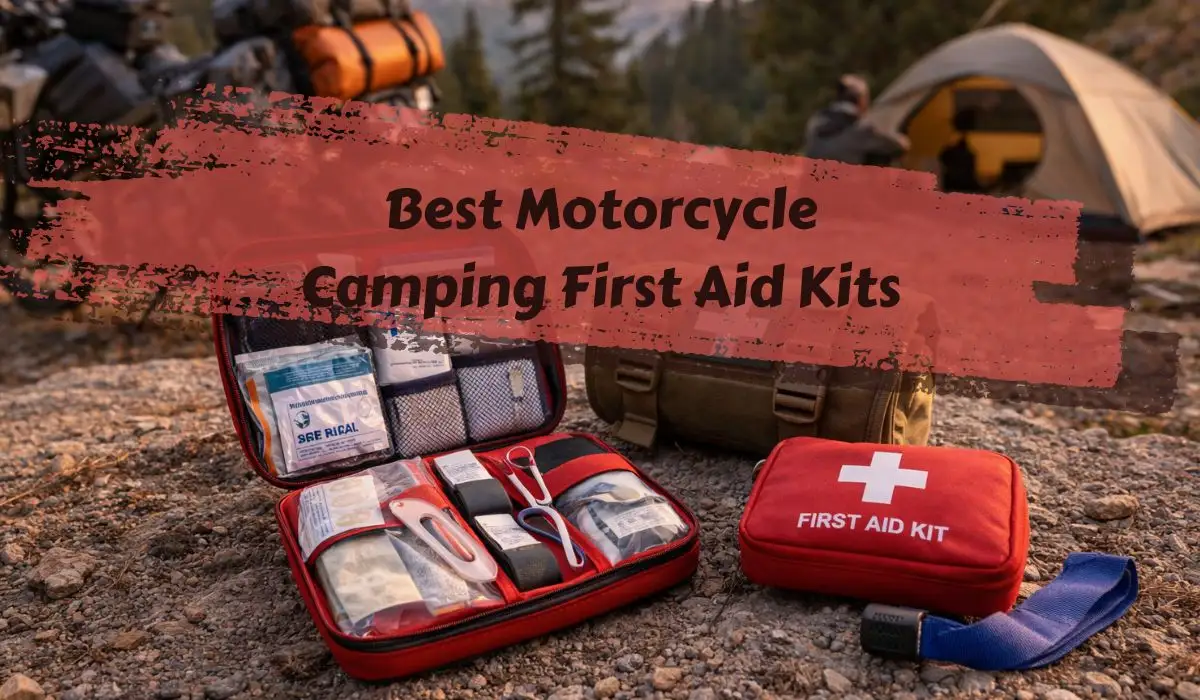
Motorcycle camping changes what a first aid kit needs to do. You are dealing with road rash, cuts, burns, blisters, and the chance that help is farther away than it would be on a normal day ride. The best kit is not always the biggest one. It is the one you will actually carry, find quickly, and use under stress. For the wider travel setup, start with the main motorcycle camping gear guide and a motorcycle camping security setup that covers more than theft.
That means you need to decide what role the kit is supposed to play. Some kits are balanced compact primaries. Some are ultralight backups. Some are trauma-focused add-ons that do not replace a normal first aid kit at all. Size, organization, and treatment depth matter more than a giant item count on the box.
That choice should match the rest of the loadout too. A realistic motorcycle camping essentials plan keeps medical gear from getting crowded out by lower-value comfort items, and solid motorcycle camping tips help prevent a lot of the small camp problems that eat through a first aid kit.
Jump Ahead To:
Quick Picks
- Best Overall: Adventure Medical Kits Mountain Series Medical Kit – Hiker for the best compact balance of general-use supplies.
- Best Ultralight Backup: Adventure Medical Kit Ultralight/Watertight Medical Kit .5 for riders who want a tiny just-in-case kit.
- Premium Pick: MY MEDIC MyFAK Standard for riders who want deeper coverage and can spare the luggage room.
- Best Trauma Add-On: Adventure Medical Kits Trauma Pak Pro for riders who want a bleed-control layer to pair with a normal kit.
- Best Compact Motorcycle Kit: My Medic Sidekick Pro for a stronger emergency-tool mix in a bike-friendlier size.
Best Overall
Best Ultralight Backup
Premium Pick
Best Trauma Add-On
Best Compact Motorcycle Kit
Comparison Table
| Product | Best For | Kit Strength | Main Tradeoff |
|---|---|---|---|
| Adventure Medical Kits Mountain Series Medical Kit – Hiker | Balanced compact primary kit | Organized general-use coverage | Not a deep trauma kit |
| Adventure Medical Kit Ultralight/Watertight Medical Kit .5 | Tiny backup carry | Very small and easy to stash | Limited treatment depth |
| MY MEDIC MyFAK Standard | Premium fuller coverage | Large organized emergency kit | Size and cost |
| Adventure Medical Kits Trauma Pak Pro | Bleeding control add-on | Focused trauma tools | Not a full first aid kit |
| My Medic Sidekick Pro | Compact stronger bike kit | Better emergency-tool mix in smaller bag | Less depth than larger premium kits |
| MY MEDIC Everyday Carry First Aid Kit | Backup stash kit | Easy glovebox or top-box carry | Secondary role only |
Quick Decision Guide
- Pick the Mountain Series Hiker kit if you want one compact main kit for normal motorcycle camping use.
- Pick the Ultralight/Watertight .5 if you want a small backup for minor care and blister treatment.
- Pick the MyFAK Standard if you want the deepest coverage here and have room to dedicate to medical gear.
- Pick the Trauma Pak Pro if you already have a normal first aid kit and want a separate bleed-control pack.
- Pick the Sidekick Pro if you want a compact motorcycle-sized kit with stronger emergency tools.
- Pick the Everyday Carry kit if you want a permanent stash pouch in a glovebox, pannier, or top box.
- If your trip kit is still coming together, compare dry bags for motorcycle camping and rugged power banks for motorcycle camping.
Best Motorcycle Camping First Aid Kits 2026: Top Picks for Riders
1 / 6
Adventure Medical Kits Mountain Series Medical Kit – Hiker
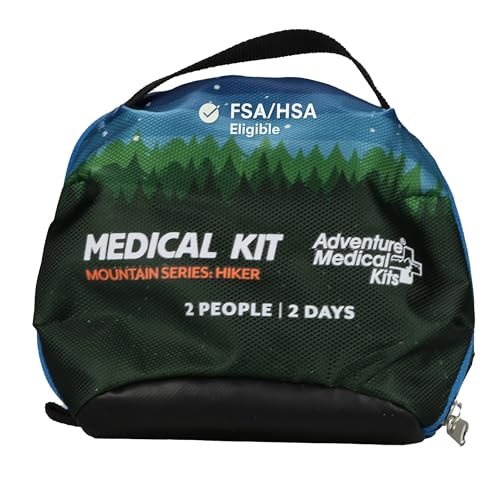
Coverage
Up to 2 people for 2 days
Layout
Organized pouch system
Included
General treatment supplies and first aid guide
Use Case
Compact primary motorcycle kit
Tradeoff
Not a trauma-heavy setup
The Mountain Series Hiker kit is the safest all-around choice because it covers the normal stuff well without becoming too big to carry. It sits in the middle ground where a good motorcycle camping first aid kit should live: large enough to matter, small enough to pack, and organized enough that you can actually find what you need quickly.
Its main limit is that it is still a balanced first aid kit, not a trauma bag. That means it works best for riders who want one primary kit for cuts, scrapes, blisters, and common camp issues, not for riders trying to solve every serious emergency with a single pouch. For most trips, that balance is exactly what makes it the best pick.
Why It Wins:
- Good mix of useful supplies without wasting too much luggage space.
- Organized layout makes it easier to use under stress.
What You Give Up:
- Serious trauma coverage still needs extra planning.
- Not the largest or deepest kit in the group.
2 / 6
Adventure Medical Kit Ultralight/Watertight Medical Kit .5

Style
Compact DryFlex-style kit
Use Case
Minor wound and blister care
Strength
Very easy to stash
Role
Backup or minimalist primary
Tradeoff
Limited depth
The Ultralight/Watertight .5 is the kit you carry when space is tight and you still want real basics on the bike. It is easy to stash in a tank bag, jacket pocket, or side pocket, which is a big reason it works so well as a backup or minimalist primary kit.
Its small size is both the advantage and the limit. It handles minor wound care, blisters, and light treatment well enough, but it is not the answer for riders who want one do-everything medical pouch. If you already carry other emergency gear, it fits nicely. If you want one main expedition kit, go bigger.
Why It Wins:
- Tiny size makes it easy to keep on the bike all the time.
- Good fit for minor treatment and just-in-case coverage.
What You Give Up:
- Not enough depth for bigger incidents.
- Works better as a backup than a full remote-travel solution.
3 / 6
MY MEDIC MyFAK Standard

Item Count
132 items
Style
Larger trauma-and-medical kit
Strength
Deeper emergency coverage
Use Case
Riders willing to dedicate more luggage space
Tradeoff
Bulk and higher price
The MyFAK Standard is for riders who want more coverage than a small outdoor pouch can give. It feels more like a prepared travel kit than a light just-in-case bag, with more supplies and a more serious overall layout. That makes it appealing for longer trips, remote travel, or riders who simply want more margin.
The tradeoff is easy to spot: it is bigger, heavier, and more expensive. On a small bike that matters. On a larger bike or a trip where medical readiness is a bigger concern, it can be worth the space. It is the premium pick because it gives you more, not because it magically packs small.
Why It Wins:
- More complete coverage than compact kits.
- Better fit for riders who want a true preparedness-oriented setup.
What You Give Up:
- Size makes it harder to justify on a tight luggage plan.
- Costs more than balanced compact kits.
4 / 6
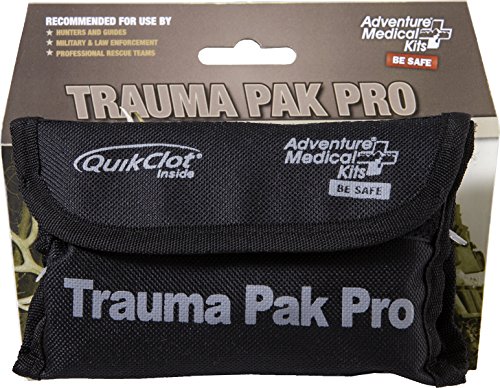
Adventure Medical Kits Trauma Pak Pro
Focus
Bleeding-control pack
Included
QuikClot gauze, tourniquet and gloves
Role
Specialist trauma add-on
Use Case
Two-kit setup
Tradeoff
Not a general-use first aid kit
The Trauma Pak Pro is not a normal first aid kit, and that is the whole point. It is a focused bleed-control pack for riders who want serious trauma tools already assembled in one compact kit. If you understand that narrow mission, it makes a lot of sense.
What it does not do is replace a normal first aid pouch. It will not cover the ordinary camp problems that happen far more often than severe bleeding. That is why it works best as part of a two-kit setup: one compact general kit, plus one trauma-specific kit for higher-risk situations.
Why It Wins:
- Focused trauma tools are already bundled and ready.
- Easy way to add a serious bleed-control layer to your setup.
What You Give Up:
- Too specialized to function as your only kit.
- Still needs a normal first aid pouch beside it.
5 / 6
My Medic Sidekick Pro

Supplies
45+ core supplies plus tourniquet
Style
Compact emergency kit
Strength
Bike-friendlier size with stronger tool mix
Use Case
Compact main kit
Tradeoff
Less depth than larger premium bags
The Sidekick Pro is the middle-ground pick for riders who want more than a tiny boo-boo kit but less bulk than a full-size premium medical bag. It fits motorcycle luggage better, still brings a stronger emergency tool mix, and makes sense for riders who want one compact but more serious main kit.
That balance is what makes it so useful. It feels more capable than the smallest kits without becoming a big luggage penalty. The tradeoff is that it still cannot match a larger trauma-heavy bag for depth. If size matters and you still want stronger coverage than the basics, this is a smart compromise.
Why It Wins:
- Better emergency mix than ultralight kits without huge bulk.
- Easy fit for real motorcycle luggage and travel use.
What You Give Up:
- Still not as deep as a larger preparedness kit.
- Some riders will still want to supplement it.
6 / 6
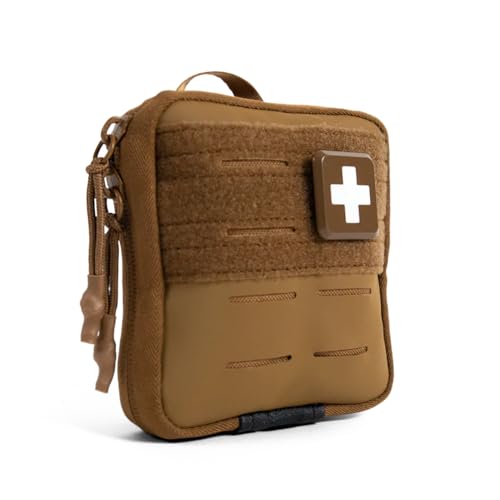
MY MEDIC Everyday Carry First Aid Kit
Style
Small everyday carry pouch
Strength
Easy stash-anywhere backup
Use Case
Glovebox, top box or daily ride carry
Tradeoff
Limited treatment depth
The Everyday Carry kit is the easiest one to leave on the bike full time. It is small, organized, and simple enough to stash in a glovebox, top box, or side compartment where it can stay ready without taking up meaningful space.
That also tells you what it is for. This is a backup or secondary kit, not a main remote-travel medical solution. It works well as a permanent bike stash or daily-ride safety layer. If you want deeper trip-ready coverage, pair it with a better primary kit.
Why It Wins:
- Small enough to keep on the bike without thinking about it.
- Useful backup layer for daily rides or short trips.
What You Give Up:
- Not enough depth for bigger incidents.
- Better as a secondary kit than a main travel kit.
What Kind of Kit Do You Actually Need?
Single compact primary kit
The Mountain Series Hiker kit and Sidekick Pro are the best starting points if you want one main bag that still fits real motorcycle travel. One leans more balanced. The other leans slightly more emergency-focused.
Two-kit setup: general care plus trauma
If you want better preparedness without carrying one oversized pouch, pairing a compact general kit with the Trauma Pak Pro often makes more sense. That gives you normal treatment supplies plus a separate trauma layer.
Bike-stash backup kit
The Ultralight/Watertight .5 and Everyday Carry kit are the easiest to keep in a bag or box full time. They work well when you want coverage on the bike even outside camping trips.
How to Choose a Motorcycle Camping First Aid Kit
Pick the role first. Is this your only kit, a backup, or a trauma add-on? After that, look at organization, weather resistance, and whether the pouch actually fits where you plan to carry it. The perfect kit on paper is useless if it never makes it into your luggage. That matters just as much as the rest of your motorcycle camping checklist.
You also need to think honestly about ride distance and remoteness. A short campground weekend does not need the same medical depth as a remote backcountry route. Matching the kit to the trip is smarter than buying the biggest bag and hoping that solves everything.
Common mistakes when buying first aid kits
- Carrying only a tiny bandage kit and calling it good.
- Mistaking a trauma pack for a complete first aid kit.
- Buying a huge kit that never actually gets packed.
- Failing to match kit depth to how remote the trip will be.
Frequently asked questions about motorcycle camping first aid kits
Should a motorcycle camping first aid kit include a tourniquet?
It depends on your risk tolerance and training, but many riders prefer at least one more serious bleeding-control option in their setup.
What is the difference between a trauma kit and a basic first aid kit?
A trauma kit focuses on serious bleeding and urgent emergencies. A basic first aid kit handles common injuries like cuts, blisters, and minor burns.
What size kit is right for one rider?
A compact but organized kit is usually the best fit. It should be large enough to matter but small enough that you will always carry it.
Is it better to carry one kit or two?
Two kits can make more sense if one is a compact general kit and the other is a trauma-specific add-on. It depends on your space and priorities.
If you are refining the rest of the travel setup, compare dry bags for motorcycle camping, water filters for motorcycle camping, and rugged power banks for motorcycle camping.