
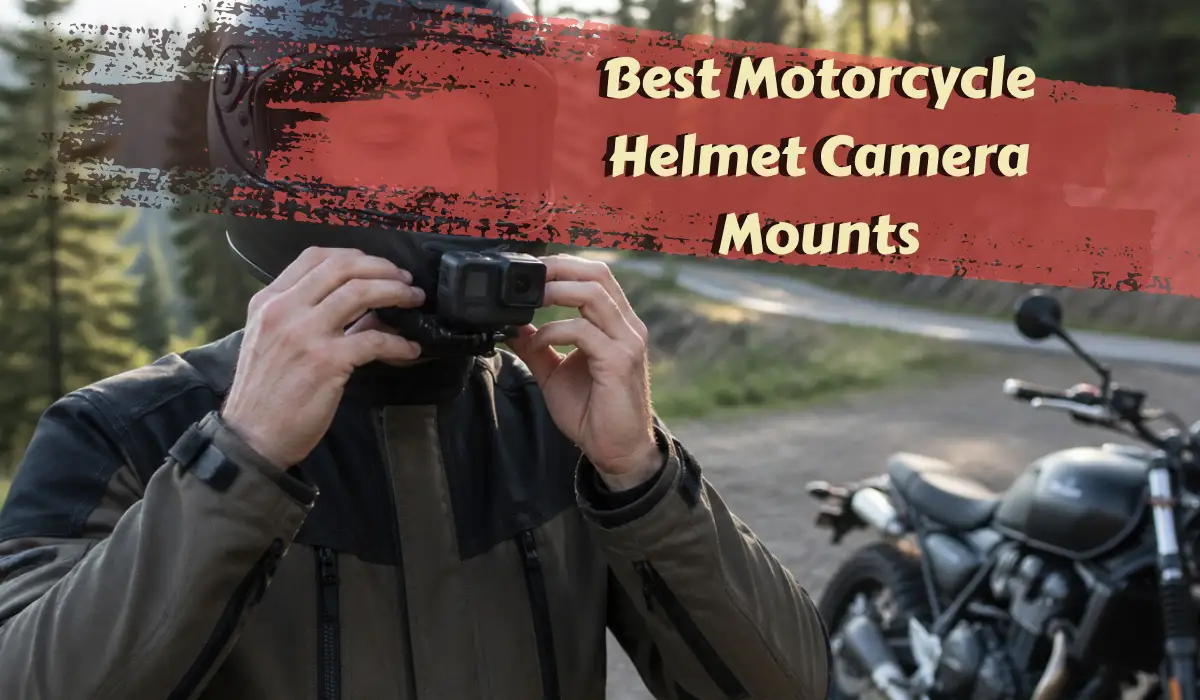
The best motorcycle helmet camera mount has to do more than hold a camera. It has to survive highway wind, keep the shot level, clear the chin vent, and stay out of the way every time you raise or lower the visor.
This page is for motorcycle riders who care about chin-bar shape, road-speed stability, and what actually works on full-face, modular, and dirt-ready lids.
If you still need the camera itself, compare the best motorcycle helmet cameras. If you are still choosing the helmet, start with best motorcycle helmet.
Jump Ahead To:
Quick Picks
- Best for Most Street Helmets: Motorcycle Helmet Chin Mount Kits with Adhesive Curved Pads – Best balance of adhesive surface, angle tuning, and general street-helmet compatibility.
- Best Centered POV: Motorcycle Helmet Mount Kit for GoPro, DJI Osmo, and Insta360 – Best if you want the camera sitting centered under the visor with faster camera swaps.
- Best for Dirt and Multi-Helmet Use: Helmet Chin Mount Strap Holder Clamp Quick Release Mount – Best when you move the same camera between different helmets and do not want adhesive on every shell.
- Best for Tight Chin Bars: Flex Slim Flexible Universal Motorcycle Helmet Chin Mount Kit – Best for sharply curved or narrow chin bars where rigid mounts keep lifting.
Best for Most Street Helmets

Motorcycle Helmet Chin Mount Kits with Adhesive Curved Pads Compatible with GoPro Hero 13, 12, 11, 10, 9, 8, 7, (2018), 6 5, Hero Black, Session, Xiaomi Yi, SJCAM, Campark (Version A)
Best Centered POV
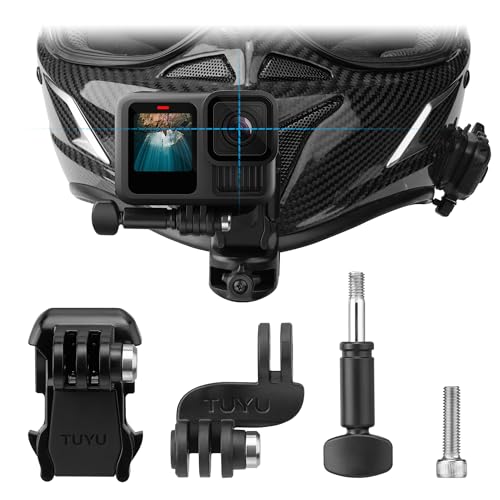
Motorcycle Helmet Mount Kit for GoPro Hero 12/11/10/9/8, DJI Osmo 3/4, Insta360 Side & Chin Camera Bracket, Quick-Release Center Buckle, Anti-Drop Screws & Wrench for Riding & Outdoor Sports
Best for Dirt and Multi-Helmet Use

Helmet Chin Mount, Motorcycle Dirt Bike Bicycle Strap Holder Clamp Quick Release Mounts Accessories for GoPro Max Hero 13 12 11 10 9 8 7 Insta360 X5 X4 GO3 Ace Pro 2 DJI Osmo Action 6 5 Pro Pocket 3
Best for Tight Chin Bars

Flex Slim Flexible Universal Motorcycle Helmet Chin Mount Kit Bendable Silicone Compatible with GoPro Hero 12, 11, 10, DJI Osmo Action, Insta360, SJCAM, Xiaomi Yi Action Cameras (Black)
Comparison Table
| Product | Best For | Key Strength | Main Tradeoff |
|---|---|---|---|
| Adhesive curved-pad chin kit | most street riders using one main helmet | big adhesive contact patch, extra angle arm, safety tether | can steal airflow from the chin vent if mounted badly |
| Quick-release centered mount kit | motovloggers and daily camera users | centered footage plus quick camera removal | wants a flatter chin-bar surface than many helmets provide |
| Strap holder clamp mount | dirt riders and riders with several helmets | no adhesive and more shape flexibility | straps add bulk and can crowd the chin area |
| Flex Slim silicone mount | angular, narrow, or oddly curved chin bars | flexible low-profile base conforms better than rigid plates | not as planted as a perfect rigid install on a flat surface |
What Makes Motorcycle Helmets Harder to Mount
Motorcycle helmets are not flat action-sports shells. Street lids have chin vents, sharp creases, visor tabs, and narrow chin bars that can make a normal mount sit crooked. Modular helmets add hinges and latch hardware that cut into your available space even more.
That means the mount that looks strongest in a product photo is not always the best one for your helmet. You need enough contact area for the base, enough room to keep the visor moving freely, and enough vent clearance that the camera does not make a cool-weather helmet fog worse.
If you are still buying the helmet itself, compare full-face motorcycle helmets, modular motorcycle helmets, and adventure motorcycle helmets before you assume every shell will take the same mount.
Best Motorcycle Helmet Camera Mounts 2026
1 / 4
Motorcycle Helmet Chin Mount Kits with Adhesive Curved Pads Compatible with GoPro Hero 13, 12, 11, 10, 9, 8, 7, (2018), 6 5, Hero Black, Session, Xiaomi Yi, SJCAM, Campark (Version A)
Focus
Street-friendly adhesive kit with a larger base, flat and curved pads, an extra angle arm, and a safety tether
Fit
Works best on full-face helmets with enough chin-bar depth to keep the base above the main vent opening
Use Case
Riders who want one stable mount left on a daily-use road helmet
Tradeoff
A bad install can block airflow and add fogging in cooler weather
This kit is the strongest general answer for street helmets because it solves the main motorcycle problems in one box. The larger adhesive base helps on curved chin bars, the extra arm lets you fine-tune the camera angle instead of living with a nose-up shot, and the safety tether adds a layer of insurance that cheaper adhesive kits usually skip.
It works best when one helmet is your dedicated filming lid. Once the base is installed well, it feels cleaner and more stable than strap systems, but the placement matters. Full-face street helmets rely on the chin vent more than many riders realize, so you need to mount it high enough that the camera does not smother the airflow path.
Why It Wins:
- Larger adhesive footprint suits street-helmet chin bars better than tiny pads.
- Extra arm helps level the shot on sloped front profiles.
- Safety tether is worth having on a road setup that sees real speed.
What You Give Up:
- Best when left on one helmet rather than moved around all the time.
- Can hurt airflow if you place it too low over the chin vent.
Bottom Line: This is the best mount for most street riders who want a clean, stable chin setup on one primary helmet.
2 / 4
Motorcycle Helmet Mount Kit for GoPro Hero 12/11/10/9/8, DJI Osmo 3/4, Insta360 Side & Chin Camera Bracket, Quick-Release Center Buckle, Anti-Drop Screws & Wrench for Riding & Outdoor Sports
Focus
Centered chin-mount system with quick-release hardware and an anti-drop screw for more secure daily use
Fit
Best on helmets where the chin bar gives you enough flat space to keep the base square under the visor
Use Case
Riders who film commute footage, road rides, or motovlogs and remove the camera often
Tradeoff
Centered designs are less forgiving if the chin bar is narrow or heavily sculpted
If your main goal is natural-looking line-of-sight footage, this is the best buy here. A centered mount keeps the camera tucked under the visor and gives road footage a more balanced look than side-mount setups. That matters a lot if you care about bars, mirrors, and the horizon sitting where viewers expect them to sit.
The quick-release base makes it even more useful for daily riding because the camera comes off fast when you stop for gas, food, or parking. The weak point is shell shape. Centered mounts look great when the chin bar cooperates, but they are fussier on narrow or deeply peaked fronts where the base cannot sit flat.
Why It Wins:
- Best option here for balanced, centered road footage.
- Quick-release base is genuinely useful for daily commuting and motovlogging.
- Anti-drop screw adds security on rough pavement and longer rides.
What You Give Up:
- Needs a fairly cooperative chin bar to sit square and centered.
- Less flexible than strap systems if you switch helmets often.
Bottom Line: Buy this one when a centered camera angle and fast camera removal matter more than all-shell versatility.
3 / 4
Helmet Chin Mount, Motorcycle Dirt Bike Bicycle Strap Holder Clamp Quick Release Mounts Accessories for GoPro Max Hero 13 12 11 10 9 8 7 Insta360 X5 X4 GO3 Ace Pro 2 DJI Osmo Action 6 5 Pro Pocket 3
Focus
No-glue strap mount with 180-degree adjustment for riders moving one camera between several helmets
Fit
Works well on dirt and mixed-use helmets where shell shapes change too much for one fixed adhesive base
Use Case
Riders with multiple helmets, off-road lids, or shared camera kits
Tradeoff
Straps can crowd the chin area and make a street helmet feel busier up front
The strap mount is the smart buy when you are moving the same camera between a few helmets or when you ride dirt and street with different lids. That is where adhesive systems get annoying. You either buy extra pads for every shell or you start peeling mounts off expensive helmets and hoping the finish stays happy.
A strap setup is not as tidy, but it is more forgiving. It works especially well for helmets with odd peaks, off-road chin bars, or shapes that change too much from one shell to the next. The price of that flexibility is bulk. The straps take up space, and some riders will notice the extra crowding around the front of the helmet.
Why It Wins:
- Best option for riders who swap one camera between multiple helmets.
- More forgiving on dirt and mixed-use helmet shapes.
- No adhesive means less commitment to one shell.
What You Give Up:
- Busier and bulkier than a clean adhesive mount.
- Chin area can feel tighter once the straps are in place.
Bottom Line: Choose the strap mount if your riding rotates between different helmets and you do not want every shell covered in adhesive bases.
4 / 4
Flex Slim Flexible Universal Motorcycle Helmet Chin Mount Kit Bendable Silicone Compatible with GoPro Hero 12, 11, 10, DJI Osmo Action, Insta360, SJCAM, Xiaomi Yi Action Cameras (Black)
Focus
Flexible silicone chin mount built to wrap around narrow, angular, or awkwardly curved helmet fronts
Fit
Low-profile body keeps the front of the helmet lighter and less bulky than many rigid mounts
Use Case
Riders whose street helmet keeps rejecting flat adhesive plates
Tradeoff
Flexible fit comes with a little less locked-in feel than a perfect rigid install
The Flex Slim is the problem-solver for helmets that keep making normal mounts sit crooked or peel at the edges. Rigid plates work best on simple shapes. A lot of modern street helmets do not have simple shapes. They have hard creases, shallow center sections, or narrow chin bars that make a flat base look secure in the garage and questionable at speed.
That is where a bendable silicone mount helps. It can wrap around the shape more naturally, and the low weight keeps the front of the helmet from feeling as nose-heavy. It still needs a proper install and test ride, but it is the first product to try when shell geometry is the main problem.
Why It Wins:
- Best choice here for narrow or sharply sculpted chin bars.
- Light flexible build adds less front-end bulk to the helmet.
- Easier to make work on problem shells than stiff plate-style mounts.
What You Give Up:
- Does not feel as solid as a perfect rigid mount on a flat chin bar.
- Flexible design does not erase the need for careful adhesive prep.
Bottom Line: The Flex Slim is the right answer when your helmet shape keeps defeating normal chin mounts.
Installation Mistakes That Ruin Good Mounts
The most common mistake is placing the base where it looks best instead of where the shell actually supports it. Chin vents, sliding visor tabs, and sculpted chin bars often leave less usable space than riders think.
The next mistake is rushing the prep. Even a good adhesive base can fail if the shell is dirty, oily, or not fully cured before riding. Do a short local test before a highway run, especially if the mount sits close to a vent or a visor edge.
If adding a mount suddenly makes your helmet louder or stuffier, compare how to reduce motorcycle helmet wind noise and how to stop motorcycle helmet fogging. Mount placement can affect both.
Frequently Asked Questions
Is a chin mount better than a side mount on a motorcycle helmet?
Usually yes. It gives more natural rider-eye footage and keeps the camera weight more centered.
Can a helmet camera mount block my vent?
Yes. That is one of the biggest motorcycle-specific problems with chin mounts.
Are strap mounts better for dirt helmets?
Often yes, especially if you move the same camera between several helmets or use peaked off-road lids.
Do I need a quick-release mount?
It helps a lot if you remove the camera after every ride or every stop.
Will a flexible mount feel less secure?
Sometimes a little, but it can still be the right answer when a rigid plate does not match the shell shape.
What should I test before a long ride?
Test the camera angle, visor clearance, vent access, and whether the mount shifts on a short ride first.
If you still need the camera body itself, use best motorcycle helmet cameras. If your current shell is already on its way out, check when to replace a motorcycle helmet before you build a camera setup around it.