
The best adventure motorcycle helmets need to do more than look rugged. They need to balance highway comfort, peak stability, enough airflow for slow dirt sections, and a shield setup that still works when conditions flip from bright sun to cold rain.
This guide focuses on the helmets riders are most likely to compare for mixed road-and-trail use. If you are still sorting the big picture first, start with the main motorcycle helmet guide, then compare the types of motorcycle helmets and the helmet safety ratings guide. Riders who already know they want a flip-up shell should also compare the best modular motorcycle helmets.
Jump Ahead To:
Quick Picks
- Best Overall: LS2 Blaze Sprint Adventure Adult Dual Sports Helmet – Best if you want a light ADV shell with a drop-down sun shield and can live with more highway noise.
- Best Value: Bell MX-9 Adventure MIPS Full-Face Helmet – Best if airflow, goggle-ready flexibility, and MIPS matter more than highway quiet.
- Best Feature Set: ILM Dual Sport Adventure Helmet with Pinlock Compatible Sun – Best if you want dual visors, Pinlock-ready hardware, and an easy quick-release setup.
- Best for Daily Riding: Orthrus Dual Sport Adventure Helmet DOT Certified for Adults – Best if you want dual visors, intercom slots, and commuter-friendly convenience.
- Best for Weather Use: ScorpionEXO AT960 Modular Adventure Street Helmet – Best if you want a modular ADV helmet with stronger shield sealing and cold-weather comfort.
- Best Backup Pick: LS2 Helmets Explorer Adventure Helmet – Best if included anti-fog support matters more than quiet highway miles.
Best Overall
Best Value
Best Feature Set
Best for Daily Riding
Best for Weather Use
Best Backup Pick
Comparison Table
| Product | Best For | Key Strength | Main Tradeoff |
|---|---|---|---|
| LS2 Blaze Sprint Adventure Adult Dual Sports Helmet | mixed pavement and gravel days | light shell, three shell sizes, and a built-in sun shield | loud once speeds climb and the cheek pads can start tight |
| Bell MX-9 Adventure MIPS Full-Face Helmet | hot-weather ADV riding on a budget | strong airflow, flip-up visor, and MIPS | peak pull and wind noise are real on faster highway runs |
| ILM Dual Sport Adventure Helmet with Pinlock Compatible Sun | feature-heavy daily use | dual visors, Pinlock 30 compatibility, and quick-release convenience | airflow is limited and sizing can feel a bit large |
| Orthrus Dual Sport Adventure Helmet DOT Certified for Adults | commuting with regular light changes | dual visors, quick-release buckle, and intercom slots | fit can run small and shield noise varies by rider |
| ScorpionEXO AT960 Modular Adventure Street Helmet | cold mornings and travel-heavy ADV use | modular chin bar, fog-resistant shield, and strong visor sealing | bulkier than a simple full-face and still not truly quiet with the peak on |
| LS2 Helmets Explorer Adventure Helmet | occasional ADV use in mixed weather | Pinlock MAX included, built-in sun shield, and removable peak | still noisy at highway speed and warmer with the shield down |
Quick Decision Guide
Start with your split between pavement and dirt. If most of your miles are still road miles with some gravel, look for calmer aerodynamics, visor sealing, and better all-day comfort. If you ride more technical trails, peak stability and eye-port flexibility matter more. Riders who are still deciding between ADV, full-face, and flip-up shells should compare the full-face helmet picks and the modular helmet picks before locking in the category.
Next, think about how the helmet works around the rest of your setup. If you wear glasses, speaker comfort, temple pressure, and shield access change the decision fast, so also read the helmets for glasses guide. If your trips run hot, dusty, or noisy, pair this with the helmets for hot weather roundup and how to reduce helmet wind noise. Riders running comms on travel-heavy ADV days should compare the helmet speakers guide and the helmet speakers vs earbuds guide. Riders running goggles on certain off-road days should also compare the motorcycle goggles guide.
Best Adventure Motorcycle Helmets 2026
1 / 6
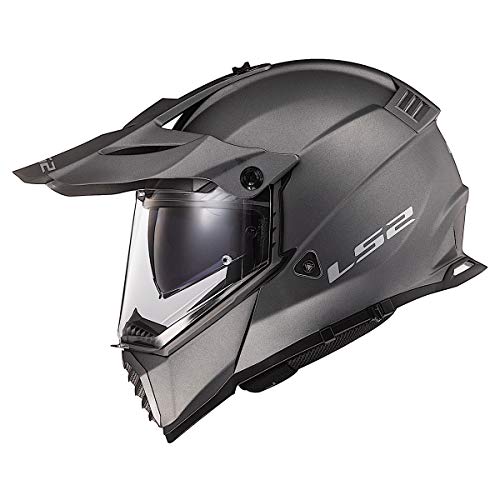
LS2 Blaze Sprint Adventure Adult Dual Sports Helmet
Focus
Light ADV shell with a drop-down sun shield and removable peak
Comfort
Three shell sizes and multi-port venting suit mixed road and gravel use
Use Case
Riders who want one helmet for regular road miles with occasional dirt detours
Tradeoff
Wind noise builds quickly once speeds climb
The LS2 Blaze Sprint works best for riders who want a light ADV shell with the features that matter most day to day. You get a KPA shell, three shell sizes, a built-in drop-down sun shield, and multi-port ventilation, so it covers the basics for mixed pavement and gravel use without getting complicated.
Noise is the tradeoff. This helmet stays light and comfortable, but the peak and shell get busy once speeds climb, so it makes more sense for back roads, shorter highway stints, and riders who already use earplugs. Remove the peak and it leans closer to a street-friendly ADV setup.
Why It Wins:
- Light KPA shell with three shell sizes gives it a broad fit and use range.
- Built-in sun shield is handy when pavement, trees, and open light keep changing.
- Multi-port venting and a removable peak make it easier to tune for mixed riding.
What You Give Up:
- Highway noise is the big compromise, especially once speeds climb past town pace.
- Tight cheek pads and the left-side sun-visor switch can complicate break-in and comms placement.
Bottom Line: Best overall if you want a light ADV helmet that can cover regular road miles and gravel detours, and you already ride with earplugs.
2 / 6
Bell MX-9 Adventure MIPS Full-Face Helmet

Focus
Hot-weather ADV helmet with MIPS and a goggle-ready visor setup
Comfort
Three shell sizes and strong airflow suit warm rides better than quiet touring
Use Case
Riders who want dirt-to-street flexibility without premium pricing
Tradeoff
Peak pull and wind noise show up fast on pavement
The Bell MX-9 Adventure is the clear value pick if you want a real ADV feature set instead of a stripped-down budget shell. It gives you MIPS, three shell sizes, a flip-up anti-fog clear visor, and a removable peak, so it can switch between shield use and goggle use without much fuss.
It also suits hot-weather riding better than most helmets here. Airflow is a real strength, glasses compatibility looks better than average, and the dirt-to-street layout makes sense for riders who split time between pavement and slower off-road work. The catch is highway behavior: the peak can start pulling early, and wind noise is part of the package.
Why It Wins:
- MIPS and DOT/ECE approval give it a stronger safety and feature story than many cheaper ADV lids.
- Flip-up clear shield and removable visor make it easy to swap between shield use and goggle use.
- Strong airflow makes it a better match for hot riding and slower trail work.
What You Give Up:
- Wind noise and peak pull show up fast on higher-speed pavement.
- Most of the vents stay open, so it is a poor match for riders who want a sealed winter helmet.
Bottom Line: Best value if you want real ADV features, strong airflow, and MIPS without paying for a premium touring shell.
3 / 6
ILM Dual Sport Adventure Helmet with Pinlock Compatible Sun

Focus
Dual-visor ADV helmet with a Pinlock-ready eye port
Comfort
Chin curtain and multiple vents favor cooler-weather daily use
Use Case
Riders who want easy sun-shade and fog-control options
Tradeoff
Airflow is limited and fit can feel slightly large
The ILM is the feature-heavy pick for riders who care more about everyday convenience than brand cachet. It pairs an oversized eye port with a removable outer visor, an internal sun shield, Pinlock 30 compatibility, seven-position ventilation, a chin curtain, and a quick-release clasp.
That setup works especially well if you ride through changing light or colder weather and want easier fog control. The downside is that this is not a max-airflow helmet. Expect a calmer, more closed-in feel, watch sizing carefully, and do not assume the outer visor will feel tall enough for every rider.
Why It Wins:
- Pinlock-ready eye port, inner sun visor, and quick-release strap make it easy to live with every day.
- Seven vent positions and a removable chin curtain give you more setup options than most basic ADV lids.
- Dual visors and Pinlock compatibility give it real cold-weather practicality.
What You Give Up:
- Airflow is not this helmet's best trick, especially compared with more open ADV shells.
- Fit can run a touch large, and some riders will want a taller outer visor.
Bottom Line: Best feature-set pick if you want dual visors and Pinlock compatibility in one ADV helmet without a lot of extra fuss.
4 / 6
Orthrus Dual Sport Adventure Helmet DOT Certified for Adults
Focus
Dual-visor ADV helmet built around daily convenience
Comfort
Quick-release buckle and intercom slots make commuting easier
Use Case
Riders who want an easy everyday ADV shell with sun-shade flexibility
Tradeoff
Fit can run small and shield noise varies
The Orthrus makes the most sense as a daily-use ADV helmet. The dual-visor layout, quick-release buckle, removable liner, and built-in headphone slots all point toward commuting, errand riding, and short mixed-surface days where convenience matters more than outright refinement.
It also comes with the usual budget ADV compromises. The visor operation and cold-air blocking are useful, but fit can run small, shield noise is not especially refined, and the main shield tint will not suit everyone. That still leaves it as a practical commuter option if you want ADV styling without a fiddly setup.
Why It Wins:
- Dual visors and a quick-release buckle make it easy to use on everyday rides with changing light.
- Built-in intercom slots save you from stuffing speakers into the liner.
- Good cold-air blocking and stable visor operation help on day-to-day rides.
What You Give Up:
- Sizing can run small, especially if you are right on the line between sizes.
- Shield noise and tint clarity are less consistent than on stronger premium options.
Bottom Line: Best for daily riding if easy visor use and intercom-ready padding matter more than peak off-road performance.
5 / 6
ScorpionEXO AT960 Modular Adventure Street Helmet

Focus
Modular ADV and touring helmet with a removable peak and comms-ready shell
Comfort
Everclear shield, sun visor, and aero skirt help in colder weather
Use Case
Riders who want one helmet for commuting, travel, and light off-road use
Tradeoff
Bulk and peak noise are part of the package
The Scorpion AT960 is the most travel-ready helmet in this lineup. The modular chin bar, removable peak, Everclear no-fog shield, internal sun visor, breath deflector, aero skirt, speaker pockets, and ECE 22.06 certification push it closer to a touring helmet that still keeps ADV flexibility.
That shows up on the road. It handles cold mornings well, stays more composed than expected through changing weather, and gives you easy vent control when fog starts building. The price you pay is size and noise. It is bulkier than a standard ADV full-face, and the peak still keeps it from feeling like a true quiet helmet.
Why It Wins:
- Flip-up chin bar, sun visor, and fog-resistant shield make it easy to manage changing weather without stopping.
- Breath deflector, aero skirt, and stronger shield seal help it hold heat better than open-feeling ADV lids.
- Speaker pockets and EXO-COM compatibility suit riders building a travel helmet around comms.
What You Give Up:
- It is heavier and bulkier than the simpler ADV helmets in this group.
- The peak still adds noise, so it is not a true quiet-helmet replacement.
Bottom Line: Best for weather use if you want a modular ADV helmet that handles cold mornings, comms, and day-long touring better than a basic dual-sport shell.
6 / 6
LS2 Helmets Explorer Adventure Helmet

Focus
ADV helmet with a Pinlock MAX insert and built-in sun shield
Comfort
Fiberglass shell and weather-friendly visor setup suit occasional trips
Use Case
Riders who want a second ADV helmet for shoulder-season miles
Tradeoff
Crosswind noise and warmer shield-down riding limit highway comfort
The LS2 Explorer works best as a second ADV helmet for riders who care about weather management more than highway hush. The big draw is simple: it pairs a fiberglass shell with a built-in sun shield and an included Pinlock MAX insert, so you start with a better anti-fog setup than most helmets in this group.
That makes it useful for shoulder-season trips, wet rides, and occasional off-pavement weekends. It stays comfortable for many riders and the vents can be managed for colder weather, but the peak gets noisy in crosswinds and the helmet gets warmer with the shield down. Buy it for occasional mixed-weather use, not as your quietest road lid.
Why It Wins:
- Included Pinlock MAX insert is a real advantage for cold and damp rides.
- Built-in sun shield and removable peak make it easy to adapt to changing conditions.
- Solid comfort and useful weather management make it easy to keep as a second helmet.
What You Give Up:
- Highway noise and crosswind peak noise show up once speed climbs.
- It can get warm with the shield down, especially in slower riding.
Bottom Line: Best backup pick if you want an ADV helmet with built-in anti-fog help for occasional trips, shoulder-season rides, and bad-weather miles.
How to Choose an Adventure Motorcycle Helmet
Think first about where your time actually goes. Riders doing mostly highway and secondary-road travel want calmer aerodynamics, less neck fatigue, and better visor sealing. Riders doing more off-road work care more about eye-port flexibility, peak behavior, and whether goggles are part of the plan. That is why the quiet helmet roundup and the hot-weather helmet roundup can matter almost as much as the ADV category itself.
Then plan the ownership details. If you run comms, compare the helmet speakers guide and the helmet speakers vs earbuds guide. If road grime, dust, or bug cleanup is part of the routine, also keep how to clean a motorcycle helmet, best motorcycle helmet bags, and when to replace a motorcycle helmet in mind before you buy.
Common Buying Mistakes
- Buying an ADV helmet for the look when your riding is almost entirely highway commuting.
- Ignoring peak stability and wind noise until after the first long road day.
- Choosing features before checking long-session fit around the temples, ears, and crown.
- Forgetting to plan for glasses, goggles, or speaker comfort.
- Assuming every ADV helmet works equally well in hot weather and rain.
Frequently Asked Questions
Are adventure helmets louder than street helmets?
Often yes, especially if the peak and shell shape create more turbulence at highway speed.
Do I need goggles with an adventure helmet?
Not always. Many riders use the shield full-time, but goggles still matter if your riding includes more dust, slower trail work, or visor-up off-road use.
Is a modular adventure helmet a good idea?
Yes for road-heavy travel, commuting, and mixed-weather convenience, but usually not for riders chasing the lightest dirt-biased feel.
What matters most in ADV helmet comfort?
Fit around the crown and cheeks, peak stability, shield behavior, and how the helmet handles wind over long road miles.
Should I buy an ADV helmet for commuting?
Only if you actually want the ADV shell format. A quieter full-face or modular lid can be a better commuter answer for pure pavement use.
How often should I replace an adventure helmet?
Replace it after a crash, after meaningful shell damage, or when age, wear, and liner breakdown make the fit and protection questionable.
If you want a calmer street-biased alternative, compare the best full-face motorcycle helmets. If you want flip-up convenience, see the best modular motorcycle helmets. For fit planning, also read the helmets for glasses guide.