
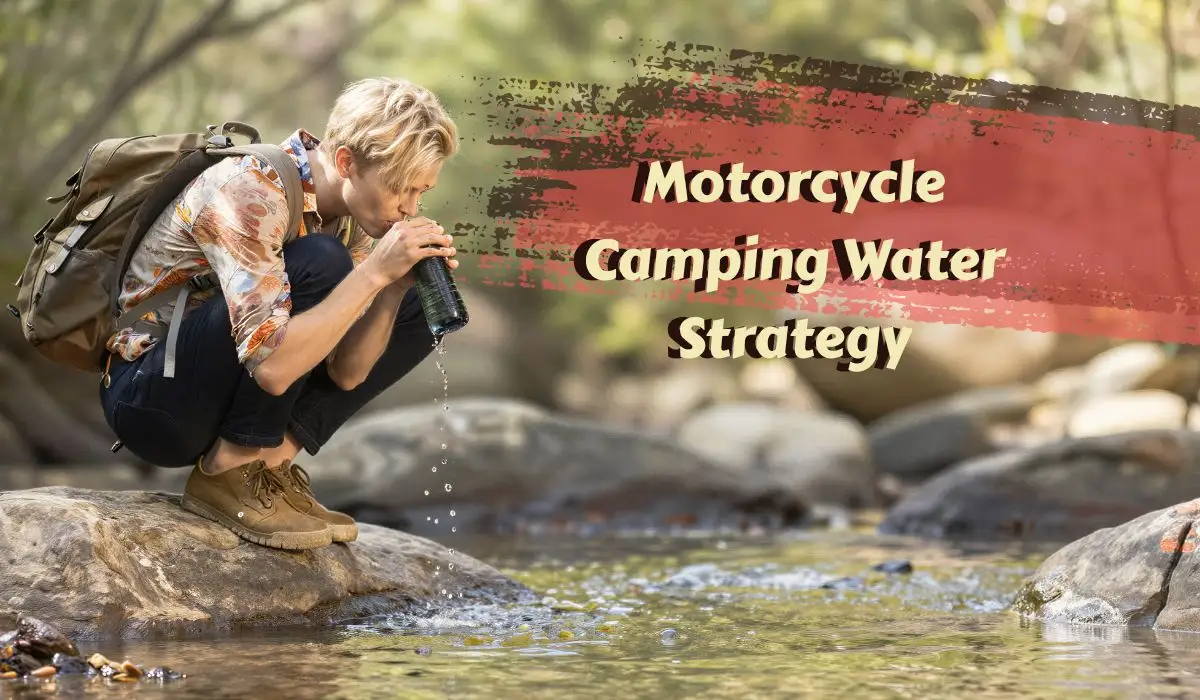
A motorcycle camping water strategy is a practical plan for how much water to carry, where to refill, how to treat, and how to pack that weight on the bike. If you misjudge volume or placement, you risk dehydration and unstable handling. This guide gives a simple daily system you can run on any route. It fits best alongside the main motorcycle camping gear guide.
Jump Ahead To:
What a Motorcycle Camping Water Strategy Is (and Who Needs It)
This strategy is not just "bring a bottle." It is a full workflow:
- Forecast daily water demand.
- Carry enough capacity for dry sections.
- Refill at planned points before you are low.
- Treat any uncertain source safely.
If you camp from the bike, you need this. If you ride hot climates or remote routes, you need it even more.
Why Water Planning Matters on a Bike
Water is heavy. One liter is about one kilogram. That weight affects braking, balance, and fatigue.
Bad water planning usually creates two problems:
- Too little water for heat and camp tasks.
- Too much badly placed weight high on the bike.
Good planning avoids both. You carry enough for drinking and camp use while keeping heavy loads low and stable.
Core Water Concepts You Need to Know
1) Filter vs purifier
A filter handles common backcountry bacteria and protozoa. A purifier setup adds virus-level protection and is more important for higher-risk regions.
2) Baseline daily volume
Most riders need around 2 to 4 liters per day in mild conditions. In hot conditions, needs can climb much higher.
3) Carry strategy
Use a split system: quick-access drinking water plus separate bulk storage for camp and dry stretches. If your luggage is soft or modular, it also helps to follow a dry-bag packing system that keeps water weight low and stable.
4) Redundancy
Never depend on one tool. A blocked filter, broken bladder, or dead battery can happen.
If you are still choosing treatment gear, start with best water filters for motorcycle camping.
Step-by-Step Water Strategy for Motorcycle Camping
1. Calculate your day before you roll out
Estimate climate, ride intensity, and refill gaps. Treat desert or high-heat days as a separate plan.
2. Build two carry zones
Keep drink-now water easy to access while riding. Store bulk water lower in panniers or stable luggage zones.
3. Pre-plan refill points
Mark fuel stations, public taps, and known water sources before you leave.
4. Treat uncertain natural water every time
Clear water is not always safe water. Treat first, then drink. If you are still choosing the right tool, compare water filters for motorcycle camping before the trip.
5. Fill before dry camp
Top up all containers before you ride into camp areas without reliable water.
6. Protect your treatment tools
Keep filters from freezing and keep backup treatment ready if your primary method fails.
7. Track intake through the day
Do not wait for strong thirst. Small, regular intake works better than large, delayed chugs.
Common Mistakes (and How to Fix Them)
Mistake: Waiting too long to refill
Fix: Refill early when you have a sure source, not when your last container is almost empty.
Mistake: Packing water too high on the bike
Fix: Keep heavy water loads low and centered to protect handling.
Mistake: Using only one treatment method
Fix: Carry a backup option in case your main method fails.
Mistake: Ignoring filter maintenance
Fix: Backflush and clean on schedule so flow rate stays usable.
Mistake: Mixing sugary drinks in your main hydration bladder
Fix: Keep your main system for plain water and mix flavor drinks separately.
Water Safety and Maintenance Tips
Avoid collecting water near heavy livestock activity, industrial runoff zones, or stagnant pools when better sources exist.
Remember that basic treatment methods do not solve every contamination type. If source quality is questionable, choose a safer source or carry from a known clean refill point.
Clean and dry your storage system after trips. Good maintenance prevents taste, odor, and microbial growth.
If your camp routine includes cooking and cleanup, coordinate this plan with the camp kitchen setup guide so your meal and hydration needs stay balanced. That also makes stove and pot sizing easier when you compare motorcycle camping cookware sets.
Frequently Asked Questions
How much water should I carry per day on motorcycle camping trips?
For many riders, 2 to 4 liters is a starting point in mild weather. In high heat, you may need much more.
Is one filter enough?
Carry a backup treatment option. Redundancy is part of a reliable water strategy.
Should I carry all water in one big bladder?
No. Split your system into riding access water and bulk camp water so one failure does not wipe out everything.
What is the best refill strategy on long routes?
Refill earlier than you think you need, especially before remote stretches and dry camps.
Can I rely on clear stream water without treatment?
No. Treat uncertain natural sources every time.
Where should water weight go on the motorcycle?
Low and centered as much as possible to reduce handling problems.
To build a full camp-ready loadout, pair this with motorcycle camping checklist and practical power planning from best rugged power banks for motorcycle camping, especially if you run electronic purification tools. If your camp meals depend on filtered water, also compare motorcycle camping stoves and motorcycle camping cookware sets.