
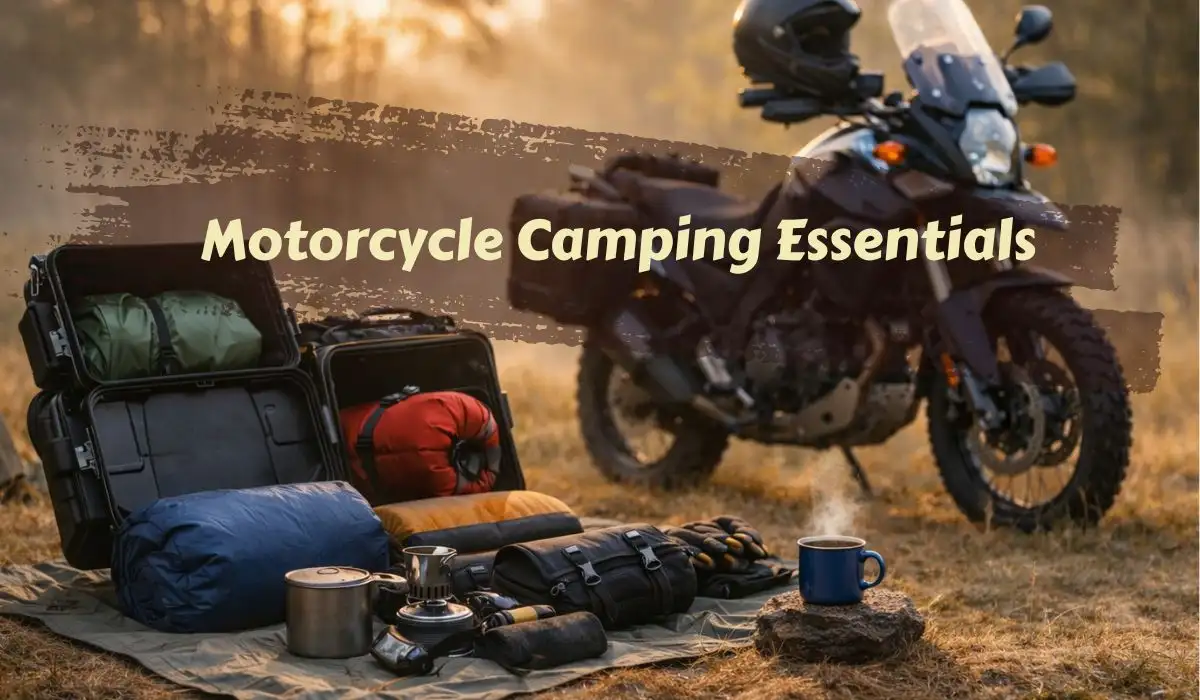
Are motorcycle camping essentials just a shorter packing list? Motorcycle camping essentials are the items that protect safety, recovery, and trip continuity when luggage space is tight.
When priorities are unclear, riders overpack comfort items and miss critical tools or weather layers. This guide gives a simple hierarchy so the must-have items make the bike first, every time.
Jump Ahead To:
What Is Motorcycle Camping Essentials (and Who Needs It)
Motorcycle camping essentials are the minimum gear categories you need to ride, stop, recover, and continue safely over multiple days while sleeping outdoors. The keyword is minimum, but not in a cheap or stripped-down sense. It means essential to outcome: safety, reliability, and next-day function.
This framework is for weekend overnighters, multi-day touring riders, and ADV riders who want repeatable systems instead of one-off packing chaos. It is also for riders who already own gear but still feel like their loadouts are messy, heavy, or hard to access under pressure.
If you are still guessing what to cut when space gets tight, this guide is for you.
If you want the full category view before you buy anything, start with the main motorcycle camping gear guide.
Key Differences: Essentials vs Checklist vs Gear Guide
These three are related, but not interchangeable.
Essentials
This is your hierarchy. It answers: what must go, what should go, what can stay home. Essentials are principle-first.
Checklist
This is your execution sheet. It answers: did I pack it, where is it, is it ready. Checklists are process-first.
Gear Guide
This is your selection help. It answers: which product type or model fits your use case. Gear guides are purchase-first.
Think of it as one pipeline:
- Essentials decide priority.
- Checklist controls consistency.
- Gear guides refine buying decisions.
When riders skip step one, step two becomes cluttered and step three becomes expensive.
A quick hierarchy card you can apply to every item:
Critical: trip safety or continuity fails without it.Support: trip still works without it, but friction rises.Comfort: quality-of-life only, no continuity impact.
If storage pressure hits, remove from comfort first, then support. Critical stays.
Motorcycle Camping Essentials: Core Decision Filters
The Problem: Storage, Weight, and Real Risk
Motorcycles force tradeoffs fast. You cannot hide poor decisions in extra trunk space. Every item affects at least one of these:
- Handling stability.
- Setup speed.
- Recovery quality.
- Failure response capability.
A practical essential filter:
- Does this reduce safety or failure risk?
- Does this improve next-day ride function?
- Does this solve a repeated daily friction point?
- Can this be replaced by a lighter or multi-use option?
If an item fails all four filters, it is probably not essential.
A useful stress test: imagine a rain delay, late arrival, and one small mechanical issue in the same evening. Keep items that help you absorb that scenario. Cut items that only look useful when conditions are ideal.
Essential Categories and Prioritization
Tier 1: Safety and Recovery Core
Tier 1 is non-negotiable. If these are weak, the whole trip gets fragile.
Core categories:
- Shelter system you can deploy quickly and predictably.
- Sleep system that protects recovery.
- Hydration and water planning.
- Lighting for setup and repair.
- Flat repair and basic bike tool coverage.
- First aid and personal meds.
This tier keeps you moving safely and helps you ride again the next day. Most rider failures on long trips are not dramatic. They are cumulative: poor sleep, poor hydration, and preventable setup stress.
Tier 2: Comfort for Performance
Tier 2 is not luxury. It is operational comfort that protects performance.
Typical items:
- Layering strategy for post-ride thermal reset.
- Organization system that reduces unpack/repack chaos.
- Simple meal flow that supports energy and mood.
This tier usually determines whether your trip feels sustainable by day three.
It is also where practical systems start doing more work than random extra items. A cleaner motorcycle camp kitchen setup and more realistic motorcycle camping water strategy usually do more for trip continuity than another optional comfort add-on.
Tier 2 is also where organization starts paying off. Two riders can carry similar total weight, but the rider with better organization usually arrives less stressed and sets camp faster.
Tier 3: Optional Comfort
Tier 3 is optional by definition. Add only after Tier 1 and Tier 2 are solid.
Typical examples:
- Chair or stool.
- Extra camp clothing options.
- Expanded kitchen extras.
- Entertainment add-ons.
Optional comfort is fine. Just do not let it displace safety or recovery core.
When in doubt, enforce a simple rule: for every optional item added, remove one equal-volume low-value item.
Shelter and Sleep Essentials
Essential Attributes (Compact, Fast, Reliable)
Your shelter and sleep system is the strongest recovery lever you carry. In motorcycle terms, a good setup should be:
- Compact enough to fit your luggage shape.
- Fast enough to deploy when tired or weather-exposed.
- Reliable enough to handle realistic trip conditions.
Freestanding tent designs are often preferred by riders because setup is easier across variable surfaces where staking can be inconsistent. Packability matters as much as weather resistance because volume pressure is constant on a bike.
Sleep essentials should include a real insulation plan, not just a bag rating. Riders routinely underestimate ground insulation and overestimate what clothing alone can solve at night.
When you are ready for product picks, compare motorcycle camping tents, motorcycle camping sleeping bags, and motorcycle camping sleeping pads.
Another practical check is setup predictability. If a shelter or sleep system is technically good but hard to deploy while tired, it may still be a poor essential choice for motorcycle travel.
If you want the whole overnight system tuned instead of shopping the pieces one by one, use the motorcycle camping sleep system guide after you shortlist shelter and insulation.
Loadout Scenarios: Small, Medium, Large
Use volume-aware scenarios so you stop packing like every trip has unlimited space.
| Scenario | Shelter and Sleep Priority | Practical Notes |
|---|---|---|
| Small Load (minimal luggage) | Compact shelter + compressible sleep kit + essential insulation | Use strict multi-use logic and avoid duplicate clothing systems |
| Medium Load (typical touring setup) | Full Tier 1 shelter/sleep + dry management + moderate comfort | Best balance for most riders doing multi-day trips |
| Large Load (expanded capacity) | Tier 1 + Tier 2 complete, selective Tier 3 comfort | Do not use extra space as excuse for random duplicates |
A larger bag does not change what is essential. It only changes how much optional comfort you can responsibly add.
If you are migrating from car camping, this is the hardest adjustment: capacity increase should improve redundancy and organization first, not just increase item count.
Constraints That Shape Every Essential Decision
Volume Limits and Luggage Shape
Motorcycle volume is not just liters. It is shape + access + stack order.
Common reality:
- Hard corners and awkward geometry waste space.
- Soft luggage can absorb odd shapes better.
- Deep bags hide critical gear if no zone system exists.
Use nesting logic:
- Soft items fill dead corners.
- Dense items lock low and close to center.
- First-access items stay near top or external quick-access pockets.
Packing by category alone is usually slower than packing by access priority.
Use a simple access matrix:
Immediate: needed within 2 minutes roadside (rain layer, headlamp, first aid).Camp-start: needed in first 20 minutes at camp (shelter, light, core sleep items).Camp-later: needed after setup (kitchen extras, comfort layers, non-critical items).
The better your access matrix, the less repacking chaos you create each day.
Weight Distribution and Handling
Weight position matters more than raw weight number once you are near typical touring load.
Practical rules:
- Heavy items low.
- Heavy items close to centerline.
- Left-right balance checked before departure.
- Rear overhang minimized.
Poor distribution can make a bike feel vague, heavy to correct, and unstable under braking or direction changes. The same gear can feel safe or sketchy depending on placement.
If handling degrades after adding gear, troubleshoot in this order:
- Move dense items lower.
- Reduce rear overhang.
- Correct left-right imbalance.
- Recheck strap compression after a short test ride.
Setup Speed and Top-Level Access
Setup speed is a safety and fatigue variable, not just convenience.
If weather shifts late-day, you need immediate access to:
- Rain layer.
- Headlamp.
- Tool/repair essentials.
- First aid.
Top-level access means you can solve urgent problems without full unpack. That single design choice reduces stress and bad roadside decisions.
This also improves weather response. Riders with top-level access usually get rain protection on earlier and lose less body heat than riders who must unpack half the bike first.
Clothing and Weather Protection
Layering for Camp and Sleep
Layering is essential when conditions swing between hot riding hours and cold camp evenings.
Practical essentials:
- Dry base layer reserved for recovery/sleep.
- Mid-layer for evening thermal stability.
- Outer shell logic for wind/rain control.
Use moisture-aware fabrics and keep the sleep set protected from wet riding contamination.
Rain and Wet Gear Management
Wet management is where many loadouts fail. Riders plan “waterproof” and then discover edge-case leakage, saturation, or slow drying.
Use a wet/dry system:
- Sleep kit in protected dry storage.
- Wet gear isolation zone.
- Fast-change access for rain layer.
Do not let wet gloves, shells, or socks migrate into sleep gear storage. Once your sleep system is wet, recovery quality drops fast.
That is exactly why it helps to use dry bags for motorcycle camping and a repeatable dry-bag packing routine instead of treating waterproofing as an afterthought.
Adjusting Essentials by Trip Type and Season
Essentials shift by context, not trends.
Overnight vs Multi-Day
Overnight can run lean if weather and support are predictable. Multi-day needs stronger redundancy in hydration, repair, and dry management.
Hot vs Cold
Heat increases hydration and pacing importance. Cold increases insulation and moisture-control importance. Both increase fatigue if mismanaged.
Paved vs Remote
Remote routes require stricter fuel/water certainty and higher confidence in tire/repair capability.
Adjusting essentials is not adding random items. It is shifting emphasis inside the same hierarchy.
A practical pre-trip adjustment checklist:
- Route certainty high or low?
- Refill confidence high or low?
- Night temperature risk high or low?
- Surface complexity high or low?
As risk rises in any one column, strengthen essentials in that category before adding optional comfort.
That same adjustment logic applies to charging and water. Hotter, drier, or more remote routes raise the value of water filters for motorcycle camping and a tougher backup layer from rugged power banks for motorcycle camping.
Tools and Bike Maintenance
What Essential Means for Reliability
Essential reliability coverage is not a workshop in your pannier. It is the minimum kit that lets you recover from common trip-ending failures.
Minimum baseline:
- Tire repair capability for your wheel type.
- Inflation method.
- Bike-specific basic tool kit.
- Small consumables (fuses, ties, tape).
This baseline is what lets you ride out, not rebuild the bike.
Before long trips, do a quick competence check with your own kit:
- Can you access it quickly?
- Can you perform a flat fix with it?
- Can you reinflate reliably?
- Can you secure a temporary field repair?
If the answer is no, your kit is incomplete even if the bag is full.
First Aid and Security
First aid should be compact, accessible, and realistic for trail/camp incidents. Add route-specific items intentionally, not by fear stacking.
Security essentials are similarly practical:
- Basic lock routine for low-friction theft deterrence.
- Smart parking/visibility choices.
- Do-not-advertise storage behavior for valuables.
Security is mostly habit quality, not one product.
Basic routine that works:
- Park with intent (visibility, surface, exit path).
- Lock in the same order every stop.
- Keep high-value small items with you, not buried.
If security is the part of the loadout you have not systemized yet, build that routine around a motorcycle camping security setup and a compact motorcycle camping first aid kit that stays easy to reach. 4. Avoid flashy unpack behavior in busy areas.
Common Beginner Mistakes
Most beginner mistakes come from category confusion, not lack of effort.
Common issues:
- Overpacking comfort before safety/recovery core.
- Heavy items high and rear-biased.
- Rain and dry systems mixed together.
- No flat-repair confidence before departure.
- No consistent bag-zone logic.
Simple fix model:
- Rebuild load by tier.
- Reassign bag zones by access priority.
- Remove duplicates.
- Test one short loaded ride before trip start.
Beginner-friendly correction loop:
- Run one overnight shakedown.
- Write what you did not use.
- Write what you could not access quickly.
- Repack with fewer categories and clearer zones.
Repeat once and most packing chaos disappears.
Food and Hydration Essentials
Water Needs and Packing Strategy
Water is an operational essential, not a “nice to manage.” Plan from terrain, temperature, and refill confidence.
Water planning checklist:
- Known daily carry baseline.
- Backup capacity for uncertain segments.
- Refill confidence rating for route sections.
- Treatment method when source certainty is low.
If refill confidence drops, increase reserve or shorten segment exposure. Do not wait for urgency to make water decisions.
Water is also a cognitive performance variable. Small deficits can reduce decision quality long before riders label themselves dehydrated. Build intake into your stop rhythm rather than waiting for thirst.
Simple Meal Planning for Recovery
Meal planning should support recovery and minimize setup burden.
Practical structure:
- One simple hot meal pattern.
- One no-cook fallback.
- One emergency calorie reserve.
This prevents “late camp, no fuel, no plan” spirals that hurt recovery and morning readiness.
Fuel management basics matter here too. Carry enough stove fuel for your real meal cadence plus margin, not idealized usage.
Meal essentials should be boring and repeatable. Complex camp menus are rarely worth the added volume and cleanup load on motorcycle trips.
If you are still deciding what belongs in that side of the loadout, compare motorcycle camping cookware sets, motorcycle camping stoves, and the simpler routines in motorcycle camping fire-ban cooking rules and safe stove use.
Power
Navigation and Lighting Essentials
Power essentials are about reliability under long days and poor signal conditions.
Core requirements:
- Primary navigation method.
- Offline backup.
- Stable charging workflow.
- Lighting redundancy for setup/repair.
Offline maps are not optional in low-service areas. They are part of the essential safety layer.
Navigation prep should include waypoints for fuel, water, and fallback stops, not just destination pins. Essentials planning improves when route files include operational points, not only scenic intent.
Lighting as a Safety Essential
Headlamps consistently rank high in practical rider lists because they solve two frequent failure points:
- Low-light setup speed.
- Hands-free mechanical or packing fixes.
One reliable headlamp with power backup is often more useful than multiple low-quality light sources.
Place your primary light in the same pocket every ride day. Consistency saves time when setup happens in wind, rain, or low visibility.
Communication Backup and Navigation Layers
A layered navigation/communication setup reduces single-point failure.
Simple layer model:
- Primary digital navigation.
- Offline map backup.
- Check-in plan with one trusted contact.
- Spare power bank and cable.
Paper map backup can still be useful on remote routes where digital tools fail or visibility/mount issues reduce confidence.
Communication backup does not require complexity. A clear check-in plan and expected window with one trusted contact already lowers solo-risk exposure significantly.
For riders who still need the step-by-step charging routine, how to charge devices while motorcycle camping covers the working process better than just adding another cable or battery bank.
Packing Routine and Organization
Essential Packing Habits and Routines
Essentials are only useful if packed the same way every time.
High-value habits:
- Fixed bag zones.
- Dry bag logic that never changes.
- First-access pouch for rain/light/first aid/docs.
- Night-before and morning-of quick checks.
A repeatable routine beats a perfect one-time pack job. The goal is fewer decisions when tired.
Try the 12-minute reset method at camp breakdown:
- 3 minutes: dry/wet separation.
- 3 minutes: repack by access zone.
- 3 minutes: strap and balance check.
- 3 minutes: next-stop essentials confirmation.
Short structured routines beat long unstructured repacking every time.
Practical routine:
Night Before
- Confirm route and weather shifts.
- Verify fuel/water confidence for first segment.
- Reset bag zones after camp use.
Morning Of
- Strap and load check.
- Access check for urgent items.
- Quick mechanical confidence pass.
During Ride
- Short stop rhythm.
- Micro-check of hydration and load movement.
- Early correction before small issues compound.
Good organization turns essentials from static gear into a working system.
That is the real difference between “having gear” and “running a system.” Essentials are not a pile. They are a sequence you can execute reliably in bad conditions.
Frequently Asked Questions About Motorcycle Camping Essentials
What are the top essentials for motorcycle camping?
Top essentials consistently center on shelter, sleep system, hydration, lighting, flat repair, and first aid. Those categories protect safety and next-day function across most trip types.
If you are unsure what to cut, cut from optional comfort first and keep these core categories intact.
How do I pack light and keep gear dry on a motorcycle?
Pack by priority tiers and bag access zones, not by random category grouping. Keep heavy items low and centered, and isolate wet from dry systems so sleep kit stays protected.
Light packing works best when you remove duplicates and keep only repeated-use items.
Do I need a special tent or sleeping bag for motorcycle camping?
You do not need motorcycle-branded gear. You need compact, reliable gear that sets up predictably and fits your luggage reality.
For most riders, packed size, setup predictability, and weather performance matter more than branding.
Do I need a chair for overnight trips?
A chair is optional comfort. It can be worth carrying for recovery, cooking, and route planning at camp, but it should not displace Tier 1 essentials.
If space is tight, prioritize sleep and repair capability first.
What tools are mandatory for camping rides?
The practical minimum is tire repair, inflation, and a bike-specific basic tool kit plus a few small consumables like fuses, ties, and tape.
Mandatory means “lets you continue safely after common failures,” not “carry every tool you own.”
For shelter, sleep, and cook-system choices, also read best motorcycle camping tents and best motorcycle camping sleeping bags.
Build the rest of your setup with motorcycle camping checklist, motorcycle trip planning guide, motorcycle camping tips, and motorcycle camping gear.