
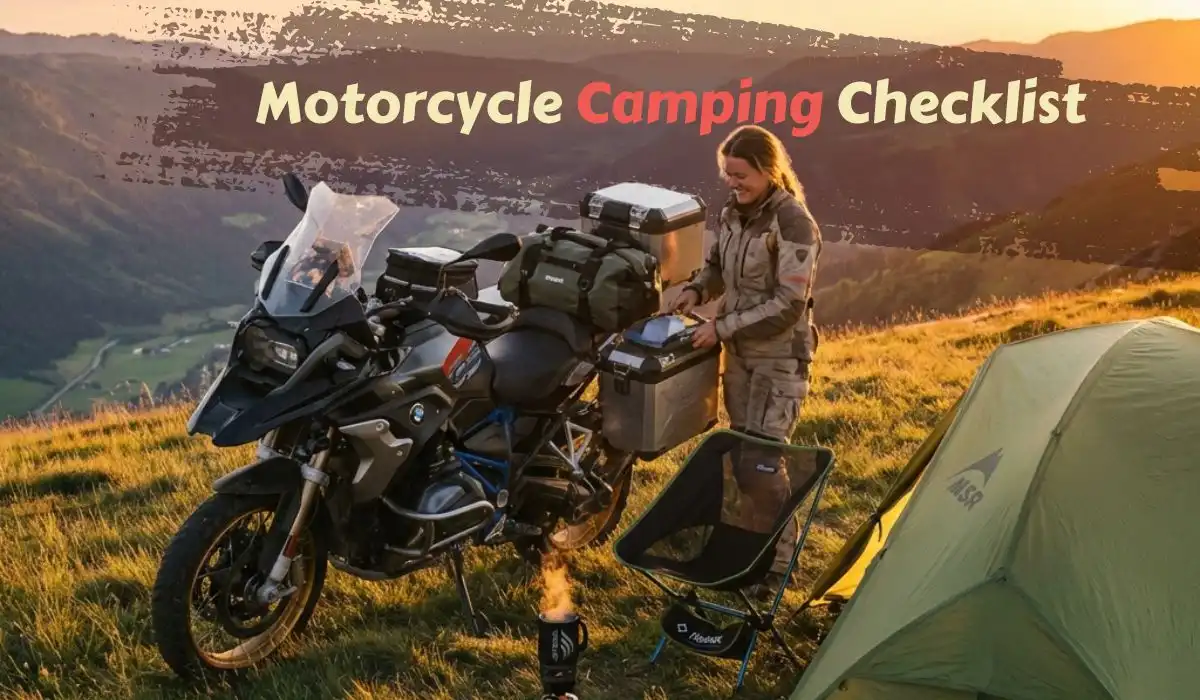
Is a motorcycle camping checklist just a normal camping list with a few items removed? Not really. Short version: riders need a checklist that covers camping gear, motorcycle reliability, and load placement all at the same time.
You’re facing limited luggage space, changing weather, and real safety tradeoffs if weight is packed badly. It implies forgotten essentials, unstable handling, and rough camp setup after long riding hours. Here’s the solution: use a checklist that is built for riders first, then for camping comfort.
Jump Ahead To:
What Is a Motorcycle Camping Checklist (and Who Needs One)

A motorcycle camping checklist is a structured packing and prep system for riders who sleep at camp and travel with limited cargo capacity. Unlike a car-camping list, this format includes load distribution, tool coverage, tire repair readiness, and first-access packing logic.
If you ride overnighters, multi-day touring routes, ADV weekends, or mixed-road trips, you need one. New riders use it to avoid obvious misses. Experienced riders use it to standardize setup, reduce mental load, and keep their packing repeatable across trips.
Printable Motorcycle Camping Checklist
Use this section as your print-ready worksheet.
Download Printable Checklist
Optional image downloads:
Four-Sheet Method (For OC Riders)
Some riders joke they are “OC” with packing, and this structure works well if you like very tight organization. Build one master spreadsheet with four sheets, then trim it per trip length:
- Bike Maintenance
- Camping Gear
- Paperwork
- Toiletry and Medical
That format scales cleanly from big expeditions down to weekend or overnight rides.
One-Page Rider Checklist (Fast Version)
Base Camp Essentials
Shelter and Sleep
- Lightweight tent
- Sleeping bag or quilt
- Inflatable sleeping pad
- Compact pillow
Camp Kitchen
- Portable stove
- Fuel
- Collapsible cookware
- Utensils
- Non-perishable food staples
Apparel and Personal Care
- Synthetic base layers
- Rain layer
- Camp shoes
- Biodegradable soap
- Toiletries
Bike Utility and Logistics
Repair and Emergency
- Tool roll
- Tire plug or patch kit
- Portable air compressor or pump
- First aid kit
Power and Electronics
- Power bank (10,000mAh+)
- Extra USB charging cords
- GPS backup (tracker or offline map device)
- Headlamp
Key Rule
Pack heavy items low, balanced left-right, and close to the bike centerline.
Pack-by-Bag Printable (Rider Layout)
This layout matches what many riders actually do at camp.
Tank Bag
- Phone
- Wallet/cards/cash
- ID and legal documents
- Charging cable
- Earplugs
- Sunglasses/clear lens
- Lighter
- Headlamp
Left Pannier / Left Side Bag
- Tool roll
- Tire repair kit
- Inflator
- Chain lube
- Compact rag
- Spare fuses
- Zip ties and tape
Tail Bag / Rear Duffel
- Tent
- Sleeping bag/quilt
- Sleeping pad
- Camp clothing cube
- Socks and underwear
- Rain layer (if not first-access elsewhere)
Right Pannier / Right Side Bag
- Stove and fuel
- Pot and utensil kit
- Food pouch
- Water treatment (if needed)
- Toiletries and meds
- First aid kit
Other / External
- Camp chair or stool (optional)
- Extra dry bag
- Water reserve container
Advanced Tools and First Aid Add-On (Optional)
Use this optional module if your trip is remote, technical, or far from services.
Advanced Tool Add-On
- Axle-specific tools for your bike
- Bike-specific socket/bit set
- Spare tube (if your setup needs it)
- Valve core tool + spare cores
- Mechanics wire
- Mini test light
- Spare critical fasteners
Advanced First Aid Add-On
- Trauma dressing
- Compression wrap
- Sterile gloves
- CPR barrier mask
- Emergency blanket
- Tweezers and trauma shears
Only carry medical items you understand how to use. Advanced items are useful only with training and practice.
Pre-Ride Inspection Guide (Print Block)
| System | Checkpoint |
|---|---|
| Tires | [ ] Pressure and tread depth |
| Fluids | [ ] Oil, coolant, and brake fluid levels |
| Lights | [ ] Headlight, signal lights, and brake light |
| Chain and Drive | [ ] Chain slack and lubrication |
| Controls | [ ] Front brake, rear brake, clutch, and throttle feel |
Print tip: keep one laminated copy with your gear bins and one editable digital copy for route-specific changes.
Core Camping Essentials
Shelter System
Your shelter setup should be quick, weather-stable, and compact. For riders, setup speed matters because camp arrivals often happen late after long miles.
If you still need actual product picks, compare motorcycle camping tents before you lock your shelter choice.
Checklist:
- Tent body and rainfly
- Footprint or groundsheet
- Stakes and guylines
- Pole repair sleeve
If you cannot pitch your shelter quickly at home, expect frustration in wind, dark, or rain.
Sleep System
Good sleep is a performance item for day two riding. Think of bag/quilt and pad as one system.
For category picks, compare motorcycle camping sleeping bags, motorcycle camping sleeping pads, and motorcycle camping pillows.
Checklist:
- Bag or quilt matched to expected lows
- Insulated sleeping pad
- Pillow or clothing-stuff pillow
- Optional liner for cold swings
Many riders underestimate pad insulation and overfocus on bag rating alone.
Lighting
Lighting is both convenience and safety.
Checklist:
- Primary headlamp
- Backup mini light
- Backup batteries or charge source
Keep one light in immediate-access storage, not buried in camp gear.
Motorcycle-Specific Gear
Tool Kit
A useful motorcycle tool kit is bike-specific. Generic kits fail when they do not match your real fasteners.
Checklist:
- Wrenches/sockets that match your bike
- Bits for bodywork and controls
- Pliers and multi-tool
- Tire gauge
- Axle-relevant tools where required
Do one full garage dry run using only trip tools: minor panel access, chain check, and battery access.
Maintenance Supplies
Small consumables solve outsized problems on real trips.
Checklist:
- Chain lube
- Rag or microfiber cloth
- Zip ties
- Duct/electrical tape
- Spare fuses
- Disposable gloves
Store these in one bright pouch so you can find them in low light.
Tire Repair and Inflation
Flat readiness is non-negotiable on motorcycle trips.
Checklist:
- Plug kit or patch kit (based on wheel type)
- Spare tube if needed
- Inflator or hand pump
- Valve core tool and spares
Test your inflator before departure. A dead pump at roadside is avoidable failure.
If your repair kit also includes medical backup for remote routes, compare motorcycle camping first aid kits so the whole emergency side of the loadout is covered.
Spare Parts
Spare parts should be compact and high-impact.
Checklist:
- Fuse assortment
- Spare bolts/nuts relevant to your bike
- Replaceable bulb where applicable
- Chain-relevant spare where applicable
Avoid carrying low-value duplicates that add weight without real utility.
Luggage and Securing
Load security affects handling and safety.
Checklist:
- Main luggage system (soft or hard)
- Dry liners/stuff sacks
- Non-elastic tie-down straps
- Backup tie-down set
If you strap externally, verify no movement can reach wheel, chain, or exhaust.
Clothing and Weather Protection
Riding Gear
Riding gear should support changing conditions, not just one perfect-weather scenario.
Checklist:
- Helmet and visor care item
- Jacket and pants suited to route climate
- Gloves (wet/dry strategy if needed)
- Boots with real weather tolerance
Plan your clothing around repeated exposure and drying reality, not one-day comfort.
Base Layers
Base layers are your moisture and temperature management layer.
Checklist:
- Synthetic or merino top layers
- Synthetic or merino bottom layers
- Moisture-wicking socks
Carry one guaranteed dry sleep set for overnight recovery.
Mid Layers
Mid layers give flexibility across temperature swings.
Checklist:
- Fleece or insulated mid-layer
- Thermal backup piece
Use compressible layers that pack small and dry quickly.
Outer Shell
Outer shell is your wind and water control.
Checklist:
- Waterproof shell or proven rain setup
- Waterproof glove solution where needed
- Over-boot protection where needed
If your main suit is not reliably waterproof, pack dedicated rain protection.
Camp Clothing
Camp clothing is for recovery, comfort, and dry reset.
Checklist:
- Dry shirt
- Dry underwear
- Extra socks
- Camp shoes/sandals
Keep camp clothing separate from ride-wet items.
Optional Comfort Items
Comfort items should earn their space.
Checklist:
- Beanie/buff
- Lightweight camp gloves
- Compact sit pad
Optional does not mean automatic. Keep only repeated-use items.
Food and Water Packing
Water Storage and Purification
Water planning should match route uncertainty.
Checklist:
- Daily carry bottles/bladder
- Reserve container
- Purification option where refill risk exists
Refill early when possible. Late refills reduce route flexibility.
If the route math is still unclear, build that side first with motorcycle camping water strategy and then compare water filters for motorcycle camping if you need treatment in the kit.
Cooking Gear
Build your cook kit around your real meals, not ideal camp-photo setups.
Checklist:
- Stove
- Fuel
- Ignition + backup
- Pot or pot/mug combo
- Utensil kit
- Compact wash kit
For simple boil meals, keep your cook kit lean.
If you still need category picks, compare motorcycle camping cookware sets and review motorcycle camping fire-ban cooking rules and safe stove use before you assume your normal stove routine fits every route.
Food
Food planning should be calorie-dense and low-failure.
Checklist:
- Night-by-night dinner plan
- Morning breakfast plan
- Day snacks
- Emergency calories
Favor non-perishable staples that tolerate weather and delay.
Optional Food Items
Optional food items improve comfort when used intentionally.
Checklist:
- Electrolyte packets
- Coffee or tea setup
- Small condiments kit
Avoid carrying weight for items you rarely consume.
Electronics and Power
Core Electronics
Electronics should support navigation, communication, and camp operation.
Checklist:
- Phone
- Power bank
- Charging cables
- Headlamp charging support
Keep electronics in one weather-protected pouch.
If your backup power is weak, use rugged power banks for motorcycle camping for hardware picks and how to charge devices while motorcycle camping for the working routine.
Navigation
Navigation needs a backup path when signal fails.
Checklist:
- Primary GPS/app navigation
- Offline maps downloaded before departure
- Route backup plan
Do not rely only on active data coverage.
On-Bike Power
On-bike charging should be checked before day one.
Checklist:
- 12V/USB power output checked
- Stable cable routing at full steering lock
- Connector weather protection
Loose cables and weak mounts cause repeat failures on rough roads.
Optional Electronics
Optional devices should match trip purpose.
Checklist:
- Satellite communicator
- Action camera
- Small tripod
If device count increases, charging plan must scale with it.
Personal and Hygiene Items
Toiletries
A minimalist hygiene kit prevents discomfort without excess bulk.
Checklist:
- Toothbrush and toothpaste
- Biodegradable soap
- Quick-dry towel
- Tissue/wipes
- Hand sanitizer
Keep toiletries in sealed containers to avoid leak events.
First Aid Kit
Your first aid kit should match your route risk profile.
Checklist:
- Bandages and gauze
- Antiseptic wipes
- Tape
- Pain and fever meds
- Blister care
- Personal medications
For remote terrain, add items from the optional advanced module only if trained.
Personal Items
Personal items are small but easy to miss.
Checklist:
- Prescription meds
- Eyewear or contact supplies
- Earplugs
- Sunscreen and bug spray
Keep personal daily items in one small first-access pouch.
Documents and Money
Essential Documents
Documents need both waterproofing and fast retrieval.
Checklist:
- Driver license
- Registration
- Insurance information
- Emergency contact card
Carry physical copies and secure digital backups.
If the trip includes overnight stops where theft risk is part of the plan, pair this section with motorcycle camping security setup so your document and key routine stays consistent.
Money
Payment redundancy reduces route interruptions.
Checklist:
- Primary card
- Backup card in different location
- Emergency cash
Never keep all payment methods in one bag.
Optional Comfort and Convenience
Camp Comfort
Comfort gear is valuable when it improves daily recovery.
Checklist:
- Compact chair or stool
- Pillow upgrade
- Lightweight tarp for rain/shade workspace
Choose one or two meaningful comfort upgrades, not a full comfort loadout.
If seated recovery is the comfort upgrade you care about most, compare motorcycle camping chairs before you give chair space to a random bulky item.
Entertainment
Downtime tools help when weather delays setup or riding.
Checklist:
- Book or e-reader
- Journal
- Downloaded audio content
Keep this category intentionally light.
Packing Order and Weight Balance
Bottom-to-Top Packing Strategy
Use this order to simplify setup and improve handling:
- Pack dense heavy items first and low (tools, water, fuel).
- Pack medium-weight daily items around them (food, electronics pouch).
- Pack bulky-light items high/rear (sleep kit, camp clothing).
- Keep first-access items available (rain layer, headlamp, documents, first aid).
This approach lowers setup friction and improves ride stability.
Weight Distribution Rules
Use these rules on every trip:
- Keep left-right load balance close.
- Keep heavy items low.
- Keep load close to motorcycle center.
- Keep external items fixed with no lateral play.
- Respect your bike’s rated load limits.
If your bike feels vague, top-heavy, or unstable in turns, reassess placement before adding more gear.
Accessibility Packing
Pack by access timing, not just by category.
Immediate Access
- Rain layer
- Headlamp
- Document pouch
- First aid kit
Camp Setup Access
- Shelter kit
- Sleep kit
- Stove and dinner pouch
Repair Access
- Tool roll
- Tire repair kit
- Maintenance consumables
When these zones stay consistent, your setup becomes faster and less error-prone.
Pre-Trip Packing Checklist Routine
Use this simple repeatable cycle:
48 hours before
- Lay out full gear list
- Check weather, terrain, and overnight lows
- Remove duplicate and low-value items
- Confirm route assumptions (fuel, water, camp options)
24 hours before
- Pack by bag zone (tank, left, tail, right)
- Charge all devices and power banks
- Confirm tire repair and inflator readiness
- Run bike check: tires, lights, fluids, chain
Morning of departure
- Load heavy items first and check side balance
- Tighten all straps and test after a short ride
- Place first-access pouch where reachable
- Verify docs, wallet, meds, and map downloads
Final roll-out check
- Walk around and tug-test straps
- Confirm no load can reach wheel, chain, or exhaust
- Confirm rear visibility with full luggage
- Share route window with safety contact
Routine is what makes checklists work. Consistency beats memory.
Frequently Asked Questions About Motorcycle Camping Checklists
How detailed should my motorcycle camping checklist be?
Start with a one-page core list, then add modules based on your trip type. A short core version works for weekend rides, while longer remote rides need advanced repair and medical add-ons.
If your list gets too long to scan quickly, split it into layers: core, optional, and route-specific add-ons.
Should I pack by category or by bag location?
Use both. Build by category first to avoid missing essentials, then finalize by bag location for real-world use. Riders typically perform better when they know exactly which bag holds each critical item.
Bag-based packing is also faster under stress and in low light.
What is the most common packing mistake riders make?
Most riders pack heavy gear too high or too far rearward. That can hurt stability and confidence, especially when the road gets rough or technical.
Keep dense items low and centered, then secure them with minimal movement.
Do I need an advanced first aid and tool module for every trip?
No. Use advanced modules when route risk is high, help is far away, or terrain is technical. For local overnighters near services, your core kit is usually enough.
Carry advanced items only if you know how to use them safely.
How do I keep gear dry across multiple rainy days?
Separate wet and dry systems: dry liners for sleep gear, sealed pouches for electronics, and a dedicated dry sleep clothing set. Repack wet items early each day to prevent moisture spread.
Dry-management discipline matters more than any single product.
Should I include extra fuel on my checklist?
Only when route planning shows real fuel gaps. If you have reliable fuel intervals, skip extra fuel weight. If you do carry extra, use approved containers and place them low and secure.
Fuel decisions should come from route math, not anxiety packing.
For shelter, sleep, and cook-system choices, also read best motorcycle camping tents and best motorcycle camping sleeping bags.
Build the rest of your setup with motorcycle camping gear, motorcycle camping essentials, motorcycle camping tips, and motorcycle trip planning guide.