
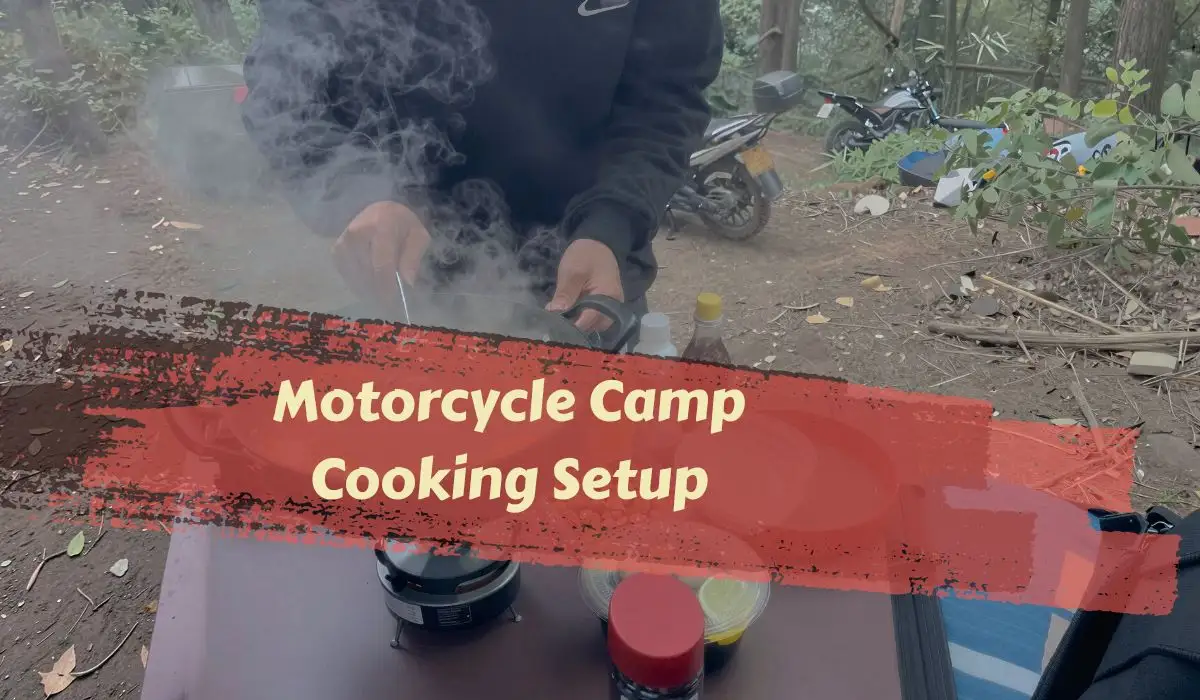
A motorcycle camp kitchen setup is a compact cooking system built for limited luggage space and changing weather. If your kit is bulky or hard to use, meals become slow, fuel-heavy, and frustrating at camp. This guide shows how to build a clean, fast setup that packs small and cooks safely. For the full gear picture, pair it with the main motorcycle camping gear guide.
It works much better when the kitchen is planned as part of the whole load, not as a separate pile of cooking gear. A clear motorcycle camping checklist and realistic motorcycle camping essentials hierarchy stop the kitchen from stealing room from sleep gear, tools, and weather layers.
Jump Ahead To:
What a Motorcycle Camp Cooking Setup Is (and Who Needs One)
A motorcycle camp kitchen is more than a stove. It is a full system: stove, fuel, cookware, utensils, cleanup kit, and the way you pack it.
If you do overnights, weekend loops, or long tours, you need one. A good setup gives you hot food, hot drinks, and clean water handling without wasting space. It also keeps your camp routine fast when you pull in late.
The goal is simple: cook safely, use less fuel, and pack everything so it does not rattle itself to death on rough roads.
Why Cooking Setup Matters on a Motorcycle Trip
On a bike, space is tight and vibration is constant. Gear that works fine for car camping can turn into a problem on a motorcycle.
A bad kitchen setup usually fails in three ways:
- It packs too big and steals room from sleep gear.
- It burns fuel too fast and leaves you short.
- It creates slow, annoying camp routines that make every stop feel like work.
A good setup does the opposite. It fits in one compact kit, lights quickly, and lets you cook and clean with minimal water. If you are still choosing your stove and pot combo, compare options in best motorcycle camping stoves and best motorcycle camping cookware sets.
Core Kitchen Concepts That Save Space and Fuel
Start with fuel choice:
- Canister stoves are the easiest for most riders. They light fast and boil quickly.
- Liquid fuel stoves are better for very cold trips and international routes where canisters can be harder to source.
- Alcohol stoves are simple and light, but they are slower and can be less stable in wind.
Now choose pot material based on how you cook:
- Hard-anodized aluminum is the best all-around choice for real meals.
- Titanium is great for fast boils and low weight, but it can create hot spots when cooking food.
- Stainless steel is durable, but heavier and slower to heat.
Use nesting on purpose. Pack stove, lighter, mug, and small utensils inside your main pot. Add a bandana or microfiber cloth between metal parts to stop rattling and reduce wear from constant vibration.
Finally, run your kitchen with a water plan. Your cooking system and hydration system should work together. If your route is dry or uncertain, build your full water plan first with motorcycle camping water strategy, then compare water filters for motorcycle camping if you still need a treatment method.
Step-by-Step Camp Cooking Setup
1. Pick a stable cook spot
Use flat dirt or rock away from dry brush. Keep your stove off soft ground where it can tip.
2. Build one compact kitchen kit
Put your stove, lighter, small fuel tools, cloth, and utensil inside your main pot. Keep this one kit in the same pannier every trip so setup is automatic. If you are still deciding what fits inside that kit, compare motorcycle camping cookware sets.
3. Match stove to trip conditions
Use canister for quick 3-season trips. Use liquid fuel for deep cold or remote travel where fuel options change.
4. Add wind protection before lighting
Set your windscreen and lid before you start. This cuts boil time and fuel waste.
5. Cook with heat control, not max flame
High flame feels faster but often wastes fuel and scorches food. Start hot to boil, then drop heat for simmering.
6. Clean with low-water methods
Scrape residue first, wipe with a damp cloth, then do a light wash. Save deep cleaning for home.
7. Repack with anti-rattle padding
Let parts cool fully. Dry everything. Re-nest with cloth spacers so nothing bangs around all day.
If you want your kitchen kit to integrate cleanly with your loadout, keep all kitchen items in one dedicated, repeatable pack zone so setup stays fast at every stop. That gets even easier if your luggage layout already follows a dry-bag packing routine built around camp access.
Common Kitchen Mistakes (and How to Fix Them)
Mistake: Bringing too many single-use items
Fix: Build one modular kit that handles coffee, boiling, and one-pan meals.
Mistake: Using the wrong pot for the job
Fix: Use hard-anodized aluminum for mixed cooking. Use titanium when your main goal is fast boiling and low weight.
Mistake: Ignoring wind
Fix: Always use a windscreen and a lid. Wind can double fuel burn and slow every meal.
Mistake: Packing bare metal against bare metal
Fix: Put a cloth between nested parts. This reduces noise and protects surfaces.
Mistake: Depending on one ignition method
Fix: Carry a backup lighter or matches even if your stove has a built-in igniter.
Mistake: Treating burn-ban rules as optional
Fix: Check local rules before you cook and use compliant stove types. If your trip includes strict fire zones, review the fire-ban cooking and safe stove-use guide.
Safety and Care Tips for Cooking on the Road
Never cook inside your tent. Keep a clear area around the stove and stay out of dry grass when possible.
For alcohol stoves, treat every flame as hard to see in daylight. Move slowly and avoid rushing refills.
For liquid fuel stoves, prime carefully and expect a brief flare if conditions are cold.
Keep fuel away from food containers. Label fuel bottles clearly so nothing gets mixed up.
After each cook session:
- Cool down fully.
- Wipe moisture off stove and pot.
- Dry pack before storing in luggage.
Consistent care keeps your setup reliable and extends the life of your gear.
Frequently Asked Questions
What is the best stove type for most motorcycle campers?
For most riders, a canister stove is the easiest place to start. It is fast, simple, and low hassle for 3-season trips.
When should I switch to liquid fuel?
Switch when you expect very cold weather, longer remote trips, or fuel availability problems for canisters.
Is titanium cookware worth it?
It is worth it if low weight and fast boiling are your main priorities. For regular meal cooking, hard-anodized aluminum is usually easier to manage.
How do I stop kitchen gear from rattling in panniers?
Nest your kit and place a small cloth between metal parts. That reduces noise and protects surfaces from long-term vibration wear.
How much water should I plan for cooking and drinking?
It depends on heat and route, but most riders need a daily plan for both drinking and meal prep, not just hydration during the ride.
Can I cook during fire restrictions?
Sometimes yes, sometimes no. Rules vary by location. Check local burn-ban rules and use only allowed stove types.
If you are building your full camp system, use this together with the full motorcycle camping gear guide so your packing, cooking, and camp routine stay simple on the road. For product picks, compare motorcycle camping stoves, motorcycle camping cookware sets, and water filters for motorcycle camping.