
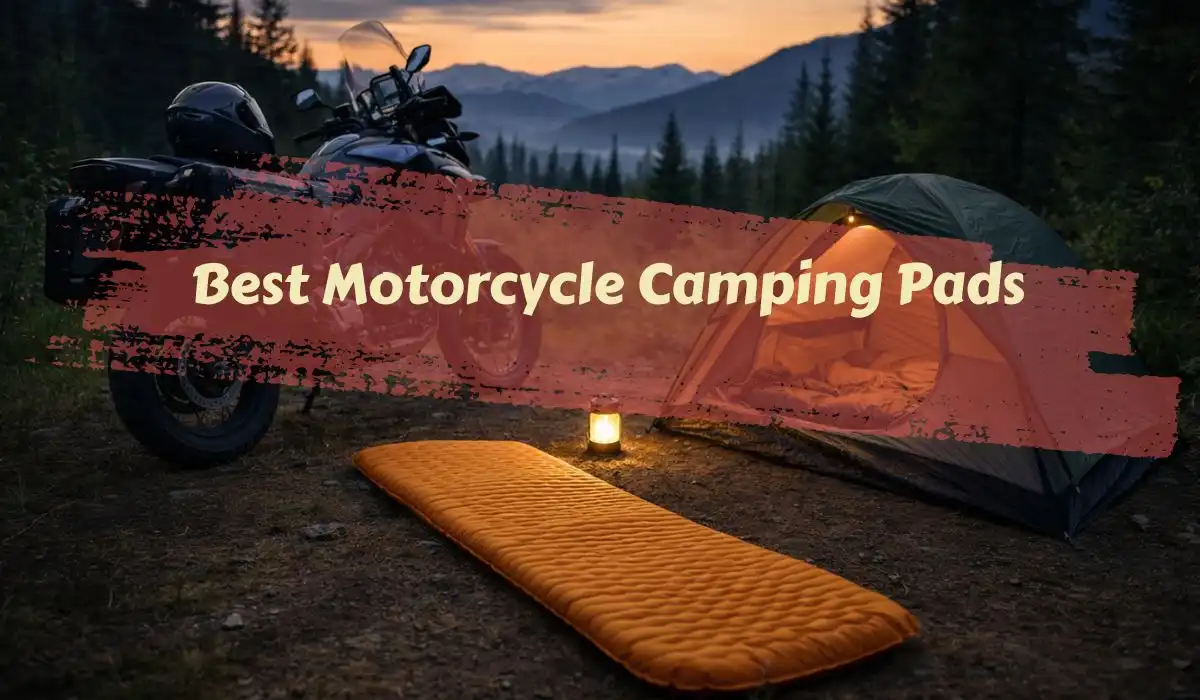
A good sleeping bag cannot save a bad sleeping pad. If the pad is too thin, too cold, or too noisy, you still wake up sore and tired. On a motorcycle trip, that matters more because the next day starts on the bike, not at home. If you want the wider sleep setup first, begin with the main motorcycle camping gear guide and a better motorcycle camping sleep system.
The hard part is choosing what kind of compromise you can actually live with. Some riders want a do-it-all insulated pad that works on most trips. Some want puncture-proof simplicity. Others just want enough thickness to sleep on their side without feeling every rock and root. Packed size matters on the bike, but sleep quality matters too.
Jump Ahead To:
Quick Picks
- Best Overall: Nemo Equipment Tensor All-Season Ultralight Insulated Sleeping Pad for the best mix of warmth, comfort, and packability.
- Budget Pick: Therm-a-Rest Z Lite Sol Sleeping Pad for riders who want absolute simplicity and zero puncture stress.
- Premium Pick: Therm-a-Rest NeoAir XTherm NXT Sleeping Pad for colder nights and maximum warmth margin.
- Best for Side Sleepers: Sea to Summit Ether Light XT Sleeping Pad for thick pressure-point relief.
- Best for Plush Sleep: Big Agnes Rapide SL Insulated Sleeping Pad for riders who want a softer mattress-like feel.
Best Overall

Nemo Equipment Tensor All-Season Ultralight Insulated Sleeping Pad
Budget Pick
Premium Pick
Best for Side Sleepers
Best for Plush Sleep
Comparison Table
| Product | Best For | Thickness / Insulation Angle | Main Tradeoff |
|---|---|---|---|
| Nemo Equipment Tensor All-Season Ultralight Insulated Sleeping Pad | Most riders | 3.5-inch insulated all-rounder | Premium price |
| Therm-a-Rest Z Lite Sol Sleeping Pad | Budget simplicity | Closed-cell foam with no puncture risk | Lower comfort |
| Therm-a-Rest NeoAir XTherm NXT Sleeping Pad | Cold-weather trips | High warmth-to-weight insulated pad | Overkill for mild trips |
| Sea to Summit Ether Light XT Sleeping Pad | Side sleepers | 4-inch thick comfort-first pad | More comfort bulk and some noise |
| Big Agnes Rapide SL Insulated Sleeping Pad | Plush sleep | Thick all-season cushioned pad | Premium cost and some narrow feel |
Quick Decision Guide
- Pick the Tensor All-Season if you want one premium pad that works on most three-season motorcycle trips.
- Pick the Z Lite Sol if you want zero valve drama, zero puncture stress, and the lowest-cost reliable option.
- Pick the XTherm NXT if you camp in colder shoulder seasons or sleep cold enough to need extra insulation.
- Pick the Ether Light XT if you sleep on your side and hate bottoming out on thinner pads.
- Pick the Rapide SL if your main goal is a plusher sleep surface that still packs like backcountry gear.
- If the rest of your sleep kit still needs work, compare motorcycle camping sleeping bags and camping pillows that actually help neck comfort.
Best Motorcycle Camping Sleeping Pads 2026: Top Picks for Riders
1 / 5
Nemo Equipment Tensor All-Season Ultralight Insulated Sleeping Pad
Thickness
3.5 inches
Insulation
All-season insulated build
Sleep Feel
Quieter premium air pad
Strength
Balanced warmth and comfort
Use Case
Do-it-all motorcycle camping pad
Tradeoff
Premium price
The Tensor All-Season is the pad that makes the most sense for the biggest number of riders. It gives you real insulation, enough thickness to feel like an upgrade over old-school thin pads, and a more refined sleep feel than the crinkly insulated pads that used to annoy people. It is built as a premium all-rounder, and that is exactly how it comes across.
In camp, the balance is the selling point. It is warm enough for most normal motorcycle travel, thick enough to improve sleep, and compact enough to justify in a tight luggage plan. That makes it easy to pair with a stronger motorcycle camping checklist instead of building your whole setup around one specialist item. The downside is price. You are paying for polish, not just basic function.
Why It Wins:
- Strong balance of warmth, thickness, and packed carry.
- Quieter sleep feel than many older insulated air pads.
What You Give Up:
- Costs more than simpler foam or entry-level air pads.
- Riders on a strict budget may not need this much refinement.
2 / 5
Therm-a-Rest Z Lite Sol Sleeping Pad

Pad Type
Closed-cell foam
Pack Style
Accordion fold
Strength
Puncture-proof reliability
Use Case
Budget trips and backup layering
Comfort
Simple firm support
Tradeoff
Less cushioning than thick inflatables
The Z Lite Sol is the budget pick because it solves one problem perfectly: reliability. There is no valve to fail, no air chamber to leak overnight, and no puncture that ruins the trip. For riders who want a simple pad that always works, that matters more than chasing luxury comfort.
The catch is obvious the second you compare it with a thick insulated air pad. Foam is dependable, but it is not plush. It also takes up more awkward outside-luggage space because it folds instead of disappearing into a small stuff sack. If your priority is a no-fuss setup that works every time, it is still a very smart choice. If your priority is deeper sleep, it is not enough on its own.
Why It Wins:
- No puncture risk and almost no setup drama.
- Great low-cost choice for riders who value simplicity first.
What You Give Up:
- Much less pressure-point relief than thicker air pads.
- Bulky folded shape can be awkward on smaller bikes.
3 / 5
Therm-a-Rest NeoAir XTherm NXT Sleeping Pad

Thickness
3 inches
Strength
High warmth-to-weight ratio
Use Case
Cold-weather and shoulder-season camping
Packability
Compact for the insulation level
Tradeoff
High price and more insulation than warm trips need
The XTherm NXT is the premium cold-focused option for riders who camp when the nights drop hard. It is built around strong insulation in a pad that still packs small enough to make sense on a bike. That makes it a specialist tool, but a very useful one if you push into colder shoulder seasons or you simply sleep cold.
That extra warmth headroom is what you are really paying for. On cold ground, it gives you more confidence than a lighter mild-weather pad. On warm trips, though, it can be more pad than you actually need. If your riding lives mostly in mild weather, the Tensor is easier to justify. If cold nights are part of your normal season, the XTherm makes a lot more sense.
Why It Wins:
- Excellent warmth margin without a huge packed penalty.
- Better fit for riders who sleep cold or camp late into the season.
What You Give Up:
- Premium price is hard to ignore.
- More insulation than many summer-only riders need.
4 / 5
Sea to Summit Ether Light XT Sleeping Pad

Thickness
4 inches
Pad Style
Comfort-focused insulated air pad
Strength
Pressure-point relief
Use Case
Side sleeping
Inflation
Easy inflation setup
Tradeoff
Some noise and extra comfort bulk
The Ether Light XT is built for riders who do not sleep well on thin pads. Its 4-inch profile gives your hips and shoulders far more room before you feel the ground, which is exactly why side sleepers like it so much. Instead of feeling like a minimal backcountry compromise, it leans more toward actual comfort.
That thicker, softer feel is the point, but it does come with tradeoffs. It is a comfort-first pad, not the leanest minimalist option in the group, and some riders will notice a bit more pad noise than they want. If pressure-point pain is what ruins your sleep, though, those tradeoffs are easy to live with. This is one of the clearest comfort upgrades in the category.
Why It Wins:
- Thick profile does a better job protecting hips and shoulders.
- Much better fit for riders who sleep on their side most of the night.
What You Give Up:
- Comfort-first design is less minimalist to pack.
- Some riders may notice more pad noise than expected.
5 / 5
Big Agnes Rapide SL Insulated Sleeping Pad

Thickness
4.25 inches
Pad Role
Ultralight all-season comfort pad
Strength
Plush feel with compact carry
Use Case
Riders who want a softer sleep surface
Tradeoff
Premium cost and some narrowness
The Rapide SL is for riders who want a sleep pad that feels softer and more forgiving than a typical ultralight design. It gives you a lot of cushion for something that still packs like real travel gear, which is why it lands in a useful middle ground between minimalist backcountry pads and bulky mattress-style camp pads.
In practice, it feels like the pad you buy when sleep quality has become a real trip issue. It keeps more comfort under you without turning into oversized car-camping gear. The tradeoffs are price and fit details. It is still a premium pad, and some riders will want more width. If you can live with that, it is one of the nicest sleep-feel options here.
Why It Wins:
- Plush feel without blowing up the luggage plan.
- Better comfort than many thinner backpacking-style pads.
What You Give Up:
- Costs premium money for that extra comfort.
- Narrower feel may not suit every sleeper.
Which Pad Fits Your Camping Style?
One pad for most trips
The Tensor All-Season is the easy answer if you want one insulated pad that handles most normal motorcycle camping without forcing a hard compromise. It is the most balanced option in the group.
No-fuss reliability
The Z Lite Sol wins if you do not want to think about valves, punctures, or overnight deflation at all. It gives up comfort, but it gives back simplicity. Riders who want more support can combine that kind of reliability with a stronger sleep bag choice.
Cold nights or pressure-point comfort
The XTherm NXT is the warmth-focused specialist. The Ether Light XT and Rapide SL are the comfort-focused choices. One solves colder ground better. The other two solve soreness and side-sleeping better.
How to Choose a Motorcycle Camping Sleeping Pad
Start with the problem you are actually trying to fix. If you wake up cold, prioritize insulation. If you wake up sore, prioritize thickness and shape. If you hate gear failure, foam still has a strong case. Then look at packed shape, not just claimed specs. A pad that looks light on paper can still be awkward in a real luggage setup if the rest of your motorcycle camping essentials are already fighting for room.
Noise, inflation hassle, and repair risk also matter more than people admit. Some riders are fine with premium air pads. Others would rather give up comfort than deal with one more thing that can fail at camp. Choose the pad that fits your tolerance for fuss, not just the one with the best-looking numbers.
Common mistakes when buying sleeping pads
- Chasing the highest insulation level even for warm-weather trips.
- Buying the thinnest compact pad possible, then sleeping badly every night.
- Ignoring side-sleeping pressure points when that is the real comfort issue.
- Forgetting that a puncture-sensitive air pad needs at least basic care and setup attention.
Frequently asked questions about motorcycle camping sleeping pads
Is foam or inflatable better for motorcycle camping?
Foam is better for simplicity and reliability. Inflatable pads are better for comfort and packed efficiency when you want better sleep.
How much sleeping pad thickness matters on a motorcycle trip?
It matters a lot if you sleep on your side or camp on rough ground. Thickness can be the difference between waking up rested and waking up sore.
When is a high-insulation sleeping pad worth it?
It is worth it for colder shoulder-season trips or for riders who sleep cold. It is less important for mild summer camping.
Is a thick luxury-style sleeping pad realistic on a bike trip?
Yes, if it still packs small enough for your luggage plan. Modern thick air pads can work well on a motorcycle without turning into car-camping gear.
If you are still tuning the rest of your overnight kit, compare motorcycle camping sleeping bags, motorcycle camping pillows, and motorcycle camping tents. If rain protection is the bigger packing problem, look at dry bags for motorcycle camping.