
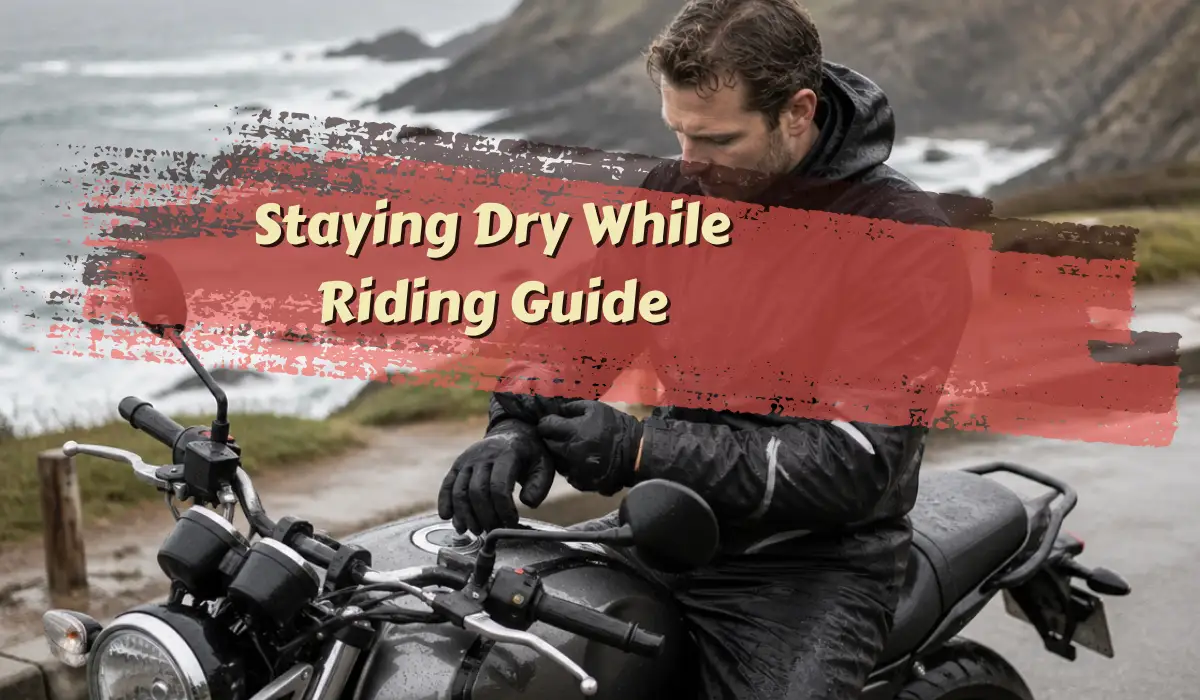
Is staying dry while riding mostly about buying expensive gear? Not by itself. You stay dry by running a full system: shell choice, seal points, visor control, layering, and wet-road behavior. This guide gives you that system in the order riders can actually use it.
Jump Ahead To:
What “Staying Dry” Really Means
Staying dry is not only blocking outside rain. It also means reducing sweat buildup inside your gear and keeping your visibility clear enough to ride safely.
A rider can feel soaked from condensation even when the shell is technically still waterproof. That is why setup and maintenance matter as much as price.
If you want the complete gear map first, review best motorcycle rain gear and then apply this guide as your field routine.
Why Riders Still Get Wet
Most wet-ride failures happen at overlaps and interfaces:
- Neck opening
- Cuff and glove overlap
- Pant and boot overlap
- Seat and crotch pressure zone
Another failure is wet-out, where the outer face fabric stays saturated and blocks moisture escape. That clammy feeling is often internal moisture, not a giant seam blowout.
For the buying side of this problem, pair this with motorcycle-rain-gear-buying-guide before your next upgrade.
Core Concepts That Keep You Dry
Wet-Out vs True Leak
If the shell face soaks and stops breathing, you can feel wet and cold without major seam failure.
Seal Integrity
Small gaps at neck, wrists, and ankles let wind-driven water in fast. Seal details are non-negotiable.
Layer Management
Base layers move moisture. Cotton holds moisture and makes cold rain feel much worse over time.
Visibility Control
A dry rider with a fogged visor is still unsafe. Clear vision is part of staying dry enough to keep control.
To tune technical shell behavior, use waterproof-ratings-explained-for-motorcycle-gear and motorcycle-rain-gear-materials-guide.
Step-by-Step System
1. Set Up Your Outer Shell Before Rain Starts
When rain is likely, gear up early. If your base layers are already wet, outer shells cannot reverse that.
2. Seal the Three Critical Openings
- Neck: close collar properly and use a neck tube when needed.
- Wrists: set cuff-glove overlap to stop channeling.
- Ankles: keep pant legs over boots and secure cuffs.
3. Fix Your Vision Stack
Use anti-fog and proper airflow control so visor fog does not force risky behavior.
4. Manage Internal Moisture
Use moisture-wicking base layers and adjust vents as conditions change. For cold rain routines, apply how to layer for cold wet motorcycle rides.
5. Keep Rain Gear Reachable
Staged packing beats deep-bag digging in a storm. Build a fast-access setup with how to pack rain gear on a motorcycle.
6. Maintain DWR and Seams
Dirty shells and worn treatment kill comfort quickly. Run scheduled care using how to waterproof and maintain motorcycle gear.
Common Wet-Ride Mistakes
Waiting Too Long to Put Rain Gear On
Once inner layers get wet, comfort and control drop for the rest of the ride.
Treating Jacket and Pants as Separate Problems
Upper and lower interfaces must work together. Align fit using waterproof-motorcycle-jackets-guide and motorcycle-rain-pants-guide.
Overlooking Safety While Chasing Comfort
Dry gear means little if traction and spacing choices are wrong. Apply wet-road behavior from motorcycle-rain-riding-safety-guide.
Safety Constraints in Heavy Rain
Staying dry supports safety, but it does not increase tire grip. Keep inputs smooth, expand following distance, and avoid sudden lean or brake spikes on low-traction surfaces.
Also remember visibility drops hard in rain. High-contrast gear and clear visor management reduce risk during traffic interactions.
Frequently Asked Questions
Why do I still feel wet in waterproof gear?
Often because the outer fabric has wetted out and breathability dropped, so internal moisture stays trapped.
Should gloves go under or over jacket sleeves?
Set the overlap that best prevents water channeling for your glove and cuff design, then test before long rain runs.
How can I stop visor fog in steady rain?
Use a proper anti-fog solution and airflow management, then keep your face shield clean and treated.
Do I need different rain strategy for short rides?
Short rides can use simpler setups, but seal points and visibility control still matter.
How often should I clean rain gear?
When water beading drops, shell breathability feels poor, or gear is visibly dirty from road grime.
What is the fastest way to improve rain comfort today?
Fix overlap seals at neck, wrists, and ankles, then stage gear for fast deployment.
If your rain comfort still collapses after setup changes, review motorcycle-rain-gear-buying-guide and compare your shell against best-motorcycle-rain-gear options before your next wet season.