
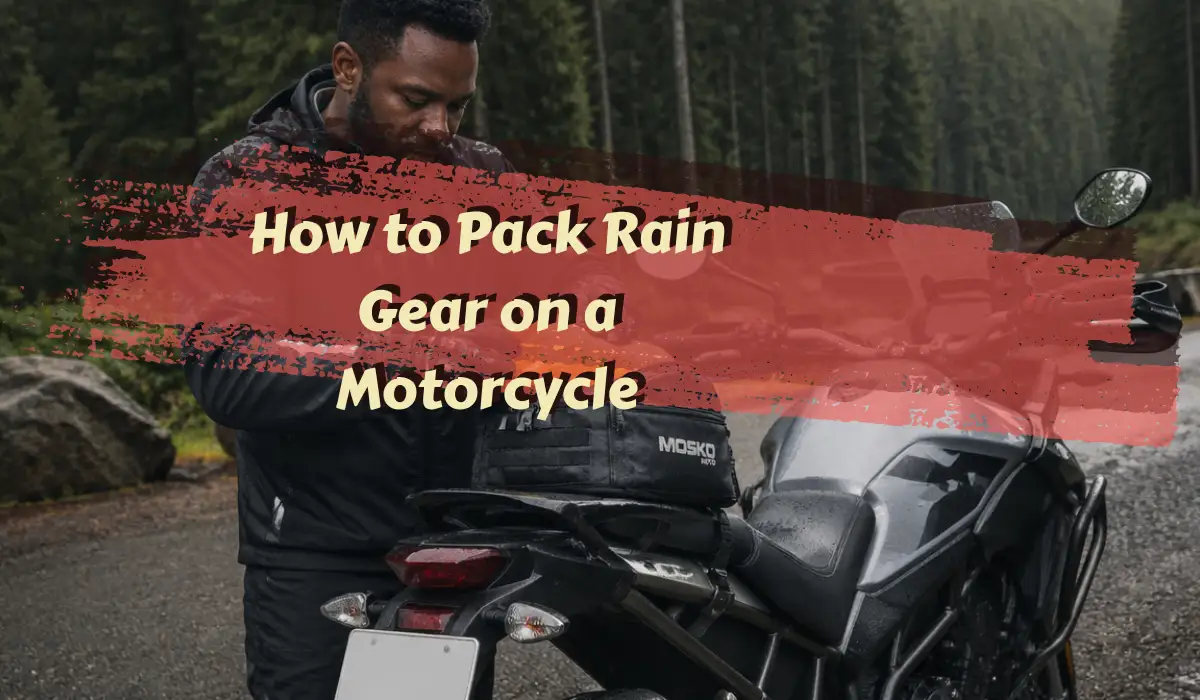
Is packing rain gear on a motorcycle really that important? Yes, because rain gear you cannot reach in time is almost as bad as not carrying it. This guide shows how to pack for speed, not just for storage.
Jump Ahead To:
What “Good Packing” Means for Rain Gear
Good packing does three things:
- Keeps rain gear compact
- Keeps deployment fast
- Keeps wet gear isolated after use
A tight packing method saves space, but access order is what keeps you dry in surprise weather.
If you are still building the full wet-weather setup, start at best-motorcycle-rain-gear.
Why Most Riders Get Caught Out
The common failure is simple: rain gear is buried under other items. By the time riders unpack it, base layers and gloves are already wet.
The second failure is wet-gear contamination after a storm. Without separation, one soaked suit can dampen everything else in the bag.
To align packing strategy with gear type, use motorcycle-rain-gear-buying-guide before finalizing your loadout.
Core Packing Concepts
Access-First Placement
Store rain gear where you can grab it quickly from one stop.
Compact Rolling
A tight roll keeps bulk down and improves consistency between rides.
Wet-Gear Isolation
Wet and dry gear should never share the same storage compartment without a barrier.
Repack Discipline
After rain use, dry and repack correctly so your next deployment is clean and fast.
If your suit choice is still open, compare best-motorcycle-rain-suits before dialing the final packing method.
Step-by-Step Packing Flow
1. Pre-Pack Inspection
Close zippers, flatten flaps, and empty pockets so the roll packs evenly.
2. Roll for Compact Shape
Use a tight roll approach that keeps the bundle stable and easy to slide into a dry bag.
3. Add Secondary Compression
Use roll-top dry bags or compression bags that do not require tools.
4. Place by Deployment Priority
Keep rain gear at the top of a pannier, in a tank bag, or in a dedicated quick-access section.
5. Pair Critical Extras
Store boot covers, glove covers, and visor wipe tools with the main suit so deployment is complete in one grab.
6. Handle Wet Gear Correctly
After storm use, shake off water, isolate wet gear, and keep it away from dry clothing.
For riders managing overlap and volume over armored layers, use how-to-choose-rain-gear-over-armor while setting your pack size.
Common Packing Mistakes
Burying Rain Gear Deep in Luggage
This delays deployment and increases soak risk.
Packing Wet Gear with Dry Layers
Moisture spread ruins comfort for the next segment.
Forgetting Extremity Items
No glove or boot solution means partial protection only. Keep best-motorcycle-rain-boot-covers options in the same access path as your suit.
Ignoring Post-Ride Care
Poor drying and repacking reduces performance over time. Follow how-to-waterproof-and-maintain-motorcycle-gear for long-term reliability.
Safety Notes
Access speed is a safety factor. Riders who delay stopping and suiting up often lose focus as they get soaked and cold.
Keep packing secure and stable so nothing can shift into moving parts. Also keep wet-weather visibility and riding behavior in mind with motorcycle-rain-riding-safety-guide.
If your rain kit includes separate jacket and pant systems, confirm coverage overlap in waterproof-motorcycle-jackets-guide and motorcycle-rain-pants-guide.
Frequently Asked Questions
Where is the best place to store rain gear?
Where you can reach it fast without unloading your whole bike.
Should I pack one-piece and two-piece suits differently?
Yes. Two-piece systems can be split and staged by access priority, while one-piece systems often need a dedicated top-access slot.
How do I pack wet rain gear after a storm?
Isolate it in a separate waterproof or sacrificial bag so dry gear stays dry.
Do compression bags damage rain gear?
For trip use, normal compression is fine. Avoid long-term over-compressed storage between rides.
What is the fastest deployment setup?
Pre-staged gear in a top-access location with all rain essentials packed together.
How often should I repack rain gear?
After each wet use and after any long storage period so readiness stays high.
If you ride long cold rain days, pair this packing system with how-to-layer-for-cold-wet-motorcycle-rides so you can deploy both insulation and weather layers in the right order. For a full wet-weather routine from setup to execution, follow staying-dry-while-riding-guide.