
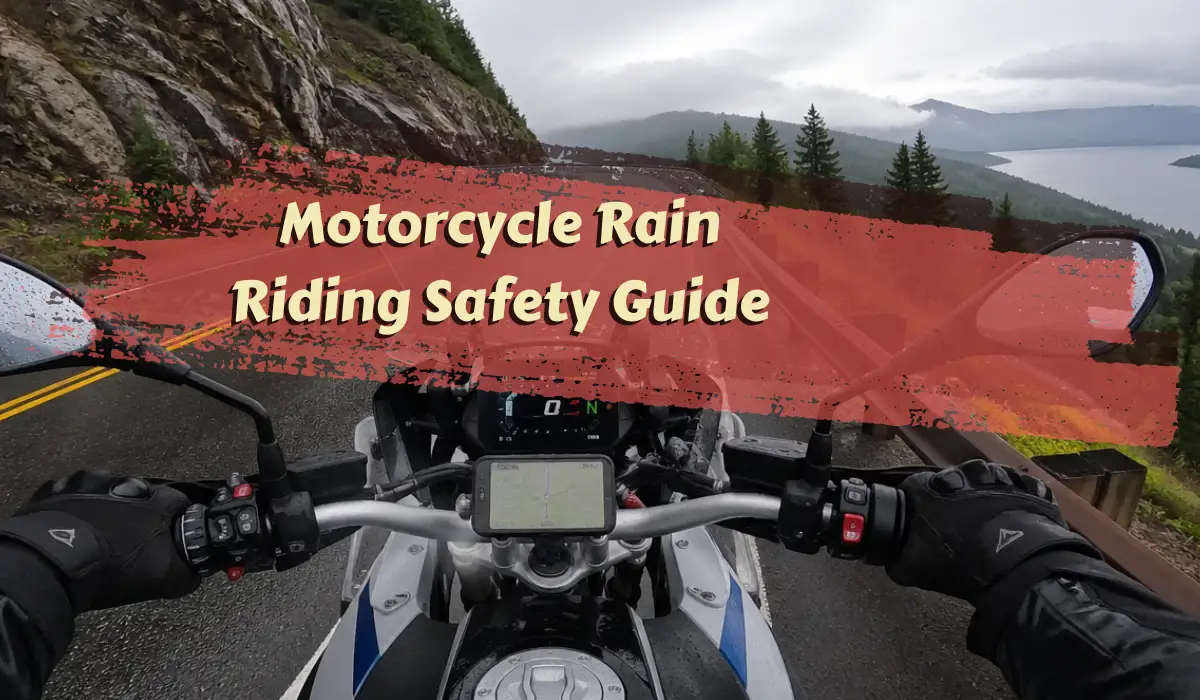
Is motorcycle rain riding safety just about slowing down? No. It is about keeping grip, sight, and control steady when rain cuts traction and hides hazards. This guide shows exactly how to prepare, ride, and recover in wet conditions so you can make safer calls on real roads.
Jump Ahead To:
What Motorcycle Rain Riding Safety Actually Means
Rain safety is a full system, not one trick. You need the right pace, smoother control inputs, and gear that keeps you dry enough to stay focused.
If you are still building your full weather setup, start with best motorcycle rain gear so your technique and equipment work together.
Why Wet Roads Catch Riders Off Guard
The first stretch of rain is often the slickest. Oil, dust, and grime lift to the surface before steady rain washes them away.
Stopping distance grows fast in these conditions. Painted lines, metal covers, and tar snakes also get much more slippery than normal pavement, so line choice matters more than usual.
If your outer layer leaks or flaps at speed, you lose comfort and concentration. Use the motorcycle rain gear buying guide to fix fit and sealing before your next wet ride.
Core Rain-Riding Principles
1. Be Smooth With Every Input
Brake, throttle, and steering changes should be progressive, never abrupt. Sudden inputs overload the reduced grip you have in rain.
2. Create More Space
Increase following distance and lower your corner-entry speed. A bigger gap gives you time for hazards you cannot see early in spray.
3. Keep the Bike Upright Over Slick Surfaces
Cross paint, metal, and patched strips as upright as possible. Avoid braking hard while crossing them.
4. Protect Vision First
A fogged visor is a safety problem, not a comfort issue. Keep visor management and anti-fog setup dialed before you ride.
For shell and visor interface choices, compare waterproof motorcycle jackets guide.
Step-By-Step Wet Ride Routine
Before You Leave
- Check tire pressure and tread.
- Confirm lights and signals work.
- Seal cuffs, collar, and pant overlap points.
- Pack a dry glove liner or backup layer.
For cold rain days, build your base and mid layers first with how to layer for cold wet motorcycle rides.
During the First 15-30 Minutes of Rain
- Treat the road as extra slick.
- Avoid rushing lane changes.
- Test braking feel gently on clean straight pavement.
- Stay off the lane center strip where residue tends to collect.
Through the Main Part of the Ride
- Look farther ahead and pick smoother lines.
- Brake earlier and straighter.
- Roll on throttle gently at corner exit.
- Keep shoulders and arms relaxed so the bike can move naturally.
If Conditions Turn Severe
If rain plus wind or visibility drops beyond your comfort margin, stop and wait it out. Good judgment is part of rain-riding skill.
Common Mistakes and Fast Fixes
Grabbing the Front Brake
Fix: settle the bike first, then squeeze progressively.
Following Too Close in Spray
Fix: add space and offset lane position for cleaner sight lines.
Ignoring Cuff and Boot Interfaces
Fix: overlap jacket, gloves, pants, and boots correctly so runoff stays outside. This is where motorcycle-rain-pants-guide and best motorcycle rain boot covers help most.
Riding With Fogged Vision
Fix: stop and clear it. Do not keep riding blind between wipe intervals.
Safety Habits That Make a Big Difference
Keep rain kit easy to deploy, not buried deep in luggage. A fast setup prevents "I’ll risk it" decisions when weather changes suddenly.
Use how to pack rain gear on a motorcycle so your wet kit is reachable in under a minute. Then maintain shell waterproofing and seam health with how to waterproof and maintain motorcycle gear so your protection does not fade mid-season.
Frequently Asked Questions
Is it ever safer to wait before riding in rain?
Yes. Waiting for the first phase of rain to clear road film can reduce risk on many roads.
Should I use both brakes in rain?
Yes. Use both with smoother, earlier input than in dry conditions.
What surfaces are most dangerous when wet?
Painted markings, metal plates, manhole covers, and shiny repair strips are common low-grip spots.
Does better rain gear improve safety?
Yes. Staying dry and warm helps focus and decision-making, even though gear does not create tire grip.
How much should I slow down in rain?
Enough to keep sight distance, braking margin, and line control comfortable for current visibility and surface grip.
What is the first thing to fix if wet rides feel sketchy?
Usually input smoothness and following distance. Then improve gear fit and visibility control.
If you want a broader wet-weather strategy, read staying dry while riding guide and the motorcycle rain gear materials guide. For waterproof numbers and what they mean on the road, use waterproof ratings explained for motorcycle gear.