
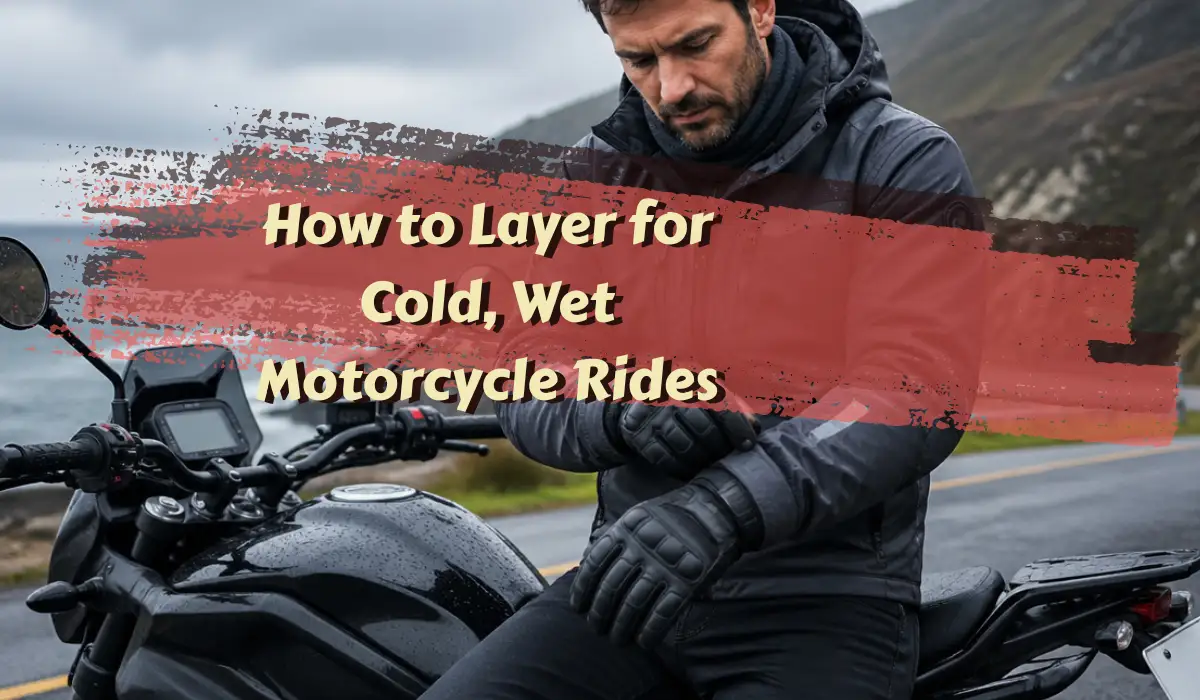
Is layering for cold, wet motorcycle rides really that different from normal winter clothing? Yes, because riding adds wind pressure, moisture load, and control demands that regular street layering does not handle well. This guide gives you a simple system that keeps you warmer, drier, and safer on longer wet rides.
Jump Ahead To:
What Cold-Wet Layering Means on a Bike
Layering is a controlled stack: moisture management at skin level, insulation for heat retention, protective shell for impact and wind, and a rain barrier when weather gets sustained.
This is not about wearing as many clothes as possible. Too much bulk can restrict movement and make control worse.
For full wet-gear context around this strategy, start with best-motorcycle-rain-gear.
Why Riders Still Freeze While “Wearing Enough”
Most cold-wet failures are moisture failures. Riders either let rain in or trap sweat inside until everything feels clammy and cold.
Wind chill multiplies this problem. A ride that looks mild at a gas stop can feel harsh once you are at speed for 30+ minutes.
Use motorcycle-rain-gear-buying-guide to make sure your shell and layering plan are aligned before long trips.
Core Layering Concepts
1. Base Layer: Move Moisture
Use merino or synthetic base layers. Avoid cotton because it holds water and chills quickly.
2. Mid Layer: Trap Heat
Use fleece, insulated mid-layers, or heated liners depending on temperature and ride duration.
3. Protective Outer Layer
Your armored jacket and pants provide impact/abrasion protection and wind blocking.
4. Rain-Over Barrier
In sustained rain, putting waterproof gear over your riding shell often keeps the whole system warmer and drier.
If you run over-armor shells, this how-to-choose-rain-gear-over-armor guide helps avoid fit and seal failures.
Step-by-Step Layering Flow
1. Start Dry
Put on dry base layers before the ride. Starting damp guarantees a cold ride later.
2. Match Insulation to Ride Time
Short rides can use lighter insulation. Long rides need stronger thermal strategy or heated gear.
3. Seal Openings First
Close neck, wrist, and ankle interfaces before rolling out. Small leaks become major heat loss points.
4. Add Rain Shell Early
Do not wait until your core layers are soaked. Deploy your rain layer as soon as weather shifts.
5. Protect Hands and Feet
Cold hands and wet feet hurt control quickly. Combine glove, boot, and overlap setup early.
6. Recheck at Stops
Adjust vents and layers as temperature changes so you do not swing from soaked-sweaty to chilled.
For rapid roadside deployment, keep your layers staged with how-to-pack-rain-gear-on-a-motorcycle.
Common Layering Mistakes
Overusing Bulky Passive Layers
Too much bulk can limit arm movement and reduce blood flow to extremities.
Running Cotton Base Layers
Cotton traps moisture and makes cold rain feel much worse.
Treating Gloves and Boots as Afterthoughts
Hand and foot comfort control your braking and shifting feel. Weak extremity setup ruins the whole system.
Ignoring Shell Maintenance
Dirty or degraded shell treatment causes wet-out and faster cooling. Restore shell performance with how-to-waterproof-and-maintain-motorcycle-gear.
Safety Notes for Cold-Wet Rides
Cold stress reduces precision. When your hands and core cool down too far, reaction quality drops and fatigue rises.
Keep your weather system practical, not just warm-looking. Fit, seal, visibility, and control matter equally in rain.
Pair your layering plan with motorcycle-rain-riding-safety-guide so technique and clothing work together.
If you are selecting shell pieces next, compare waterproof-motorcycle-jackets-guide and motorcycle-rain-pants-guide before finalizing your stack.
Frequently Asked Questions
Do I need heated gear for cold wet rides?
For longer rides in lower temperatures, heated layers can reduce fatigue and keep dexterity more stable.
What should my base layer be made of?
Use merino or synthetic fabrics that move moisture away from skin.
Is one rain shell enough for all conditions?
It depends on trip duration and temperature swings. Longer or colder rides usually need stronger system planning.
Why do I still feel wet when rain is not leaking through?
You may be trapping sweat because breathability and vent management are off.
Should I layer first, then put on armor, then rain shell?
Yes. Keep the moisture and insulation stack under your protective layer, then add rain-over protection as needed.
What is the fastest comfort improvement I can make?
Fix base-layer fabric, seal neck/wrist/ankle points, and deploy rain shell earlier.
For riders who still get lower-leg water ingress in storms, combine this layering plan with best-motorcycle-rain-boot-covers or dedicated best-waterproof-motorcycle-boots options.