
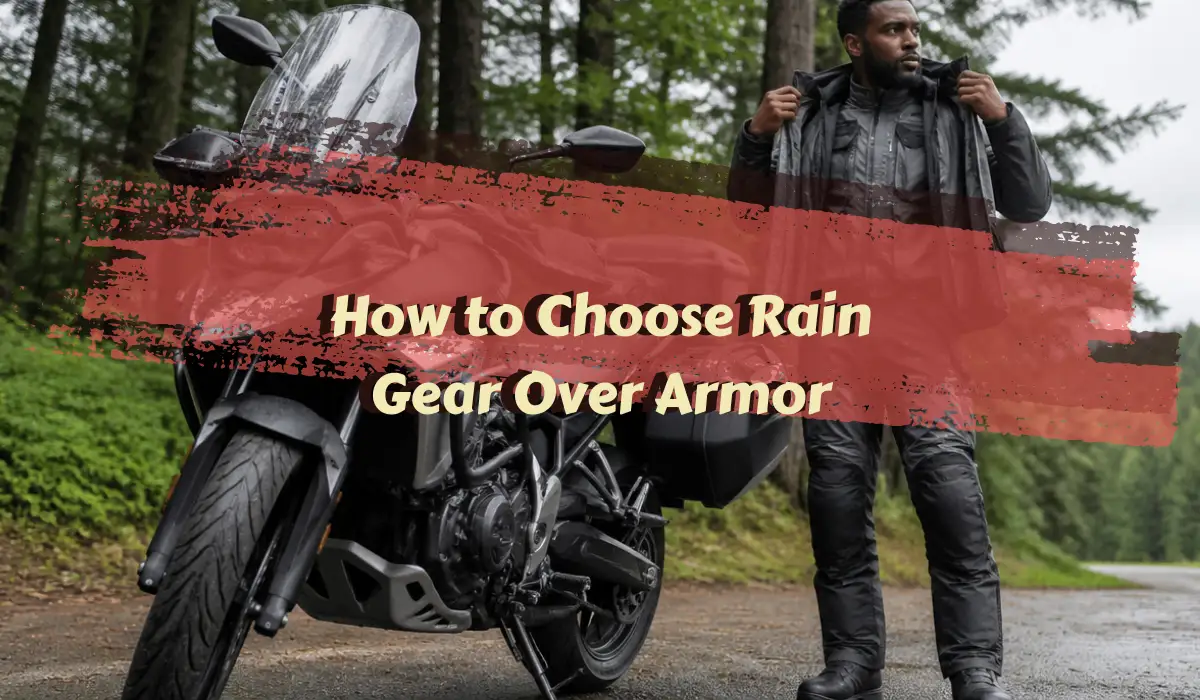
Is rain gear over armor the right setup for most riders? For many riders, yes, because it lets you keep your protective kit on and add weather protection only when conditions demand it. The key is choosing fit and construction that work at riding speed, not just while standing in a store.
Jump Ahead To:
What “Rain Gear Over Armor” Means
This setup uses a waterproof outer shell worn on top of your armored jacket and pants. It can be a one-piece suit or a two-piece jacket-and-pants set.
The goal is simple: keep your impact protection in place while adding rain and wind coverage when weather changes. If you need the full category view first, start with best-motorcycle-rain-gear.
Why Fit Over Armor Is Hard
Over-armor rain gear fails in two common ways:
- Too tight: movement is restricted and seams get stressed.
- Too loose: fabric flaps hard and openings funnel water in.
On-bike posture makes this harder. Arms extend, knees bend, and waist seams get pressure from seated rain pooling. That is why standard street fit is not enough.
For purchase planning around these tradeoffs, use motorcycle-rain-gear-buying-guide.
Key Concepts Before You Buy
One-Piece vs Two-Piece
One-piece reduces waist leak paths. Two-piece is easier to deploy and more practical at stops.
Waterproof Rating and Seam Construction
Rain at speed drives water through weak closures. Sealed seams and strong zipper-flap design are mandatory.
Volumetric Sizing
You size over your real armored layers, not over casual clothes.
Heat-Safe Lower Leg Zones
Outer shells near exhaust areas need heat-resistant sections or they can melt.
For shell behavior details, review waterproof-motorcycle-jackets-guide and motorcycle-rain-pants-guide.
Step-by-Step Selection Flow
1. Pick Suit Configuration by Ride Pattern
Choose one-piece for long severe rain exposure. Choose two-piece for commute flexibility and faster roadside changes.
2. Measure in Full Riding Kit
Wear your armored base layers and boots while checking size. Reach to bars and bend knees to verify coverage under load.
3. Verify Closure and Overlap Zones
Check neck seal, wrist overlap, waist coverage, and ankle-to-boot interface. Most water entry starts here.
4. Confirm Heat and Snag Safety
Inner leg zones should be safe around exhaust heat. Loose material should not snag on pegs or controls.
5. Test Deploy Time
If the suit is too slow to put on, you will delay deployment and start wet. Improve this with how-to-pack-rain-gear-on-a-motorcycle.
6. Build Layer Strategy
Over-armor shells still need correct base and mid-layers in cold rain. Use how-to-layer-for-cold-wet-motorcycle-rides to avoid internal moisture chill.
Common Mistakes
Buying by Street Size
Over-armor fit usually needs more volume than normal clothing labels suggest.
Using Non-Moto Rainwear
Generic outdoor shells often miss seated-ride cut, heat protection, and wind stability.
Ignoring Cuff and Neck Integration
Even good fabric leaks if overlap points are loose.
Skipping Maintenance
When shell treatment degrades, comfort and weather performance drop quickly. Follow how-to-waterproof-and-maintain-motorcycle-gear.
Safety Notes
Over-armor rain gear improves weather comfort, but it does not improve traction. Keep controls smooth and adjust spacing in wet conditions.
Visibility also drops fast in rain. Keep reflective and high-contrast surfaces visible, and pair gear decisions with motorcycle-rain-riding-safety-guide.
If you are deciding between full suits and modular pieces, compare this approach against dedicated picks in best-motorcycle-rain-suits.
Frequently Asked Questions
Should I choose one-piece or two-piece over armor?
One-piece usually seals better in hard rain. Two-piece is easier to put on and easier to live with in daily riding.
Do I need to size up over armored gear?
Usually yes. Always test fit with your real riding layers and in riding posture.
Why does over-armor rain gear still leak?
Most leaks come from overlap points, seam quality, or closure setup, not just fabric claims.
Can I use a hiking rain shell over my armored jacket?
You can in an emergency, but motorcycle-specific rain gear is safer and more stable at speed.
How do I avoid flapping at highway speed?
Use proper fit, adjusters, and closure tightening at cuffs, waist, and neck.
What is the first thing to fix if I keep getting wet?
Fix your neck, wrist, and ankle overlap points before replacing your whole kit.
For riders who still get wet feet after over-armor setup changes, add targeted lower-body coverage with best-motorcycle-rain-boot-covers. If you want built-in weather protection instead of temporary covers, compare best-waterproof-motorcycle-boots.