
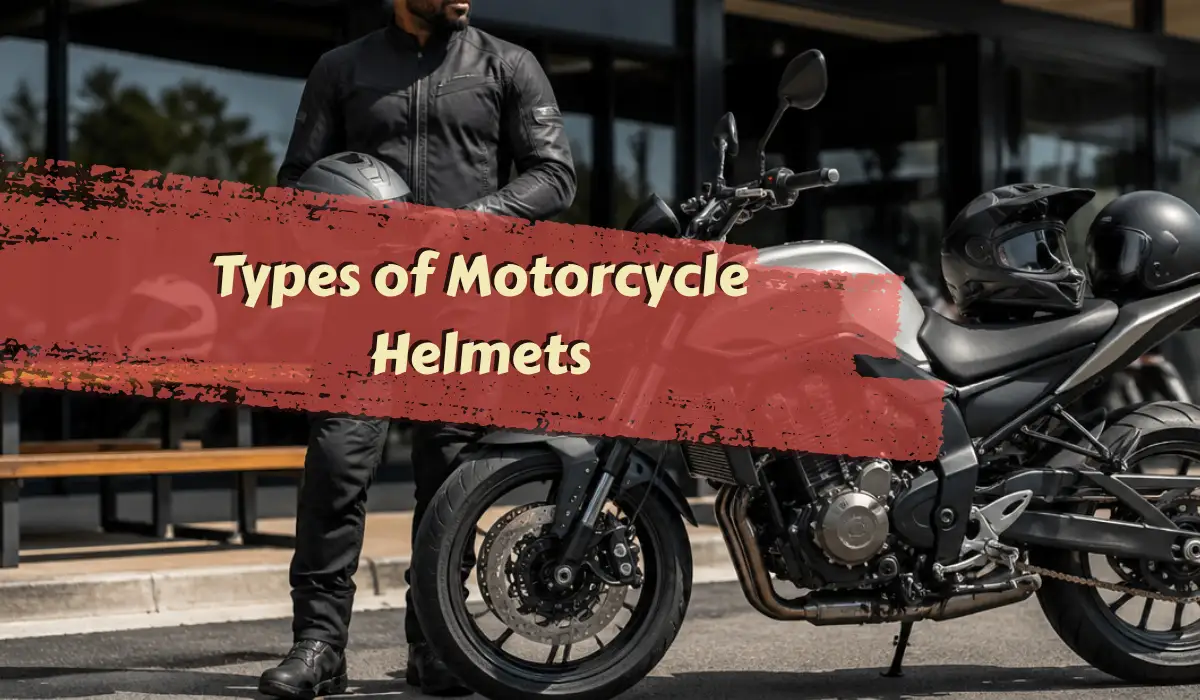
Does helmet type really matter that much? Yes. Helmet type decides your face coverage, airflow, noise level, weight, and how the helmet feels after an hour on the bike.
That is why riders get stuck here so often. They are not only choosing a look. They are choosing a set of tradeoffs they will live with every ride.
If you just want the straight product shortlist first, start with best motorcycle helmet. If you want to understand the shell styles before you shop, keep reading.
Jump Ahead To:
The Main Motorcycle Helmet Types
Most riders are comparing six broad categories:
- full-face
- modular
- open-face or 3/4
- half helmet
- ADV or dual-sport
- off-road or motocross
Each one solves a different problem. The mistake is choosing by image alone and discovering later that the helmet is too loud, too hot, too exposed, or just wrong for the way you actually ride.
Full-Face Helmets
Full-face helmets are the safest all-around choice for most street riders. They give the most complete coverage, including the chin bar, which matters because face and jaw impacts are common in real crashes.
They are also usually the quietest style at speed because they have fewer seams and hinge points for wind to exploit. That makes them the easiest recommendation for highway riding, sport riding, and general all-purpose street use.
Their downside is convenience. They can feel warmer in traffic, and you have to remove them to drink, talk clearly, or deal with glasses if the fit is tight.
Modular Helmets
Modular helmets use a flip-up chin bar. That makes them popular with touring riders, commuters, delivery riders, and anyone who wears glasses or stops often.
The benefit is obvious: you can lift the front for fuel stops, quick conversations, or a breath of air. The tradeoff is extra hardware. Modular helmets are usually heavier and can be a little louder than a strong full-face design.
Some premium modular helmets are very good. The point is not that modular helmets are bad. It is that you are trading a little simplicity and sometimes a little quietness for convenience.
Open-Face or 3/4 Helmets
Open-face helmets cover the top, sides, and back of the head but leave the face exposed. Riders choose them for airflow, visibility, and the less enclosed feel.
They make sense for some cruiser, scooter, and lower-speed city use, but the tradeoff is blunt and serious: no chin bar, no face protection, and much more exposure to weather and debris.
That is why open-face riders usually need to think about eye protection immediately too, whether that means a shield or motorcycle goggles.
Half Helmets
Half helmets are the lightest and least protective mainstream option. They leave a lot of the head and almost all of the face exposed.
That does not mean they never fit a rider's needs. It does mean riders should choose them with clear eyes. If your goal is maximum protection, this is not the category that gets you there.
ADV or Dual-Sport Helmets
ADV helmets sit between street and dirt helmets. They usually combine a shield, a larger opening, and a peak visor. That makes them a natural fit for riders who split time between pavement and off-road sections.
The peak is helpful in low sun and dirt, but it also adds drag at speed. That is the price of the extra versatility. A good ADV helmet works well in mixed use. It just will not feel exactly like a quiet dedicated street helmet on the highway.
Off-Road or Motocross Helmets
Off-road helmets are built around airflow, breathing room, and goggle use. They usually skip the street-style shield and instead use a larger peak with separate goggles.
That makes them the right tool for motocross and dirt-heavy riding. On long paved rides, they are usually louder and less convenient than street helmets.
Which Type Is Safest?
For most street riders, full-face is still the safest all-around answer because it combines the best coverage with fewer structural compromises. That does not make every other type unsafe. It just means every move away from full-face coverage usually adds a tradeoff somewhere else.
If safety is the first filter for you, pair this guide with motorcycle helmet safety ratings before you narrow the list.
Which Type Is Best for Different Riding?
Highway and sport riding
Full-face wins most of the time because it is quieter, more aerodynamic, and more protective.
Touring and commuting
Modular helmets make a lot of sense when convenience matters almost as much as protection.
Cruiser and low-speed city use
Open-face helmets appeal here because they feel airy and easy, but you are giving up face protection to get that openness.
Street plus dirt
ADV helmets are usually the best match because they split the difference more intelligently than trying to force a street or dirt helmet to do everything.
Dirt-only riding
Off-road helmets belong here because they are designed for goggles, airflow, and aggressive breathing during physical riding.
The Tradeoffs Riders Feel Every Day
The three tradeoffs most riders end up living with are:
- protection versus convenience
- airflow versus noise
- weight versus features
Those are the real arguments behind almost every helmet discussion. A modular rider is usually accepting a little extra weight for convenience. An open-face rider is accepting less coverage for airflow and openness. An ADV rider is accepting more highway drag for mixed-surface usefulness.
Fit Still Matters More Than Type Alone
The best helmet type on paper still fails if it does not fit your head correctly. A loose full-face is still a bad helmet for you. A modular that crushes your forehead is still the wrong modular.
That is why helmet type comes first in the buying order, but sizing comes right after it. Use how to size a motorcycle helmet before you fall in love with any one shell.
Frequently Asked Questions
Which motorcycle helmet type is safest?
For most riders, full-face helmets are the safest all-around choice because they give the most complete coverage.
Are modular helmets safe enough for daily use?
Yes. Good modular helmets are a strong daily-use option, especially when convenience matters.
Do open-face helmets protect your face in a crash?
No. They leave the face and jaw exposed.
Are half helmets worth considering?
Only if you clearly accept the much lower coverage compared with other helmet types.
What helmet type is best for mixed street and dirt riding?
ADV or dual-sport helmets are usually the best fit for that job.
Should I choose helmet type before size?
Yes. Pick the helmet category first, then find the right fit inside that category.
If you know the type and want product picks next, compare best full-face motorcycle helmets, best modular motorcycle helmets, best open-face motorcycle helmets, and best adventure motorcycle helmets.