
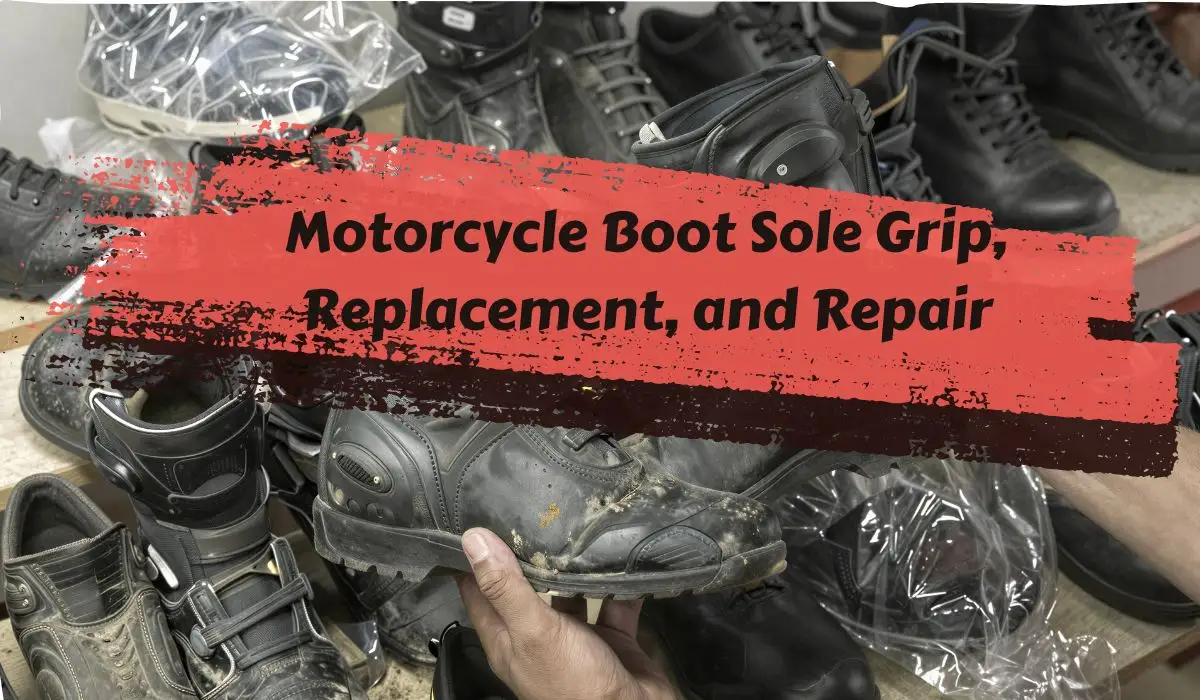
Is motorcycle boot sole grip, replacement, and repair worth doing instead of buying new boots? Yes, if the upper and support structure are still solid.
Most riders throw boots away too early, or try a quick glue job that fails after two rides. This guide shows you when a repair is safe, when replacement is smarter, and how to do a sole repair that actually lasts.
Jump Ahead To:
What Boot Sole Repair Really Includes
Sole work is not just one thing. You have three levels of repair:
- Grip refresh: restore traction on hardened or glazed rubber.
- Spot repair: fix toe or heel delamination before the sole peels off.
- Full resole: remove and replace the worn outsole.
If your boot body is still healthy, repair can save money and keep a broken-in fit. Before you start, check your protection baseline in our boot safety rating breakdown and how boots protect your feet and ankles.
Repair or Replace in 5 Minutes
Run this quick check first.
1. Check the Internal Structure
If the boot shank feels bent, unstable, or collapsed, stop. Replace the boot. A new sole does not fix a failed support core.
2. Check the Upper
Deep cracks, ripped seams, or badly degraded materials usually mean replacement is the safer call.
3. Check the Sole Damage Level
- Delamination at toe or heel: usually repairable.
- Worn tread with intact structure: often resoleable.
- Holes through to structural layers: inspect very carefully before any DIY attempt.
4. Check the Cost Math
If professional repair cost is near half the value of a new pair, replacement may be the better long-term move.
5. Check Your Riding Use
Daily highway riding and aggressive off-road use demand higher confidence than occasional short rides. If you are unsure, replacement is usually safer than another patch cycle.
Your Boot Construction Decides What Is Possible
Goodyear Welted Boots
These are the easiest to resole because the sole is attached through a welt, not only glued. Cobblers can usually replace these multiple times.
Cemented or Molded Boots
Most modern sport, ADV, and MX boots use glued or molded sole construction. They can still be repaired, but success depends on prep quality, adhesive choice, and clamp pressure.
Modular Sole Systems
Some boots use replaceable sole sections. If your model supports this, swapping OEM parts is often cleaner than full re-gluing.
If you ride dirt and pavement, compare construction differences in supermoto-ready boot options.
Step-by-Step: Re-Glue or Resole a Cemented Boot
Step 1: Strip and Clean
Remove loose old glue, dirt, and oils. A clean surface is mandatory.
Step 2: Roughen Both Bonding Surfaces
Use coarse abrasion so the adhesive can lock in mechanically. Smooth rubber is one of the main reasons repairs fail.
Step 3: Degrease Again
After abrasion, wipe with isopropyl alcohol and let it dry completely.
Step 4: Warm the Surfaces
Gentle heat helps some adhesives flow and bond better. Do not overheat or cook the boot.
Step 5: Apply a Flexible Adhesive
Use products made for flexible footwear repairs. Avoid rigid epoxies and hard construction adhesives.
Step 6: Mate and Clamp Evenly
Press the sole into position with uniform pressure from toe to heel. Weak pressure at one edge causes early peel.
Step 7: Cure Fully
Leave the boot untouched for full cure time, often 24 to 72 hours. Riding too soon ruins the bond.
Step 8: Test Before Real Riding
Walk, flex, and check for lifting at edges. Then do a short low-risk ride before normal use.
For fit and control checks after repair, use boot fit and sizing basics and break-in steps for new boots.
Grip Upgrades Without a Full Resole
When tread is still mostly intact, you can sometimes extend life with lighter interventions.
- Seal minor abrasion zones before they spread.
- Use targeted toe reinforcement on shift contact points.
- Apply traction-restoring treatments only when rubber is hardened, not torn.
Aggressive regrooving can increase bite edges, but cutting too deep can weaken the sole. Keep it conservative.
Adhesives That Work and Adhesives to Avoid
| Type | Works Well For | Why It Works | Main Risk |
|---|---|---|---|
| Flexible contact cement | Sole reattachment | Handles flex and vibration | Fails if surfaces are not prepped |
| Urethane footwear adhesive | Edge repair and fills | Stays elastic after cure | Can wear quickly in high-abrasion zones |
| Rigid epoxy/construction glue | Not recommended | Strong in static joints only | Cracks and peels on flexing boots |
After any glue work, keep up cleaning and drying habits from boot care and conditioning steps.
Safety Limits You Should Never Ignore
- Do not repair boots with failed internal support structure.
- Do not puncture waterproof liners during sole work.
- Do not rely on improvised hard toe-slide hacks for street riding safety.
- Do not use direct high heat to force faster curing.
If your riding includes cold, wet commutes, replace with purpose-built options from our waterproof boot buying guide.
Common Repair Mistakes
Poor Surface Prep
Most failures start here. Clean and roughen both sides properly.
Wrong Glue
A glue that feels strong in your hand can still fail under boot flex and peg vibration.
Uneven Clamp Pressure
Heel and toe edges need equal pressure, not just a heavy weight in one spot.
Early Ride Return
Cure time is part of the repair. Cutting it short wastes all prior work.
Repairing Past End of Life
When support structure is gone, no glue can bring safety back.
Quick Pre-Ride Checklist After Sole Repair
- No edge lift at toe, arch, or heel.
- Sole flex feels consistent left to right.
- Shifter feel is predictable during static testing.
- Peg grip feels stable in dry and damp conditions.
- No new cracking after first short ride.
If your boot is still uncomfortable after repair, compare softer street options in low-cut riding shoe options.
Frequently Asked Questions
Can motorcycle boots really be resoled?
Yes. Many can be resoled or re-glued, especially when the upper and internal structure are still sound.
Are cemented boots repairable, or only welted boots?
Cemented boots are repairable, but they need careful prep, proper adhesive, and full cure time.
What glue should I use for a peeling sole?
Use a flexible adhesive made for footwear and rubber bonding. Avoid rigid epoxies.
How long should I let a repair cure?
Follow product instructions, but many sole repairs need at least 24 to 72 hours before riding.
When should I replace instead of repair?
Replace if the shank, upper structure, or key protection zones are compromised.
Can I fix worn toe areas without a full resole?
Often yes. Localized reinforcement can extend life when the rest of the sole is still healthy.
Does resoling affect waterproof performance?
It can if the repair damages liner areas. Careful technique and pro service reduce that risk.
Is professional resoling worth it for premium boots?
Usually yes, if repair cost is reasonable and the boot structure is still safe.
If you want women-specific fit and replacement options, see women-specific boot options. If you want the full picture before replacing anything, review the main motorcycle boots guide.