
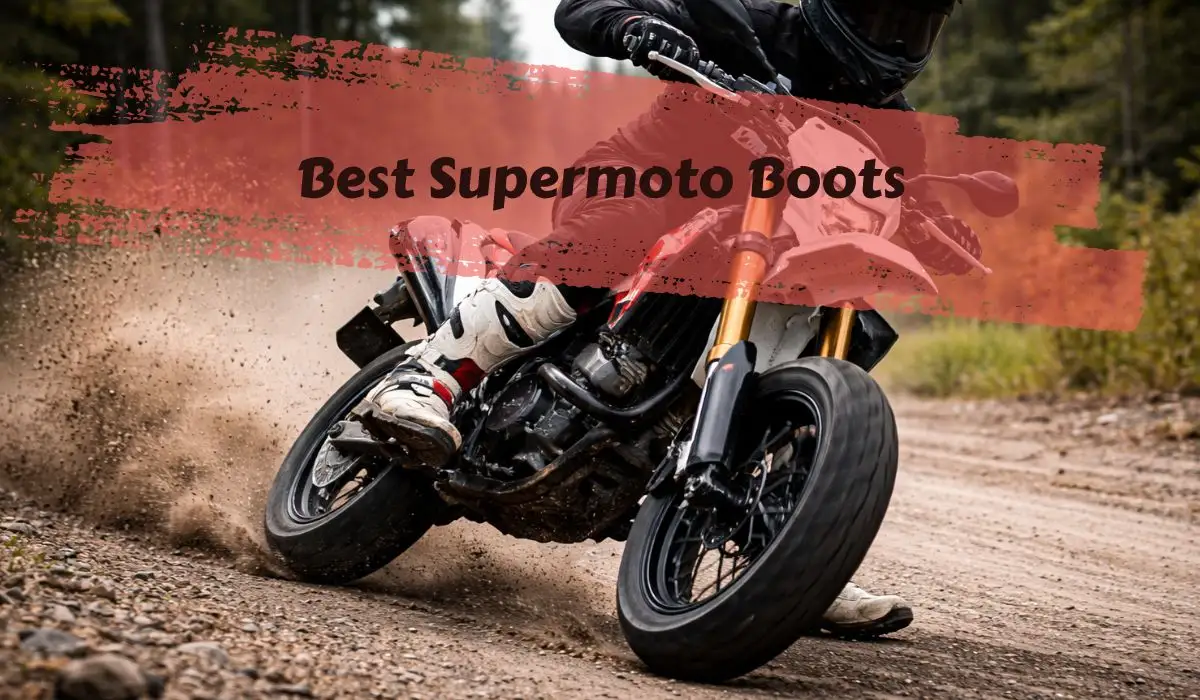
Supermoto riding needs a tricky balance. You want real impact protection like an off-road boot, but you still need enough feel for street braking, shifting, and stoplight footwork.
This guide compares three strong options for supermoto riders who split time between pavement aggression and dirt-style control demands.
Jump Ahead To:
What Makes a Good Supermoto Boot
A good supermoto boot should protect your ankle and lower leg during crashes, but still let you brake and shift cleanly on tight, technical roads. Buckle reliability, calf adjustability, sole grip, and break-in behavior matter as much as raw stiffness.
If you want the full picture first, start with the main motorcycle boots guide. If you ride mostly dirt, compare with full motocross boots.
Quick Picks
- Best Overall: SiDI Offroad Motorcycle Boots – highly serviceable, race-grade structure with strong fit adjustability.
- Best Long-Term Value: New 2019 Gaerne SG-12 Men’s Motocross Boots – premium-level support with better long-term value than many disposable boots.
- Premium Pick: Alpinestars Tech 10 Boots – maximum protection focus for riders who prioritize support over convenience.
Best Overall
Best Long-Term Value
Premium Pick
Comparison Table
| Product | Best For | Key Feature | Main Tradeoff |
|---|---|---|---|
| SiDI Offroad Motorcycle Boots | Riders who want adjustable fit plus replaceable components | Replaceable buckles, shin pads, and metatarsal inserts with flex control | Premium price and somewhat complex closure setup |
| New 2019 Gaerne SG-12 Men’s Motocross Boots | Riders who want support with better long-term value | Dual-stage pivot plus memory foam interior and anti-shock sole | Heavy boot feel and possible narrow toe fit |
| Alpinestars Tech 10 Boots | Riders who prioritize top-level protection | Race-focused support architecture with strong ankle coverage | High cost and a heavy, stiff feel early on |
Quick Decision Guide
- Pick SiDI Offroad Motorcycle Boots if you want highly adjustable fit and replaceable hard parts.
- Pick New 2019 Gaerne SG-12 Men’s Motocross Boots if you want a durable high-support boot with good long-term value.
- Pick Alpinestars Tech 10 Boots if your top priority is maximum crash-focused support.
If your riding is mostly pavement and light commuting, compare low-cut riding shoe options before committing to full MX stiffness.
Best Supermoto Boots 2026: Top Picks for Riders
1 / 3
SiDI Offroad Motorcycle Boots

Fit System
Micro-adjustable replaceable buckles
Protection
Replaceable shin and metatarsal components
Mobility
Dual Flex System with hyper-extension block
Calf Setup
Adjustable calf system
Tradeoff
Premium cost and closure learning curve
The Crossfire-style SiDI off-road platform works well for supermoto because it combines hard protection with real fit tuning. You get replaceable shin and metatarsal pieces, replaceable buckles, and an adjustable calf setup that helps when you switch between slim and armored lower-leg setups.
On the bike, the dual-flex layout and adjustable closure system help the boot feel less abrupt than a fully rigid shell. It still needs setup time, but the protection-first design leaves enough pedal feel for aggressive street-and-dirt use.
The tradeoff is complexity and price. This is not a simple throw-on commuter boot. You need to spend setup time on closures and fit, and the upfront cost is high.
Why It Wins:
- Replaceable protection parts help long-term service life.
- Strong adjustability for calf, buckle tension, and fit tuning.
- Protective support stays confidence-inspiring during aggressive riding.
What You Give Up:
- Expensive compared with simpler boot options.
- Buckle and cam-lock setup takes practice at first.
Bottom Line: This suits supermoto riders who want adjustable high-support protection they can keep in service for years.
2 / 3
New 2019 Gaerne SG-12 Men's Motocross Boots

Support Core
Dual-stage pivot system
Closure
Four lightweight adjustable alloy buckles
Comfort
Memory-cell foam interior
Chassis
Dual-composite anti-shock sole with molded footbed
Tradeoff
Heavy build and toe-box fit variance
The SG-12 is a strong supermoto crossover choice when you want serious support without giving up all control feel. Its dual-stage pivot design helps control harmful movement while still allowing useful ankle motion for braking and shifting.
The memory-cell foam interior and adjustable buckle layout help take the edge off a very supportive chassis. The dual-stage pivot keeps it more manageable on the pedals than a simpler rigid shell.
The main downside is weight and bulk. It is still a full motocross-grade boot, and the toe box can feel tight if you need extra forefoot room.
Why It Wins:
- Strong support architecture with useful pedal feel once fitted.
- Comfortable liner and reliable buckle hardware for repeat rides.
- Holds up well over long use cycles.
What You Give Up:
- Heavier feel than street-leaning supermoto options.
- Toe area can feel cramped for some wider feet.
Bottom Line: This makes sense for riders who want strong support and a higher-end build without chasing the highest price tier.
3 / 3
Alpinestars Tech 10 Boots

Protection Focus
Race-level structural support
Use Case
High-intensity riding and crash protection priority
Feel
Very supportive with break-in requirement
Coverage
Substantial upper structure
Tradeoff
Very high price with fit variability
The Tech 10 is a protection-first boot for riders who treat supermoto like a contact sport. It is designed around high support and lower-leg stability, with a structure that suits aggressive riding where ankle control matters most.
The heavy shell and full coverage can help in colder weather, but the boot is still designed around protection first, not casual comfort. Break-in takes time, especially if you are moving over from softer street boots.
The key tradeoff is comfort consistency versus cost. It is one of the most expensive options here, and a few riders still find it uncomfortable depending on fit shape.
Why It Wins:
- High support profile for hard riding and impact management.
- Strong ankle stability for aggressive riding.
- Proven race-oriented boot platform.
What You Give Up:
- Very high purchase price.
- Fit is less forgiving than softer crossover boots.
Bottom Line: This is for riders who put maximum protection first and accept the price and break-in tradeoff.
If You’re Buying New in 2026
- Start with SiDI Offroad Motorcycle Boots for the best balance of adjustability, protection, and serviceability.
- Start with New 2019 Gaerne SG-12 Men’s Motocross Boots if you want durable support with stronger value over time.
- Start with Alpinestars Tech 10 Boots if your number one priority is top-tier protection.
Use-Case Picks by Riding Style
Daily Commuting
For city-heavy supermoto use, full MX boots can feel overbuilt at low speeds and frequent stops. If your rides are mostly urban, lighter alternatives may improve comfort without overloading your ankle mobility.
Check touring-focused boot options for friendlier daily structure and weather comfort.
Weekend Twisties and Track-Style Riding
When corner speed and hard braking increase, boot support becomes a bigger safety factor. A stable ankle platform helps reduce fatigue and keeps pedal inputs more consistent.
Review support standards in our boot safety rating breakdown and how boots protect your feet and ankles.
Mixed Weather and Surface Changes
Supermoto routes can jump from clean pavement to loose or damp patches fast. You need secure fit and predictable sole behavior so control does not disappear when conditions change.
Why Supermoto Boots Matter for Riding Safety
Supermoto crashes often involve awkward foot contact, bike weight, and twisting forces. Street shoes and soft casual boots usually cannot control those loads.
Before you buy, measure your fit correctly and use boot fit and sizing basics so protection features sit where they should.
How to Choose Supermoto Boots
Pick Protection Level First
Start with ankle, shin, and lateral support. Comfort comes next, not first.
Match Stiffness to Your Real Riding
If most of your miles are street commuting, the stiffest race boot may be overkill. If you ride hard and slide often, higher support is worth the compromise.
Check Closure and Serviceability
Replaceable buckles, pads, and sole systems help when boots take repeated abuse.
Plan Fit Tuning and Break-In
Use a structured break-in process from break-in steps for new boots, keep hardware and materials healthy with boot care and conditioning steps, and monitor sole wear with our sole repair and grip-restoration guide.
Common Mistakes Supermoto Riders Make
- Buying by style and color before checking support structure.
- Choosing very stiff race boots for mostly short city rides.
- Ignoring toe-box width and calf fit until after first ride.
- Skipping break-in steps and judging fit too early.
- Running worn soles too long and losing peg/gravel confidence.
Frequently Asked Questions About Supermoto Boots
Are motocross boots good for supermoto?
Yes, many are, especially if you want higher crash protection. Just expect more stiffness than street-specific boots.
Can I daily commute in supermoto boots?
You can, but very stiff models may feel tiring in stop-and-go riding.
How stiff should a supermoto boot be?
Stiff enough to protect your ankle and shin, but not so stiff that you lose basic control feel.
Should I size up in supermoto boots?
Only when fit is clearly cramped. Check toe room, calf closure, and real riding-sock setup first.
Are replaceable buckles and parts worth it?
Yes for high-mile or hard-use riders, because you can keep boots in service longer.
Do premium boots always feel better?
Not always. Some premium boots protect better but still need break-in and precise fit matching.
What is the biggest fit mistake riders make?
Ignoring width and calf adjustability, then forcing a poor fit with over-tight closures.
When should I replace instead of repair?
Replace when core support structure is compromised, not just when tread is worn.
If your riding is more asphalt and peg feel than off-road support, compare track-focused boot options and low-cut riding shoe options before buying the stiffest setup.