
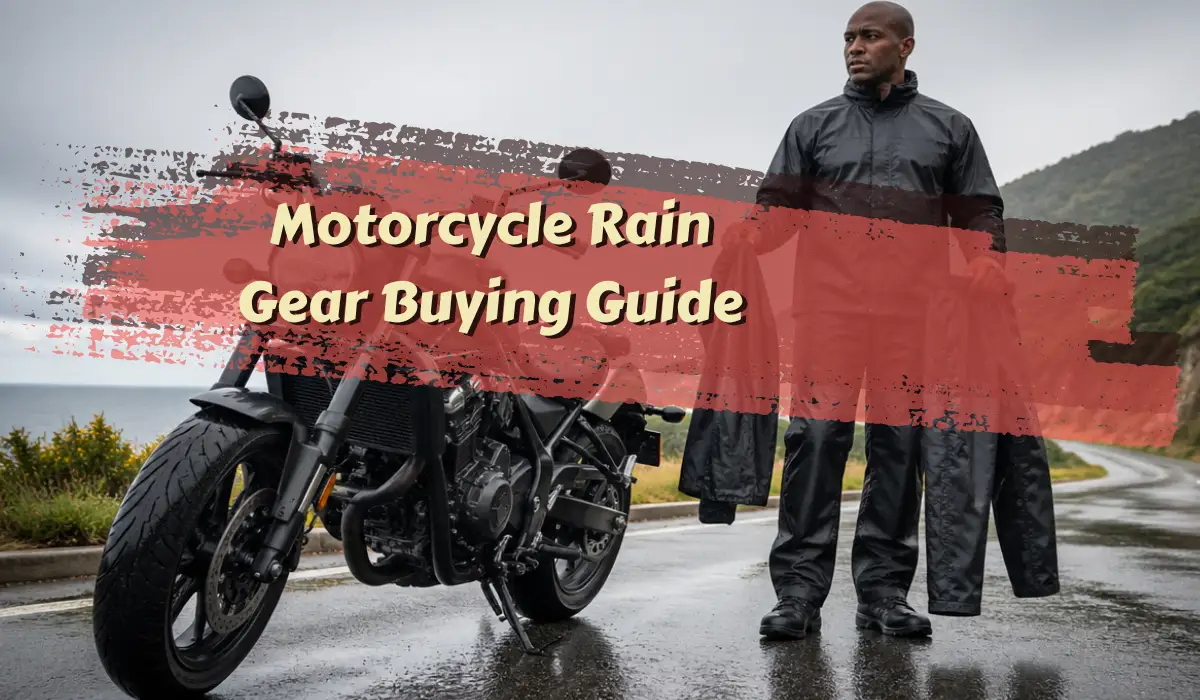
Is a motorcycle rain gear buying guide really necessary? Yes, because rain at riding speed pushes water through weak seams, bad zippers, and poor fit much faster than a normal storm test in your driveway. This guide helps you pick gear that works on the bike, not just in product photos.
Jump Ahead To:
What Motorcycle Rain Gear Includes
Motorcycle rain gear is outerwear made to go over your normal riding kit. It includes one-piece suits, two-piece jacket and pants sets, boot covers, and glove covers.
Good moto rain gear is different from hiking rain shells. It usually has sealed seams, stronger closures, better cuff and neck seals, and cuts that still work when you are bent forward on the bike.
If you want a full overview of complete setups, start with the main best motorcycle rain gear guide, then come back here to narrow your final pick.
Why the Wrong Gear Fails Fast
At highway speed, water pressure is much higher than standing rain. That is why light outdoor shells that seem fine off-bike can leak when you ride for 30 to 60 minutes in steady rain.
The second failure point is fit. If your suit is too tight over armor, seams strain and movement gets restricted. If it is too loose, it flaps, pumps water through openings, and tires you out.
The third failure point is maintenance. Once DWR stops beading water, the face fabric wets out, breathability drops, and you feel cold and damp even before true leakage starts.
Key Terms That Matter While Shopping
Hydrostatic Head (mm)
This is the waterproof pressure rating. For riding, 10,000 mm is a practical floor, and 15,000 mm or more is a safer target for repeated highway rain.
DWR
DWR is the outer treatment that makes water bead and roll off. When DWR is worn out, fabric soaks, breathability falls, and comfort drops hard.
Sealed Seams
Stitch holes leak unless seams are taped or sealed. This is non-negotiable for wet-weather riding gear.
PVC vs Breathable Membrane
PVC/PU-coated gear blocks water well and is often cheaper, but it traps heat and sweat. Membrane gear is usually better for longer rides where comfort and moisture control matter.
If you want a deeper breakdown before you buy, review waterproof ratings explained for motorcycle gear and motorcycle rain gear materials guide.
Step-by-Step Buying Flow
1. Define Your Real Use Case
Pick for your actual riding pattern, not a single emergency ride.
- Daily commute in mixed weather: fast on/off and visibility matter most.
- Long touring days: waterproofing plus breathability matter most.
- Backup-only carry: pack size and simple coverage may be enough.
2. Choose One-Piece or Two-Piece
One-piece suits reduce leak points at the waist and are usually the driest option in heavy rain. Two-piece sets are easier to put on at roadside stops and easier to mix with normal riding gear.
If your riding pattern leans toward long wet stretches, compare complete over-suit options in best motorcycle rain suits.
3. Set a Waterproof Target
If you spend time on highways in rain, treat 15,000 mm as your target range. If you ride short city hops, 10,000 mm can still work when seam sealing and fit are good.
4. Fit-Test Over Armor
Try rain gear over your real jacket and pants. Sit on the bike position. Check that wrists and ankles stay covered and the crotch does not bind.
If you keep armor as your primary layer and only throw rain kit on top when needed, this how to choose rain gear over armor guide helps you avoid fit conflicts.
5. Check High-Risk Features
Look for these before you buy:
- Fully sealed seams
- Storm flap or waterproof zipper setup
- Strong cuff and neck closure
- Heat-resistant lower-leg panels near exhaust
- Reflective or hi-vis visibility details
6. Plan Maintenance From Day One
Rain gear is not set-and-forget. You need occasional cleaning and DWR refresh to keep performance stable through a season.
For day-to-day habits that keep outer shells from wetting out, follow this how to waterproof and maintain motorcycle gear routine.
Quick Pre-Buy Checklist
- Rated around 10,000 mm minimum, ideally 15,000 mm+ for frequent highway rain
- Seams are taped or sealed throughout
- Leg entry is wide enough over boots
- Jacket and pant cuffs seal cleanly
- Fit works over full armored kit in riding position
- Heat-safe lower-leg area near hot exhaust contact zones
- Reflective or hi-vis elements for poor visibility conditions
- Packed size fits your normal luggage plan
If your current gear already leaks, restore seam and surface protection before replacing everything.
Common Buying Mistakes
Buying by Street-Clothes Size
Rain gear must fit over armor and layers. Too small means leaks and restricted movement.
Ignoring Cuff and Neck Seals
Many leaks start at wrists and neck, not through the main fabric panel.
Choosing by Price Alone
Cheap options can work for short rides, but repeated highway rain usually exposes weak seam work and zipper leakage.
Skipping Fit in Riding Posture
Standing fit can look fine while seated fit fails at sleeves, ankles, and crotch.
Treating DWR Like a Permanent Feature
DWR wears out. If water no longer beads, restore it before your next long wet ride.
Wet-Weather Safety Notes
Rain gear does not create grip. It only keeps you drier and warmer so you can keep focus and better control.
In heavy rain, keep all loose tabs secured, avoid extra flapping fabric, and confirm glove and sleeve overlap before moving. If you ride in colder rain, build your layers first before sealing the outer shell using this how to layer for cold wet motorcycle rides flow.
Frequently Asked Questions
What waterproof rating should I aim for?
For regular riding in rain, 10,000 mm is a practical baseline and 15,000 mm or higher is a better highway target.
Is one-piece always better than two-piece?
One-piece is usually drier in heavy rain because it removes the waist seam. Two-piece is easier to use at quick stops and can be more convenient day to day.
Can I use hiking rain gear on a motorcycle?
It can work for short, slow emergency use, but most hiking shells are not cut or reinforced for sustained riding exposure.
Why do I feel wet even when the suit is not leaking?
Usually the outer fabric has wetted out and breathability dropped, so sweat and moisture build up inside.
How should rain gear fit over armor?
Snug enough to avoid heavy flapping, but loose enough for full range of motion and full wrist and ankle coverage in riding posture.
How often should I refresh DWR?
When water stops beading and starts soaking into the outer surface, it is time for a wash-and-refresh cycle.
If you want to compare shell styles before buying, use waterproof motorcycle jackets guide for upper-body options and motorcycle-rain-pants-guide for lower-body fit and coverage tradeoffs. For fast roadside deployment, this how to pack rain gear on a motorcycle workflow keeps your wet-weather kit reachable.