
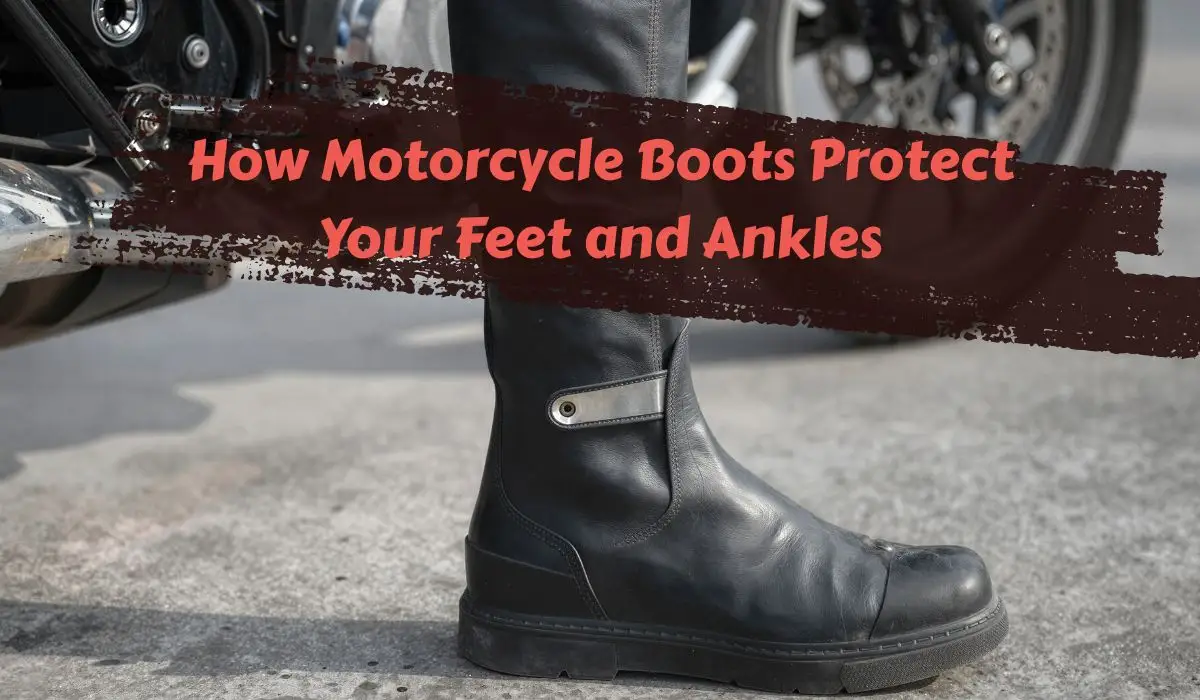
Motorcycle boots do a lot more than cover your feet. In a crash, a tip-over, or even a bad stop on slick pavement, they help keep your toes, heel, ankle, and lower leg from taking the full hit.
This guide breaks down how that protection works in plain language. You will see which parts of a boot matter, what CE labels actually tell you, and how to match protection to the way you ride.
Jump Ahead To:
Why Feet and Ankles Need Real Motorcycle Protection
Feet and ankles get exposed in more ways than riders think. The boot can hit the road in a slide, get trapped under the bike, smack a peg, or get twisted when your foot plants wrong at low speed.
That is why boots are not just a comfort add-on. They are part of the protection system, right alongside the helmet, jacket, and gloves. If you want the full boot picture first, start with the main motorcycle boots guide. If you want the test labels decoded in more detail, use our boot safety rating breakdown.
Another point riders miss: foot and ankle injuries do not only happen in big crashes. A boot also helps in common everyday moments, like putting a foot down on oil-slick pavement, catching the bike in a parking lot, or brushing a hot exhaust when traffic gets messy.
The Main Hazards Motorcycle Boots Help Manage
Slide Abrasion and Friction Heat
When a foot hits asphalt, the upper, sole, and stitching need to hold together while the boot slides. Motorcycle boots use tougher materials, stronger panel construction, and more abrasion-minded design than normal casual footwear.
That same slide can create heat fast. Boots with leather, rubber, and purpose-built protective materials help shield your foot from road friction and hot bike parts better than sneakers, hiking shoes, or fashion boots.
Crush Force and Sole Collapse
If a motorcycle lands on your foot, the risk is not only impact on top. The sole can also deform under load. That is why boot structure matters so much. A stiffer sole, a supportive midsole, and a real shank help the boot resist collapse instead of folding around the peg or under the bike.
Twist and Overextension
A lot of bad lower-leg injuries happen when the ankle bends farther than it should or twists under load. Better boots limit that extra movement. You still need enough range to shift and brake, but not so much freedom that the ankle becomes the weak link in a crash.
Loss of Grip at Stops
Protection is not just about the crash after it starts. It also helps prevent the crash in the first place. Slip-resistant soles, secure closures, and cleaner lace management all help when you stop on wet pavement, gravel, or fuel-stained concrete.
The Boot Parts That Actually Protect You
Toe Box
The toe box handles frontal knocks, scrape contact, and some crush load. Reinforcement here matters every time the bike tips toward your foot or debris gets kicked up at speed.
It also matters in daily riding because the front of the boot takes abuse from shifting. A soft fashion toe can wear through fast. A motorcycle boot toe keeps its shape longer and gives your foot a better buffer when the bike or ground hits it.
Heel Counter
The heel takes impact when your foot gets driven backward or pinned. A reinforced heel counter helps the rear of the foot stay supported instead of collapsing under pressure.
This also helps with stability on the bike. When the heel stays planted, your foot moves less inside the boot and control inputs feel more precise.
Ankle Cups and Bracing
This is the zone many riders should pay attention to first. Good ankle protection helps against side impact, twist, and overextension. Some boots use padded inserts. Others use more rigid external bracing or hard cups.
The right level depends on the job. A city boot can get away with a lighter setup. A race, ADV, or dirt boot usually needs much more structure around the ankle if you want real support when things go wrong.
Shin Plate
Tall boots add another layer of help above the ankle. Shin plates matter for roost, peg strikes, bike contact, and frontal hits. They are common on adventure, racing, and motocross boots for a reason.
If your riding stays mostly urban, a low-cut option can still make sense. If you want that comparison, look at low-cut riding shoe options. If your riding puts you on faster roads or rougher surfaces, extra height starts making a lot more sense.
Sole, Midsole, and Shank
This is where a lot of real protection hides. The sole gives grip and helps manage slide wear. The midsole helps the boot hold shape. The shank adds rigidity through the arch so the boot does not bend too easily under peg load or crush force.
A stiff shank is not unique to motorcycle boots, but motorcycle boots use that support as part of a bigger protection package. A work boot with a decent shank can feel sturdy, but it still may not have the ankle bracing, abrasion design, or motorcycle-specific testing you want.
Closures and Lace Control
A boot that opens up, loosens, or snags at the wrong time stops being protective fast. Zippers, buckles, hook-and-loop flaps, and tucked laces all help the boot stay on your foot and stay clear of controls.
This matters more than many riders think. If the fit loosens, the armor shifts. If a lace catches, you can botch a stop before the crash protection even gets a chance to help.
What CE EN 13634 Actually Covers
The short version is simple: CE EN 13634 checks whether a motorcycle boot meets a real protection baseline without making the controls unusable. It is not just one pass-or-fail badge. It tests specific parts of performance that matter in real riding.
The label tells you about four core areas:
- upper height
- impact abrasion resistance
- impact cut resistance
- transverse rigidity
That last one is especially important for foot protection because it reflects how well the boot resists being crushed or deformed across the sole. Not every boot scores the same in every category, which is why two certified boots can still feel very different on the bike.
You may also see optional markings:
IPAfor ankle impact protectionIPSfor shin impact protectionWRfor water resistanceFOfor fuel and oil sole resistanceSRA,SRB, orSRCfor slip resistance
If you want the full number-by-number breakdown, go deeper with our boot safety rating breakdown. The main takeaway here is that certification helps you judge what the boot was built to do, but you still need to match that protection to your real riding style.
Short Boots vs Tall Boots: What Changes
Short boots and riding shoes can still protect your feet better than normal street footwear. They are usually easier to walk in, cooler in hot weather, and less bulky for commuting.
What you give up is coverage. A shorter boot usually means less shin protection and less leverage control around the ankle. That trade-off may be fine for short city rides. It makes less sense for highway speed, hard sport riding, or dirt use where the lower leg sees more risk.
Tall boots add more material and more structure above the ankle. That usually improves support and impact coverage, but it also brings more stiffness and more walking penalty. That is the basic trade: more protection usually means less casual comfort.
How Protection Changes by Riding Style
Commuting and Short City Riding
City riders still need real toe, heel, and ankle protection, but they can often use lighter boots or riding shoes if the boot is purpose-built and certified. Walk comfort matters more here because you may be on and off the bike all day.
Touring and Long Highway Days
Touring boots aim for a middle ground. They usually give you weather protection, decent ankle structure, and better off-bike comfort than race boots. If that is your use case, compare touring-focused boot options.
Sport Riding and Track Use
This is where rigid ankle bracing, strong heel support, shin coverage, and more aggressive structural control start to matter. Walking comfort drops, but protection climbs. For that lane, review track-focused boot options.
Adventure and Off-Road Riding
Mixed terrain puts more stress on the lower leg. Peg pressure, rocks, ruts, and awkward dab moments all punish weak boots. ADV and off-road boots usually step up ankle support, shin protection, and sole stiffness. If you ride mixed terrain, compare adventure-ready boot options and full motocross boots.
Why Work Boots and Hiking Boots Still Fall Short
A lot of work boots look tough. Some even have steel or composite safety toes, a good shank, and decent slip resistance. That does not automatically make them a motorcycle boot.
Motorcycle boots are built around motorcycle crash problems: slide abrasion on asphalt, sole deformation under bike weight, ankle twist, shin impact, and control feel at the pegs. Work boots and hiking boots are built around different jobs. They may protect well in their own lane, but that is not the same as being motorcycle-specific protective equipment.
That is also why simple height is not enough. A tall casual boot still might not have the right sole rigidity, ankle reinforcement, or impact zones. If you are choosing between “sturdy” and purpose-built, purpose-built wins.
Fit Is Part of Protection
Even a well-built boot cannot help much if it fits badly. If the heel lifts, the ankle cups sit in the wrong place, or the boot slides on your foot, the protective parts stop lining up with the body part they are supposed to protect.
You want a secure heel, enough toe room to move naturally, and a firm midfoot hold without numbness. A too-tight boot can distract you and cut circulation. A too-loose boot can shift during a crash or even come off. For the full fitting process, use boot fit and sizing basics.
Break-in also matters, but only after you confirm the basic size is right. Break-in can soften pressure points a bit. It will not fix a boot that is wrong in length, width, or ankle placement from day one.
When Boots Stop Protecting Like They Should
After a Crash or Hard Impact
Inspect the boot right away. Look for cracked armor, loose hinges, torn panels, compressed ankle padding, and any change in shape around the heel or sole.
During Normal Wear
Boots can lose protection slowly. Worn tread, a softening sole, loose closures, and a collapsing ankle area all change how the boot behaves before it fully fails.
When Repair Still Makes Sense
Sole work can be worth doing if the upper and structure are still sound. If the support system is compromised, replacement is the safer call. For upkeep, use boot care and conditioning steps. If grip or sole wear is the main problem, see our sole repair and grip-restoration guide.
Quick Buying Framework
- Start with your real riding use, not the style you like in photos.
- Make sure the boot protects the toe, heel, ankle, and sole, not just one of those zones.
- Check CE labeling and optional ankle or shin marks when protection level matters most.
- Choose boot height based on risk, not just walk comfort.
- Fit the boot carefully so the protection sits where it should.
- Replace or repair before worn structure turns a good boot into a weak one.
Frequently Asked Questions
Do motorcycle boots really protect ankles better than normal boots?
Yes. A real motorcycle boot is built to control impact, twist, and sole deformation in ways normal boots usually are not.
Is a taller boot always safer?
Usually safer for shin and ankle coverage, yes. But the best boot still has to match your riding style and fit correctly.
Are riding shoes enough for city use?
They can be, if they are motorcycle-specific and certified. They are still a step up from normal shoes for commuting and short rides.
What part of the boot matters most for foot protection?
Ankle support and sole rigidity are usually the two biggest difference-makers, but the toe and heel zones matter a lot too.
Do CE-rated boots all protect the same way?
No. The label covers different test areas, and one boot can score differently across them.
Can a work boot replace a motorcycle boot?
Usually no. A work boot may be tough, but it is built for different hazards and often misses motorcycle-specific ankle, abrasion, and control features.
Can a worn sole reduce protection?
Yes. Once grip drops and the sole structure softens, both control and crush resistance can get worse.
Should beginners buy the stiffest boots possible?
Not always. Beginners still need real protection, but a boot that fits well and works with the controls is better than an ultra-stiff boot they hate wearing.
If wet-weather riding is part of the problem, use our waterproof boot buying guide. If a new pair feels harsh but the size is right, follow break-in steps for new boots. If calf shape or women-specific fit is your main issue, compare women’s-fit boot options.